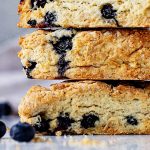
Flaky Blueberry Scones (with best tips)
Scones that are bursting with blueberries, this recipe makes tender, buttery, flaky ones that are ready in an hour and can be frozen.
Servings 6 large triangles
Ingredients
- 2 cups all-purpose flour
- ½ cup sugar
- 1 tablespoon baking powder
- ¼ teaspoon salt
- ½ teaspoon ground cinnamon
- 6 tablespoons unsalted butter cold
- 1 egg
- 2 tablespoons milk cold
- 2 tablespoons heavy or heavy whipping cream cold
- 1 teaspoon vanilla extract
- 1 ½ cups blueberries fresh or frozen, straight from the freezer
Instructions
- Make sure the butter cubes, cream, and milk are as cold as possible. I like to put them in the freezer for 10 minutes before starting.
- Have ready a baking sheet, lined with parchment paper if necessary. See Notes below.
By hand:
- In a large bowl, stir together 2 cups all-purpose flour, ½ cup sugar, 1 tablespoon baking powder, ¼ teaspoon salt and ½ teaspoon ground cinnamon
- Add 6 tablespoons unsalted butter and integrate with your hands or a pastry cutter until it’s the size of peas and beans. Don’t overwork it. The butter should remain cold. If it’s starting to soften, put the bowl in the refrigerator or freezer for 10-20 minutes, or until the butter hardens again.
Food processor:
- Put 2 cups all-purpose flour, ½ cup sugar, 1 tablespoon baking powder, ¼ teaspoon salt, and ½ teaspoon ground cinnamon in the bowl of the food processor. Pulse a few times to integrate.
- Scatter 6 tablespoons unsalted butter on top, and pulse on/off until the butter is the size of peas and beans. Don't get carried away and process the butter too much.
- Transfer the mixture to a large bowl.
For both methods:
- In a medium bowl, beat 1 egg slightly with a fork, just to make it more fluid, and add 2 tablespoons milk, 2 tablespoons heavy or heavy whipping cream and 1 teaspoon vanilla extract. Stir to blend.
- Mix lightly with a fork or spoon. It will be floury but, if you squeeze a piece of dough in your hand, it will come together.
- Toss in 1 ½ cups blueberries and stir lightly, trying not to crush them.
- Transfer this whole shaggy mass to a clean surface.
- With your hands (I use a cornet to aid me) start bringing the dough together, folding it onto itself as best as you can. Don’t knead it as you would a pie dough. It only needs to be patted into a rough circle. (I recommend you watch the video in the blog post for guidance). There will be floury patches.
- Transfer the dough circle to the prepared baking sheet. Cut the round in half, and then each half into 3 wedges with a kitchen knife or a dough scraper.
- Pop into the freezer for 10 minutes or the refrigerator for 20 minutes while preheating the oven.
- Preheat oven to 375°F (190°C).
- Bake for 10 minutes, turn the oven down to 350°F (180°C), and continue baking for about 20 minutes until the top is golden and dry.
- After 30 minutes, take out the sheet and check that the scones are done by carefully lifting the top of one and checking that the inside is done and not still raw. Bake for 5-10 more minutes if needed.
- Let cool on a wire rack.
- Store at room temperature for 1-2 days and warm slightly in the oven before eating.
Video
Notes
To get tender and fluffy scones, ensure the ingredients are cold, the oven is preheated, and you don't overwork the dough. If you forgot to turn on the oven, put the baking sheet with the cut scones in the freezer for 15 minutes before baking.
Some baking sheets nowadays are non-stick, and you can use them directly. If yours is old or you're not sure, brush them with soft butter or line them with parchment.
Liquid: You can use half and half instead of milk and cream.
Freezing: unbaked scone wedges are great to have in the freezer. Simply baked them directly without thawing them.
Flavorings: I like vanilla and cinnamon, but you can add lemon or orange zest to the dough, together with the wet ingredients.
