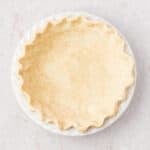
Easy Shortcrust Pastry Recipe (Pâte Brisée)
The perfect shortcrust pastry or pie crust is not hard to make if you follow the step-by-step recipe in this post. Only 3 ingredients (not counting water).
Servings 2 9-inch crusts
Ingredients
- ¾ cup ice water estimated amount
- 2 ½ cups all-purpose flour
- 1 cup unsalted butter very cold
- ½ teaspoon salt
- 1 tablespoon sugar optional (for sweet pies)
Instructions
- For the ice water, put 3-4 ice cubes in a measuring cup and fill it with cold water to about a cup. Reserve while preparing the rest of the recipe and measure when needed. You'll have to measure it again when prompted to use it below.
- Cut 1 cup unsalted butter into small pieces. Keep it refrigerated if while measuring the rest of the ingredients.
- By hand: place 2 ½ cups all-purpose flour, ½ teaspoon salt and 1 tablespoon sugar in a large mixing bowl and stir to combine. Scatter 1 cup unsalted butter, cold and in small pieces, and integrate until the butter is the size of peas and beans. It will be irregular. Use your hands or a pastry cutter or dough blender. Add ½ cup ice water and stir to mix with a fork. Add the remaining ¼ cup ice water as needed, and mix to integrate until it barely comes together.
- With a food processor: place 2 ½ cups all-purpose flour, ½ teaspoon salt and 1 tablespoon sugar, if using. Add 1 cup unsalted butter, cold and diced, and pulse on/off until the butter is the size of peas and beans. Add ½ cup ice water and pulse a few times. Add the remaining ¼ cup ice water and pulse until it barely comes together.
- In both cases, check the dough. Even though it looks crumbly and dry, if you take some and squeeze it with your hand, it should come together. If it doesn't and is floury, add a teaspoon more water at a time until you squeeze and it comes together. Be careful of adding too much water. It should not be wet and sticky.
- Transfer the shaggy dough to a barely floured surface and gather it together into a ball. Don't overwork it, or the dough will be tough. Use both hands to bring it together and squeeze with your palms until you can form a disc. Wrap it in plastic and refrigerate for 1 hour or up to 3 days. Or freeze for 20 minutes or up to 3 months.
Lining the pan:
- When you're ready to use it, roll it on a lightly floured surface, starting from the middle and making sure the size is at least 1 inch bigger than the pan you're using.
- Carefully place in the ungreased pie pan. Trim the edges, prick the surface and refrigerate for half an hour or freeze for 15 minutes. This extra resting period helps with achieving a flaky pastry.
Blind-baking:
- Preheat oven to 350ºF (180ºC)
- Put a large piece of aluminum foil over the cold dough surface and add weights (I use dried beans). Make sure the foil and beans reach the edges so the whole surface is weighed down. Bake for about 15 minutes. Lift the foil and weights and continue baking for 10 more minutes, or until it's dry and starting to color.
- Your pie crust is ready to use with a filling that needs to be baked. If you're using an unbaked filling (like the strawberry pie, for example), bake it for about 20-25 minutes after removing the foil, until golden, dry and fully baked.
Video
Notes
Baking time: consider that all ovens and pans are different, even if they look similar. The baking time in my recipes is as accurate as possible, but it might take you more or less time. You can use an oven thermometer to check that your oven is at the right temperature. I recommend keeping track of how your oven works and what tiny details you might need to adjust.
Don't overwork the dough. For tender crusts, handle it as little as possible but integrate the ingredients well.
Resting time is essential if you want the pie dough to roll easily and be tender and crisp after it's baked. It allows the dough to relax, making it easier to roll without stretching.
Make ahead: you can keep this homemade pastry in the fridge for 5 days or frozen for up to 1 month. Always well wrapped to prevent dryness.
