

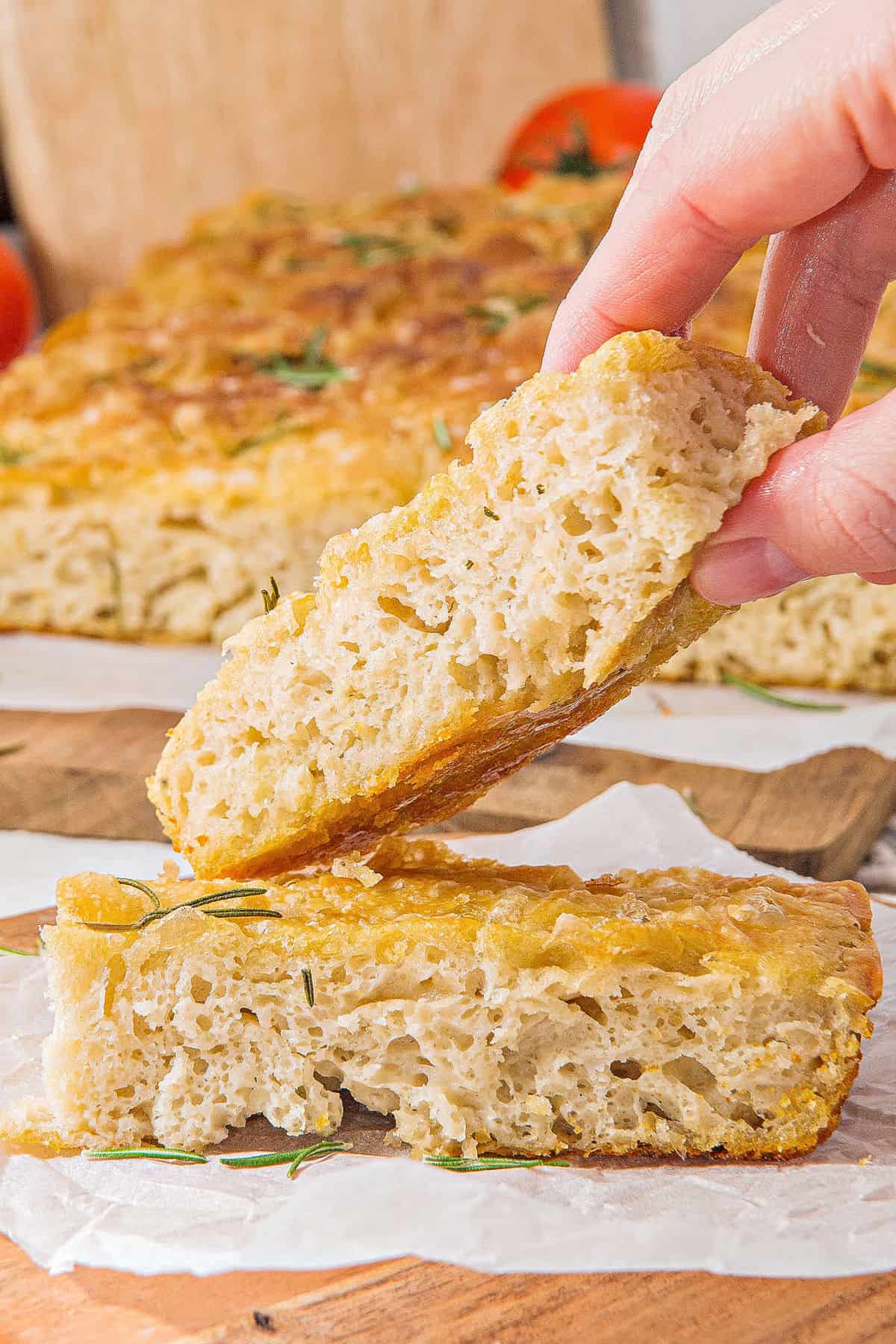
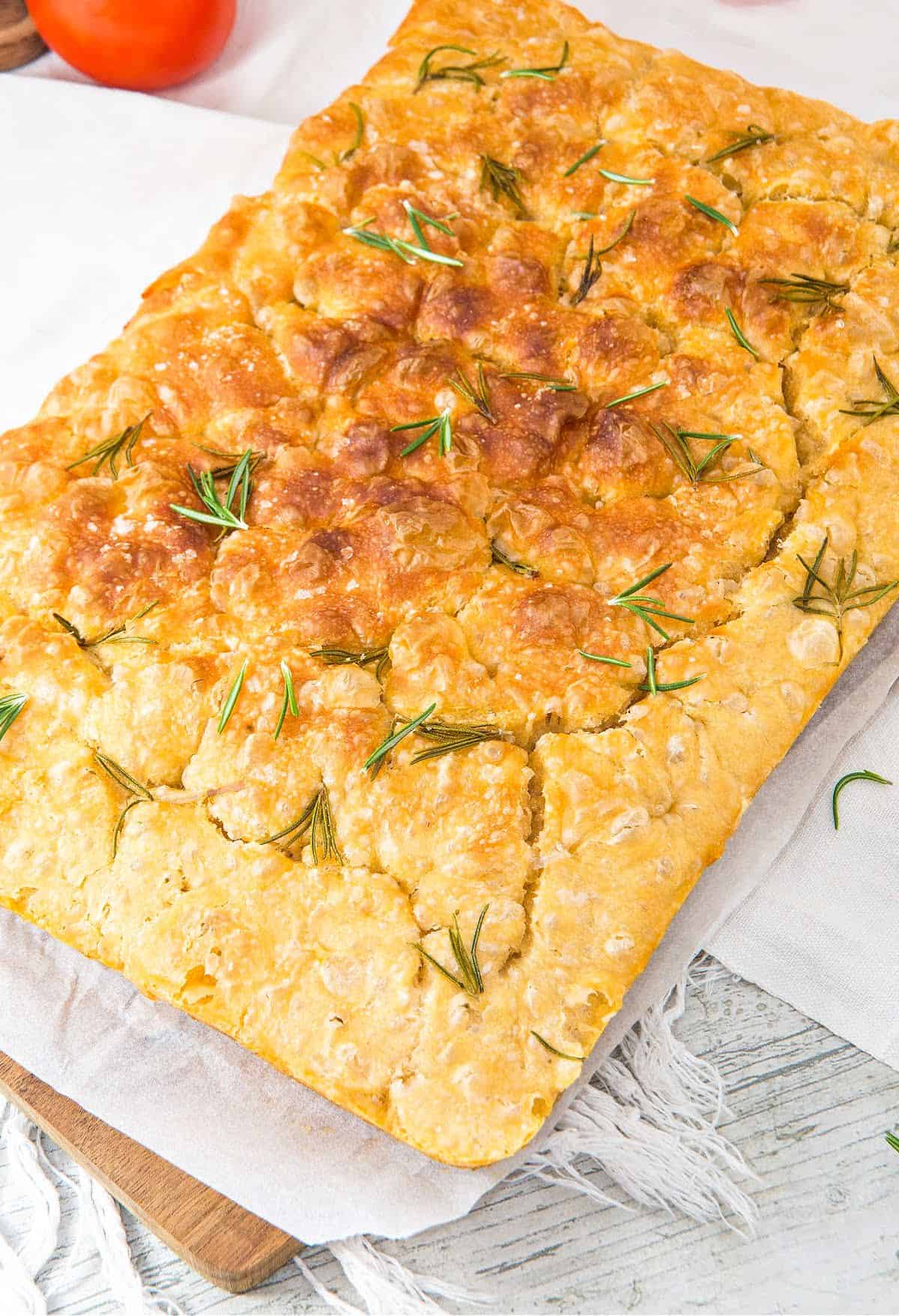
This is a traditional focaccia with a different technique that does its magic while you sleep. It's a no-knead recipe that's left to rise overnight in the fridge, making it less laborious but wonderfully crunchy, like all focaccia should be. Topped with sea salt and fresh rosemary, it's perfect for the bread basket, as a base for appetizers and sandwiches, or to accompany soups and salads.
Low effort, exceptional flavor
Italian focaccia is a wonderful thing to make. If you add that this overnight recipe doesn't require kneading, you have the best possible offer.
Though there are exceptions (like the no-knead French bread recipe), yeast doughs usually require kneading for several minutes to develop the structure needed to rise. For this homemade focaccia recipe, all of this happens with just a few folds of the dough and an overnight stay in the fridge. So it's as low effort as you can get.
Long, cold rise advantage: A slow fermentation not only develops better flavor but also makes it easier to handle the next day. A 12 to 18-hour rest is ideal.
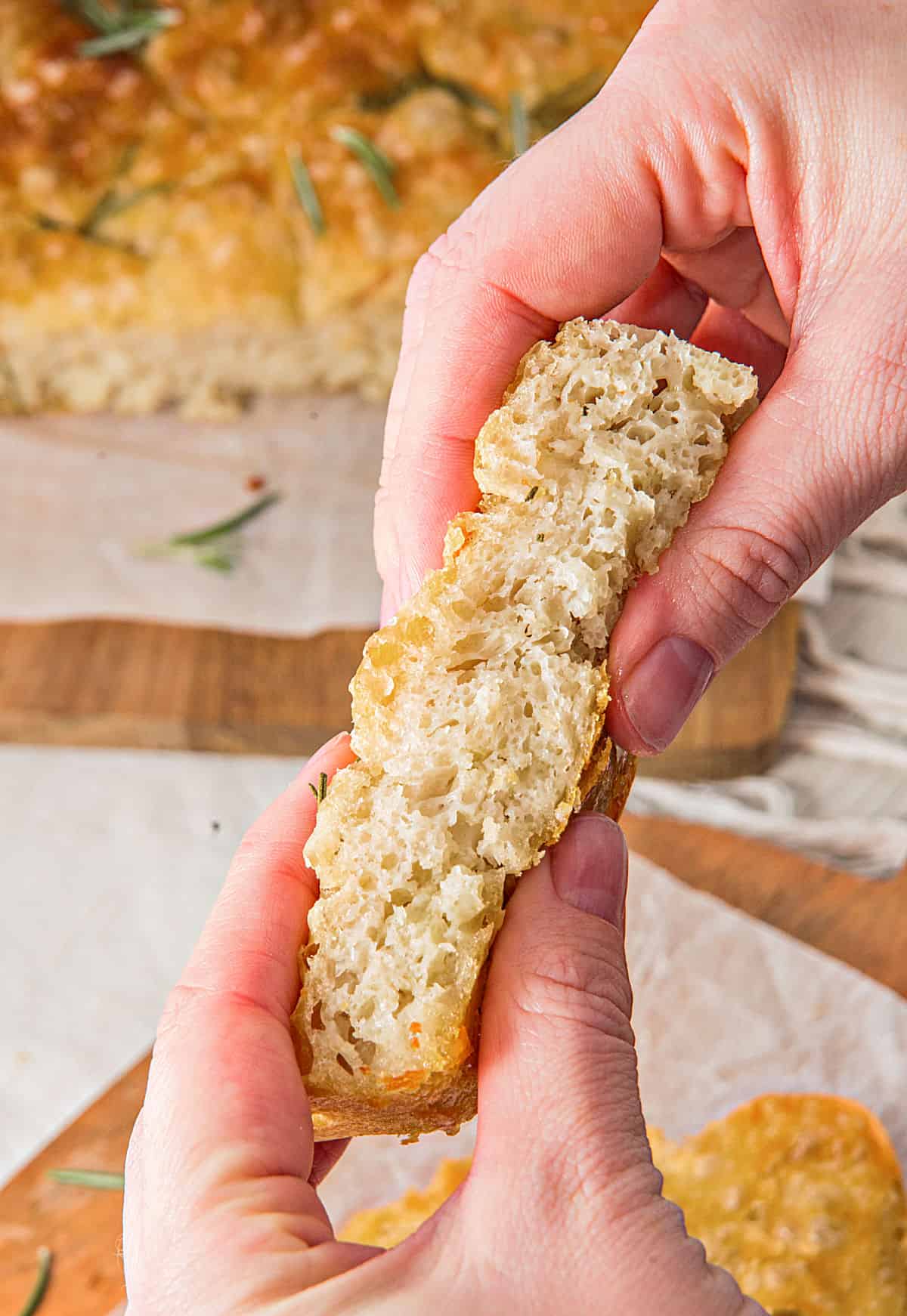
Focaccia is similar to a pizza, but taller and spongier, and without that cheese-heavy topping. It has a crunchy golden-brown crust that is heaven. If you've never tried it, I urge you to!
I've yet to find a reasonable excuse not to make and eat focaccia, even if the mandatory amount of olive oil called for raises an eyebrow.
Step-by-step VIDEO
Testing Notes
Details: Baking with yeast is all in the details, so don't overlook them. Read the recipe first and ensure you have the ingredients at the correct temperature, the needed equipment, enough workspace, and the time frame. This will make the process so much easier.
Flour: If possible, use bread flour. It has more gluten, a protein good for yeasted recipes because it creates the structure, the net that will hold the bread as it rises. All-purpose flour also works well if it's all you have.
Water temperature: Use room temperature or slightly cool water for overnight focaccia. This is not what I usually advise for recipes with yeast. But lukewarm water makes the yeast work too quickly and can cause the dough to overproof (rise more than it should too fast).
Use a large bowl: The dough expands a lot overnight, so make sure your bowl has enough room. Trust me on this; overflowing bread dough is messy! Lightly oil it so it doesn't stick.
Hydration matters: Overnight focaccia dough is wetter than typical bread dough. Don't panic if it feels sticky; it should. That high hydration is what gives you the airy texture.
Olive oil is non-negotiable! It's essential for the flavor and texture of the focaccia, especially the top, which will be incredibly crunchy. So use the best extra virgin one you can afford.
Use regular or kosher salt for the dough, and semi-coarse salt (like sea salt) for the topping: I use kosher salt for both. Don't sprinkle regular table salt on top.
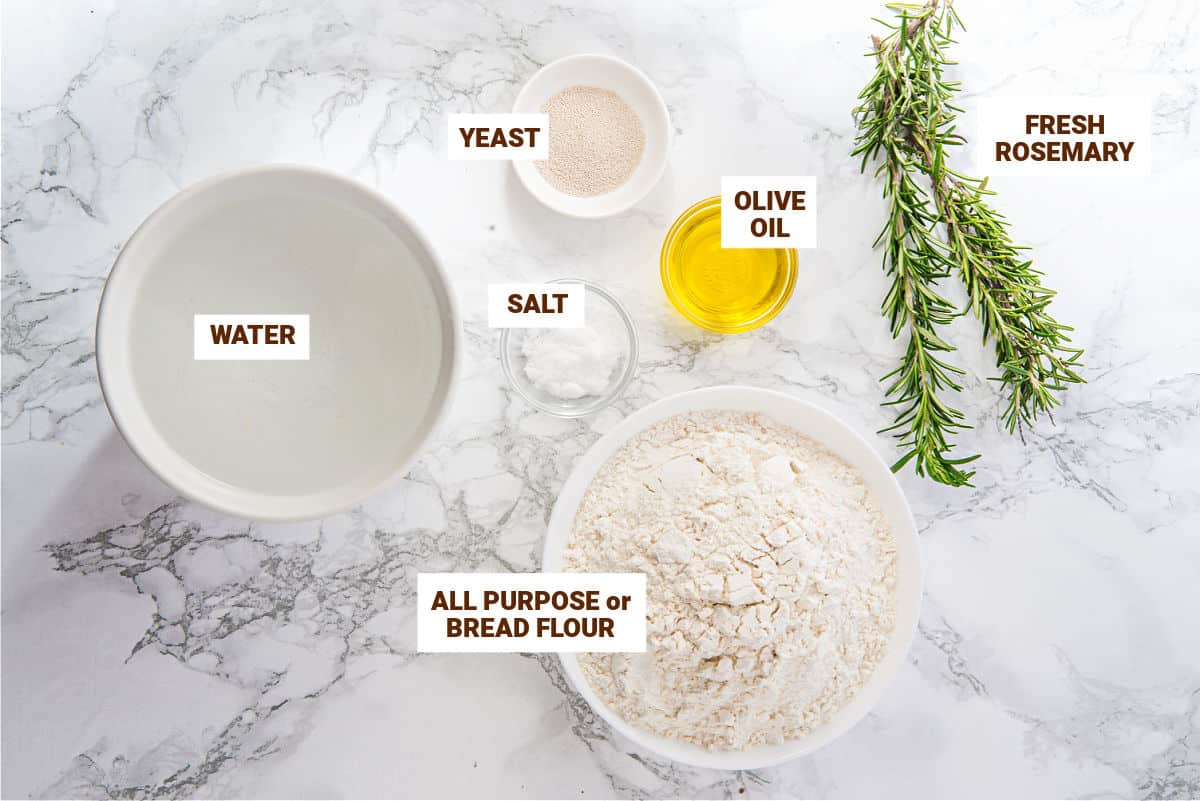
Ingredient Notes
Quantities are listed on the recipe card towards the end of this post. The Ingredients page has more details and lists the brands we use.
- Herbs: fresh or dried. Traditional focaccia is made with rosemary, but fresh oregano and thyme also work very well.
How to Make Sure Yeast Works
- Check expiration date: Replace if expired.
- Visual check: Should be beige to light brown and granular/powdery. Avoid if grayish, clumpy, or discolored.
- Smell test: Should have a mild, slightly sweet smell. Strong or unpleasant odors indicate it's bad.
Proofing test: Mix ½ teaspoon sugar in ¼ cup warm water (comfortable to touch). Sprinkle ½ teaspoon of dry yeast on top and stir gently. Wait 5-10 minutes until you start to see some activity. Fresh yeast will foam and bubble more; instant bubbles less than active dry yeast.
Golden Rule: When in doubt, buy new! It's better to be safe than to have your baked goods fall flat and be inedible.
Steps to make focaccia
Focaccia is a very easy bread, and this recipe is even simpler. It's hard to mess up, even for beginner bakers, but following instructions is still paramount.
You need to respect the fact that yeast has a process. Don't rush it, and you'll be fine even if it's your first time making it.
- By hand: use a large bowl, a wooden spoon (or a regular one) and your hands. For me, kneading by hand is one of the reasons I love to bake with yeast, especially with simple doughs like this one.
- With a mixer: you can use the bowl of a stand mixer to make the first part of the dough (and the dough hook to knead it) until you have a smooth, soft dough that leaves the sides of the bowl. It's faster and takes less arm muscle.
Make the dough
- Pan: You can use a round or rectangular baking pan. The difference will be in height and sometimes in how the bottom of the focaccia bakes. Some types of materials give it a better color than others.
- Herbs: I used rosemary, but other fresh ones work, like thyme and oregano. Or a mix. Dried herbs can also be used.
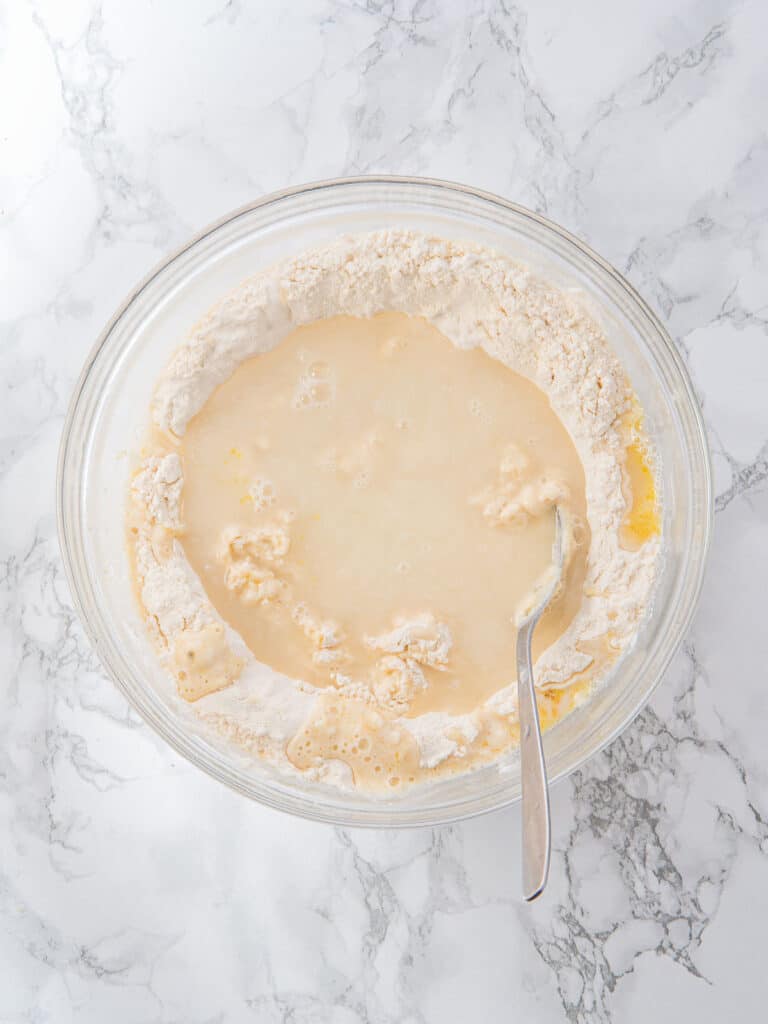
Stir ingredients
Stir the ingredients until well incorporated and a shaggy dough forms. Cover the bowl and let it rest as directed in the recipe.
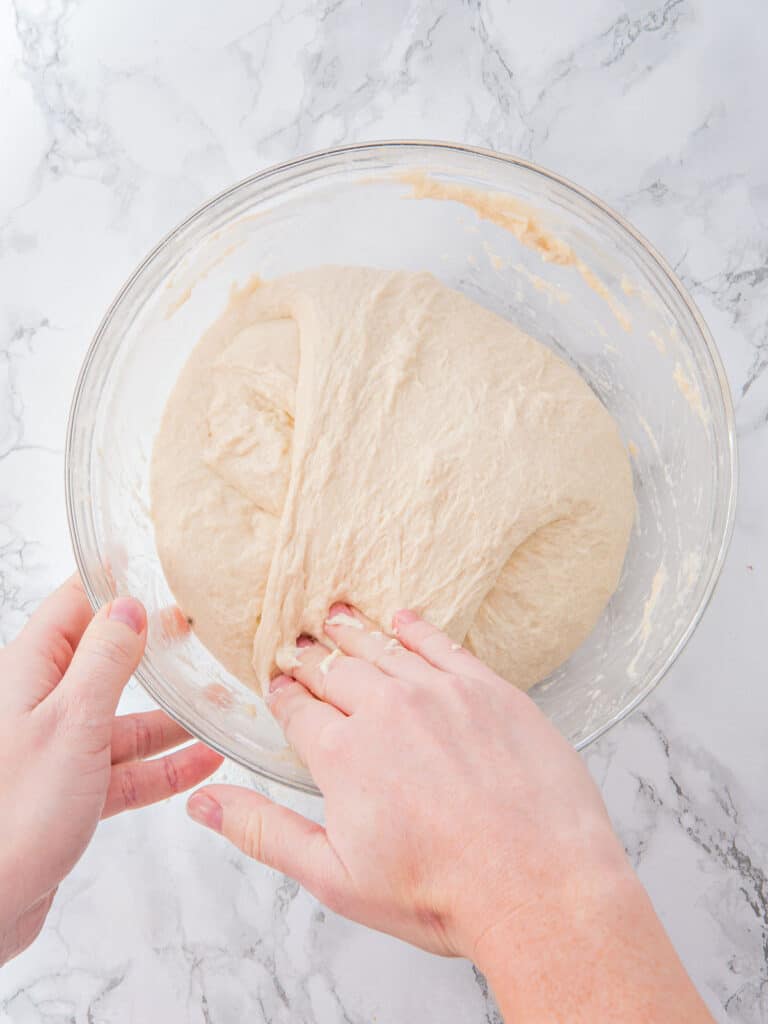
Fold it onto itself
Pull it on one end and fold it. Repeat several times, pulling from different sides.
This is the way to 'knead the dough' before it goes into the fridge until the next day.
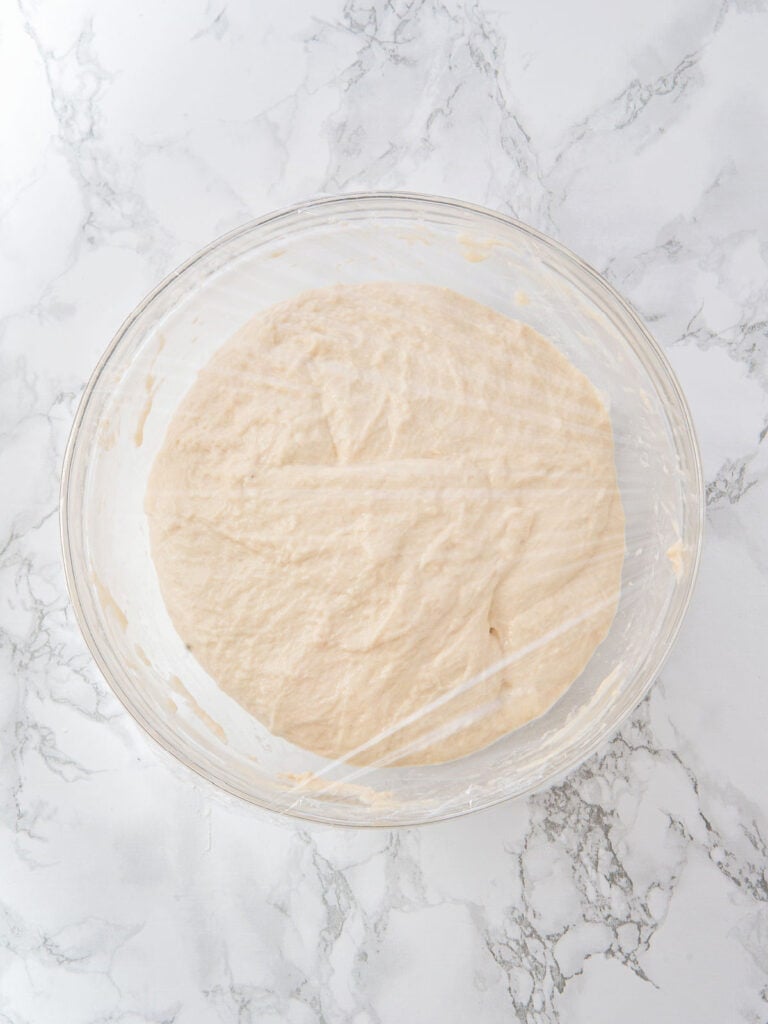
Overnight first rise
Use a big bowl, large enough to accommodate a doubled dough volume and some more. Cover it tightly with plastic wrap so it doesn't dry.
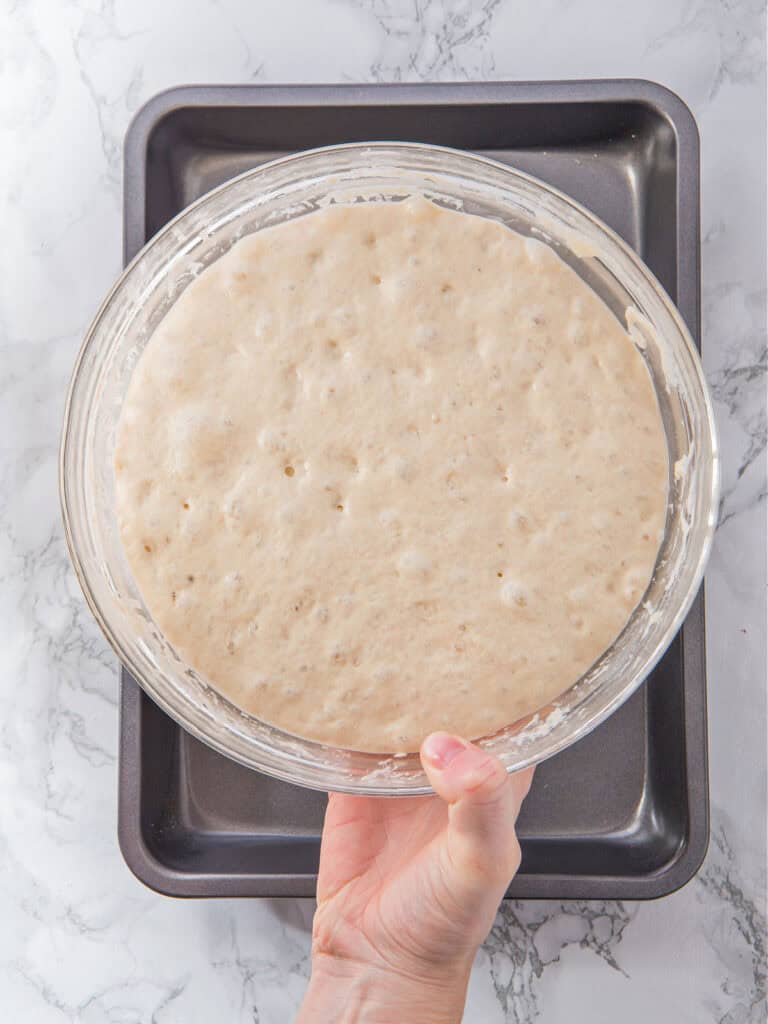
Risen dough
It should double in size and be wobbly and quite sticky when you transfer it to the oiled baking dish or pan.
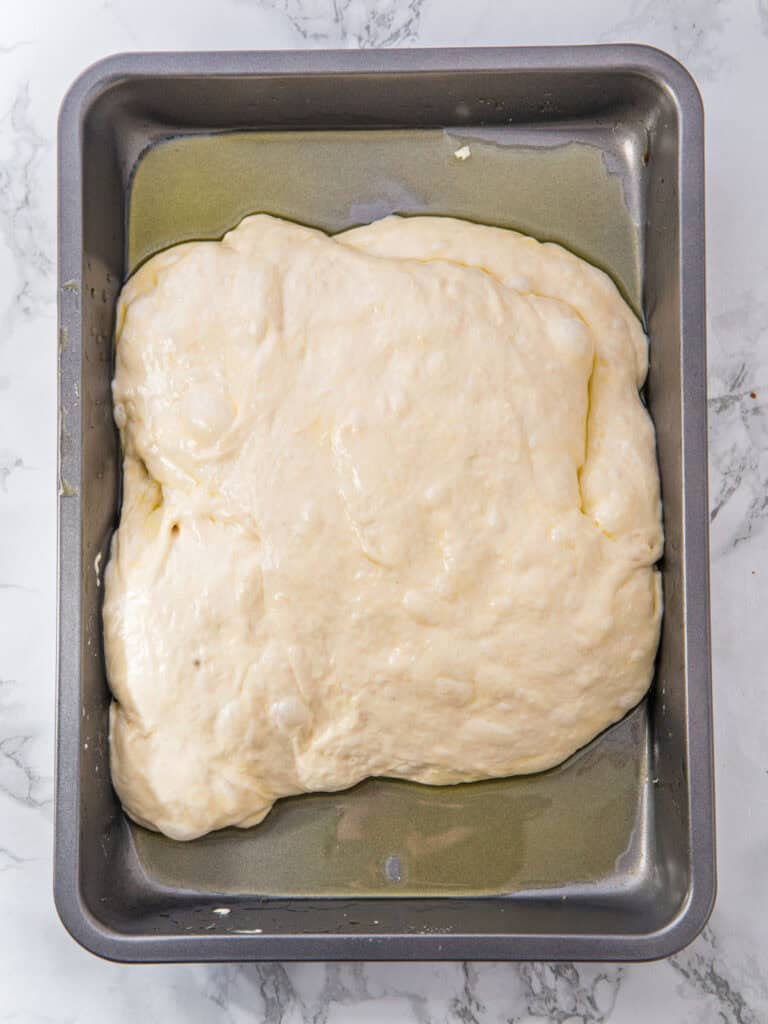
Stretch it
The way to do it is to stretch the focaccia dough to fill the rimmed baking sheet or pan without forcing it, letting it rest for several minutes in between stretches if it's too elastic and springs back.
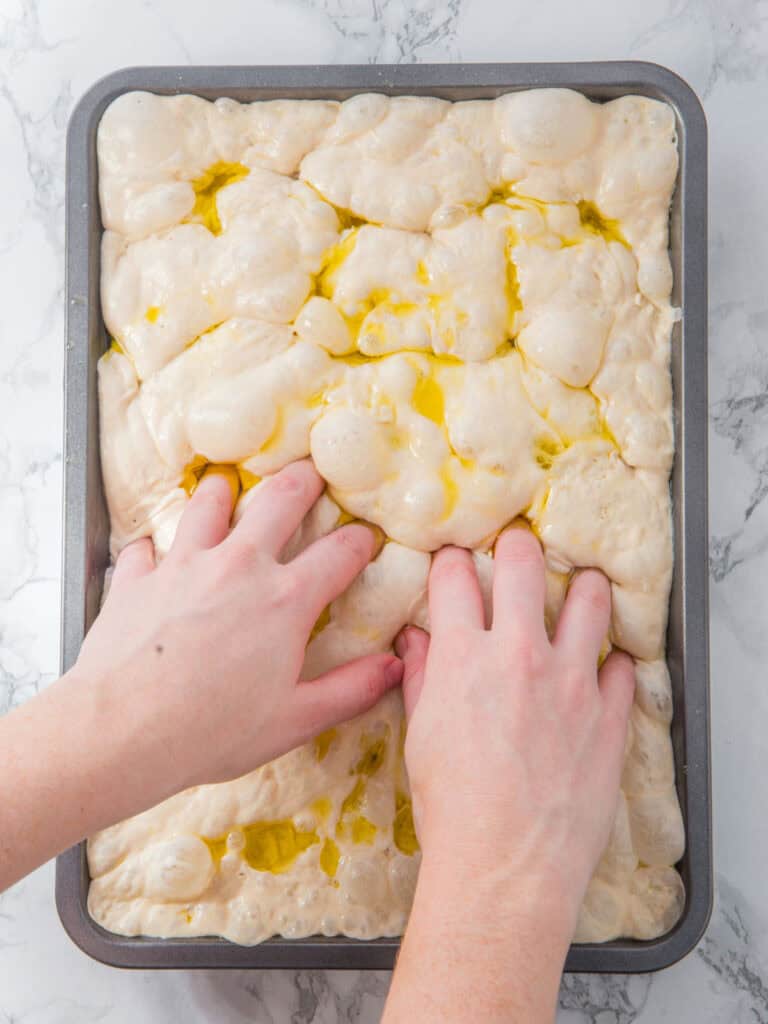
Dimpling the dough
This is a crucial step so the oil can pool and create the traditional crackly golden crust.
To dimple focaccia, use oiled fingertips to press into the dough right before baking. This keeps the crumb structure airy and creates those classic air bubbles and focaccia pockets that hold oil and toppings.
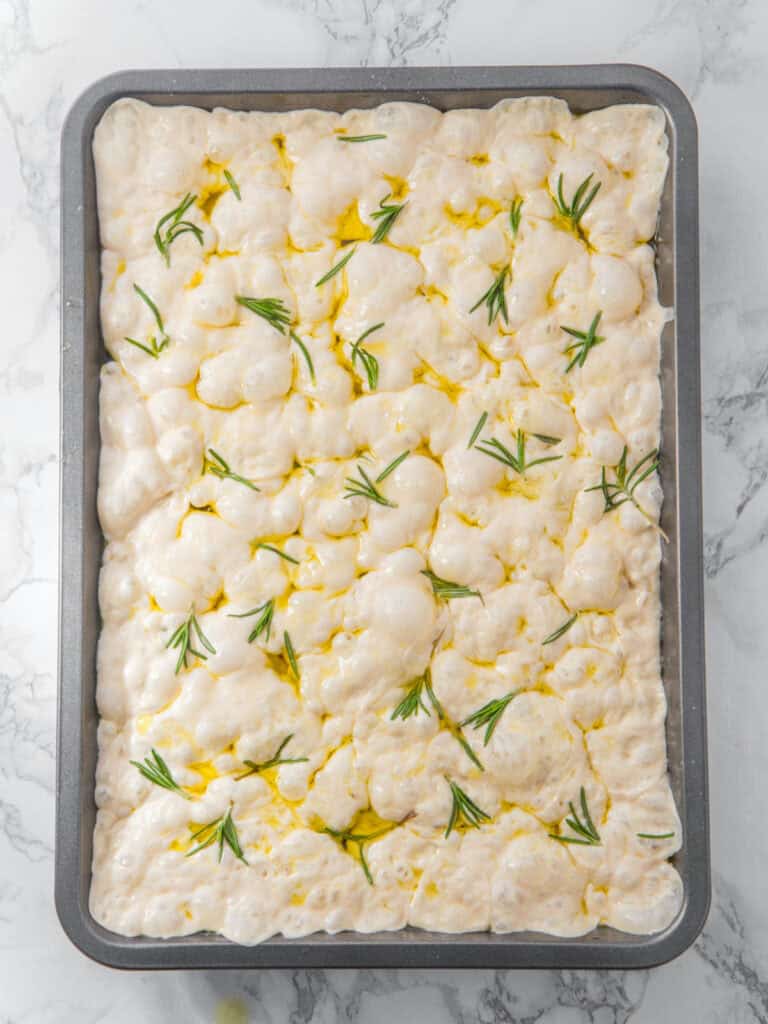
Focaccia toppings
Olive oil and sea or kosher salt are non-negotiable. Buy a good-quality oil and use flaky sea salt or a coarser one than regular; don't sprinkle table salt on the top of the dough.
Herbs: I used rosemary, but other fresh ones work, like thyme and oregano. Or a mix. Dried herbs can also be used.
Round or cherry tomatoes, thin slices of potato, garlic cloves, crumbled feta or blue cheese, olives, and caramelized onions are some of the options.
Baking tips
- Pre-heated oven: This is crucial as the bread needs a hot oven to get that first boost and rise well. If you didn't remember to turn it on, do so and let the focaccia wait the ten or fifteen minutes it takes for it to come to the temperature in the recipe.
- Steam: Creating some type of steam as you put the focaccia into the oven will help even more with that insanely crackly crust. If you don't, the focaccia bread will still be amazing, so don't fret too much about it. But if you're up to it, have ready a sprayer with water and squeeze it several times as you put the pan in the oven. The water will quickly evaporate, creating steam. Immediately close the door so it doesn't go out. You can also use half a cup of very hot or boiling water, and throw it quickly in the bottom of the oven, but this one is trickier.
- When is it done? It will turn golden brown and crisp, and the bottom will sound hollow when lightly tapped.
- Baking stone: I never baked it on a baking stone, but I know people who use it. They use a piece of parchment paper to stretch and dimple the risen dough instead of a baking sheet and use a pizza peel to slide the paper into the oven. Unless you're very used to this, I don't recommend it at home.
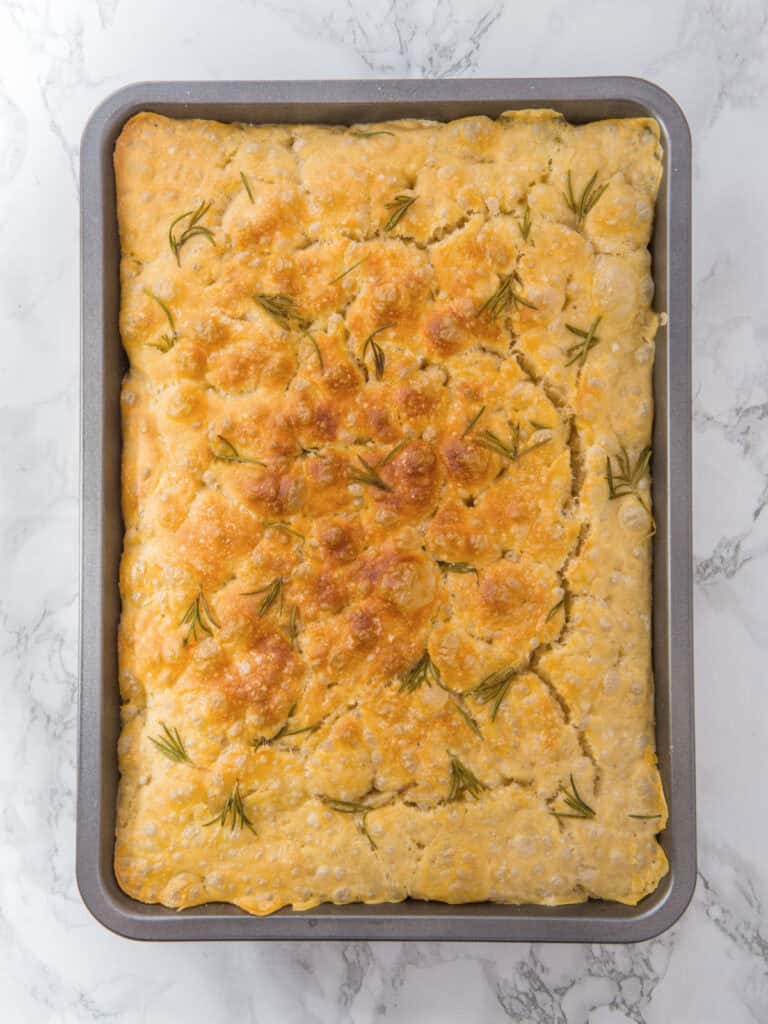
Dry and crusty
It will dry and puff, and the oil will seep into the crust. That's what makes it so unbelievably crunchy. And the aroma in the kitchen is amazing, in case you're wondering!
How long does focaccia last?
Well wrapped in plastic, it can last 2 days at room temperature, but will lose some of its crunchiness. After that, put it in the fridge. You can also freeze it, well wrapped, for a month. Thaw at room temperature. Always warm it in a medium oven (350°F/180°C) for about 15 minutes before eating to bring back its crispness.
If you made this recipe and loved it, you can comment below and leave a 5-star ⭐️ review. Also, if you had issues, let me know so we can troubleshoot together.
You can also subscribe to our FREE email series 'Baking the Best' and our regular newsletter. Or follow and save my recipes on Pinterest.
As an Amazon Associate, I earn from qualifying purchases. Read my disclosure policy.
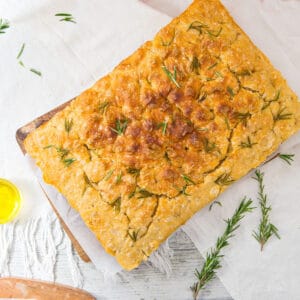
No Knead Rosemary Focaccia (overnight recipe)
Ingredients
For the dough:
- 4 cups bread or all-purpose flour, or a mix of both
- 2 cups room-temperature water, NOT lukewarm or hot
- 1 ½ teaspoons active-dry east
- 2 tablespoons extra virgin olive oil
- 1 ½ teaspoons kosher or sea salt
For the topping:
- ⅓ cup extra virgin olive oil
- 1 tablespoon fresh rosemary leaves, or to taste, for the topping
- kosher or sea salt, or to taste, for the topping
Instructions
- In a large bowl, combine 4 cups bread or all-purpose flour, 1 ½ teaspoons active-dry east, 2 tablespoons extra virgin olive oil, and 1 ½ teaspoons kosher or sea salt.
- Gradually add 2 cups room-temperature water, mixing slowly. Use a spoon or spatula to help incorporate the ingredients until the dough is smooth and homogeneous. Let the dough rest for a few minutes to allow it to gain structure.
- Cover the bowl with a clean kitchen towel or plastic wrap and let the dough rest for 30-40 minutes in a warm place. The dough should double in size.
Folding the Dough:
- Lightly oil your hands with olive oil to prevent sticking. Gently fold the dough by lifting it from the edges and folding it over itself in an enveloping motion. Repeat a few times to strengthen the dough structure, pulling from a different side each time.
- Cover the bowl with plastic wrap and refrigerate the dough for at least 12 hours or overnight.
Shaping the Dough:
- Remove the dough from the refrigerator and dump it on a 9.5 x 13.5 inch (24 x 34 cm) baking tray that has been generously greased with olive oil. Overnight focaccia dough is wetter than typical bread dough. Don't panic if it feels sticky; it should.
- Gently stretch the dough onto the tray and fold it over itself (like a letter) from one side to the other. Repeat for the other side. Let the dough rest in the tray for 1 to 1.5 hours in a warm place, or until it doubles in size again.
- Preheat your oven to 450°F (230°C), a high temperature.
- Using your fingers dipped in oil, create dimples by pressing gently into the dough with your fingertips.
For the topping:
- Drizzle ⅓ cup extra virgin olive oil over the dough and sprinkle 1 tablespoon fresh rosemary leaves and kosher or sea salt, to taste, evenly over the surface. The dimples will create pockets for the olive oil and toppings.
- Place the tray in the preheated oven and bake for 40 minutes, or until the focaccia is golden brown on top and cooked through.
- Remove the baking tray from the oven and let it cool down on a wire rack until warm before cutting or it will be pasty.
- Serve warm or at room temperature.

Rate and review this recipe