
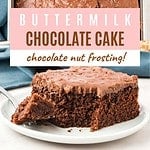
The difference with Texas sheet cake is the technique, because it doesn't look like normal cake baking. You're not creaming butter and sugar, and you're not folding anything carefully. It starts with a stovetop custard and uses cocoa powder. So it's perfect for beginners or for when you don't have the patience.
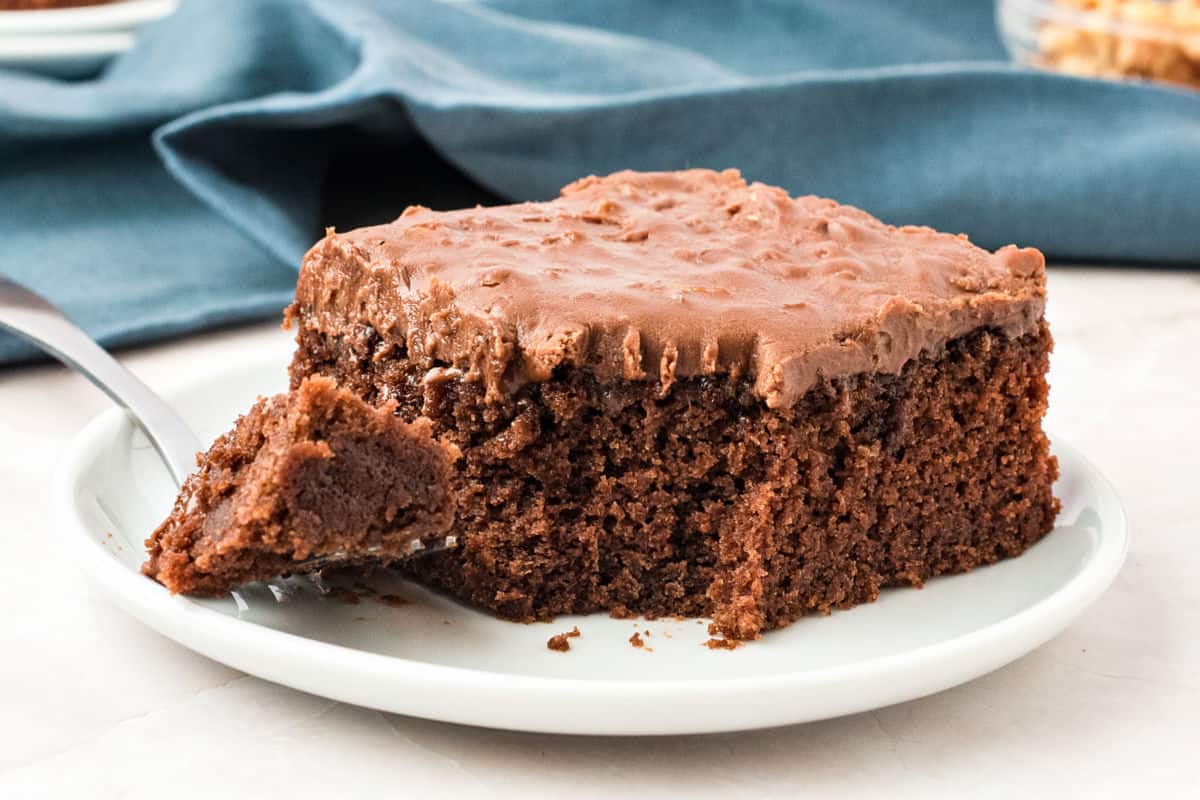
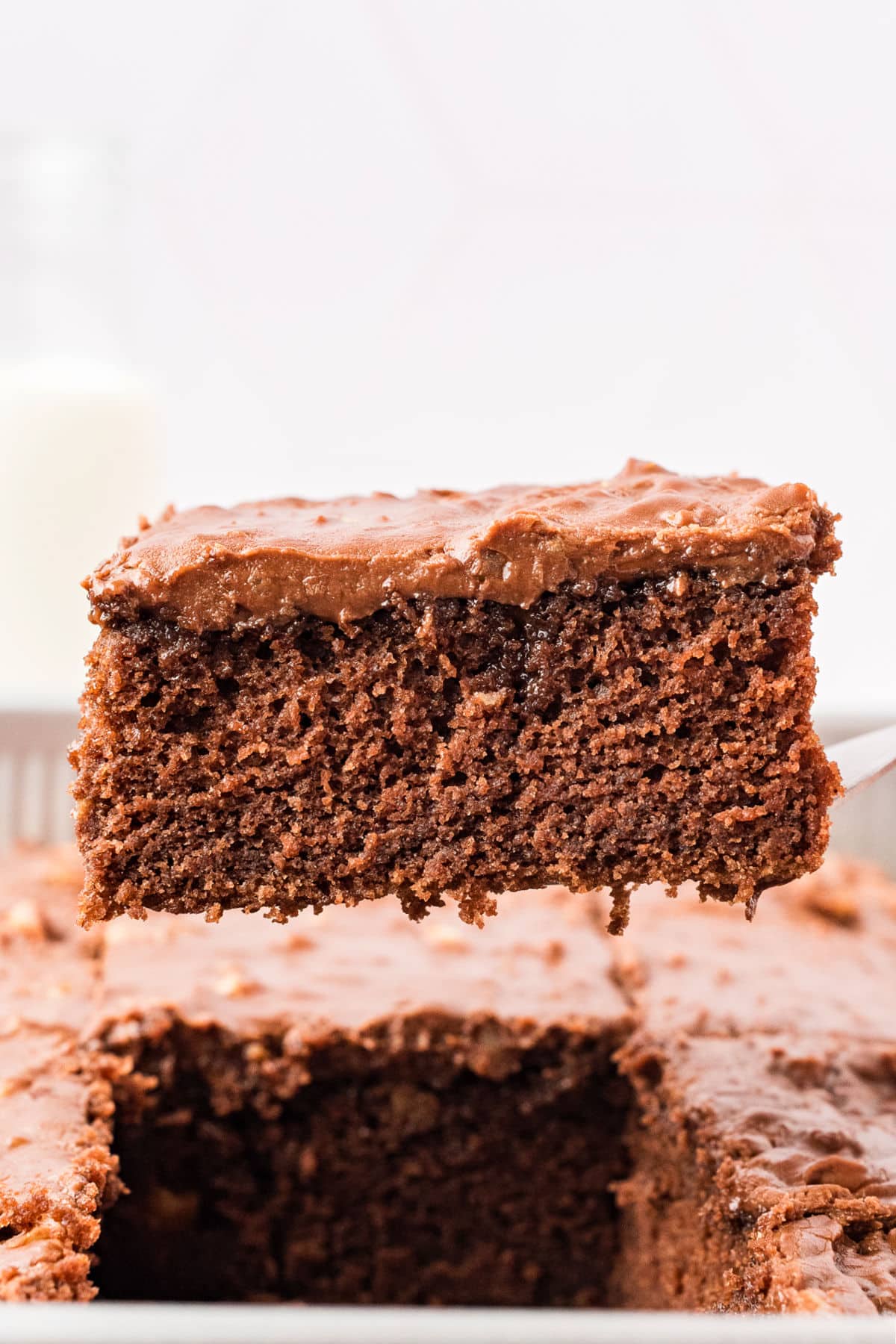
It's fudgy, it's deeply chocolatey, and the buttermilk makes it soft and tender. Bake it in a standard half-sheet or jelly roll pan, or use a 9x13-inch one, which results in a thicker cake, and honestly, that's not a bad trade.
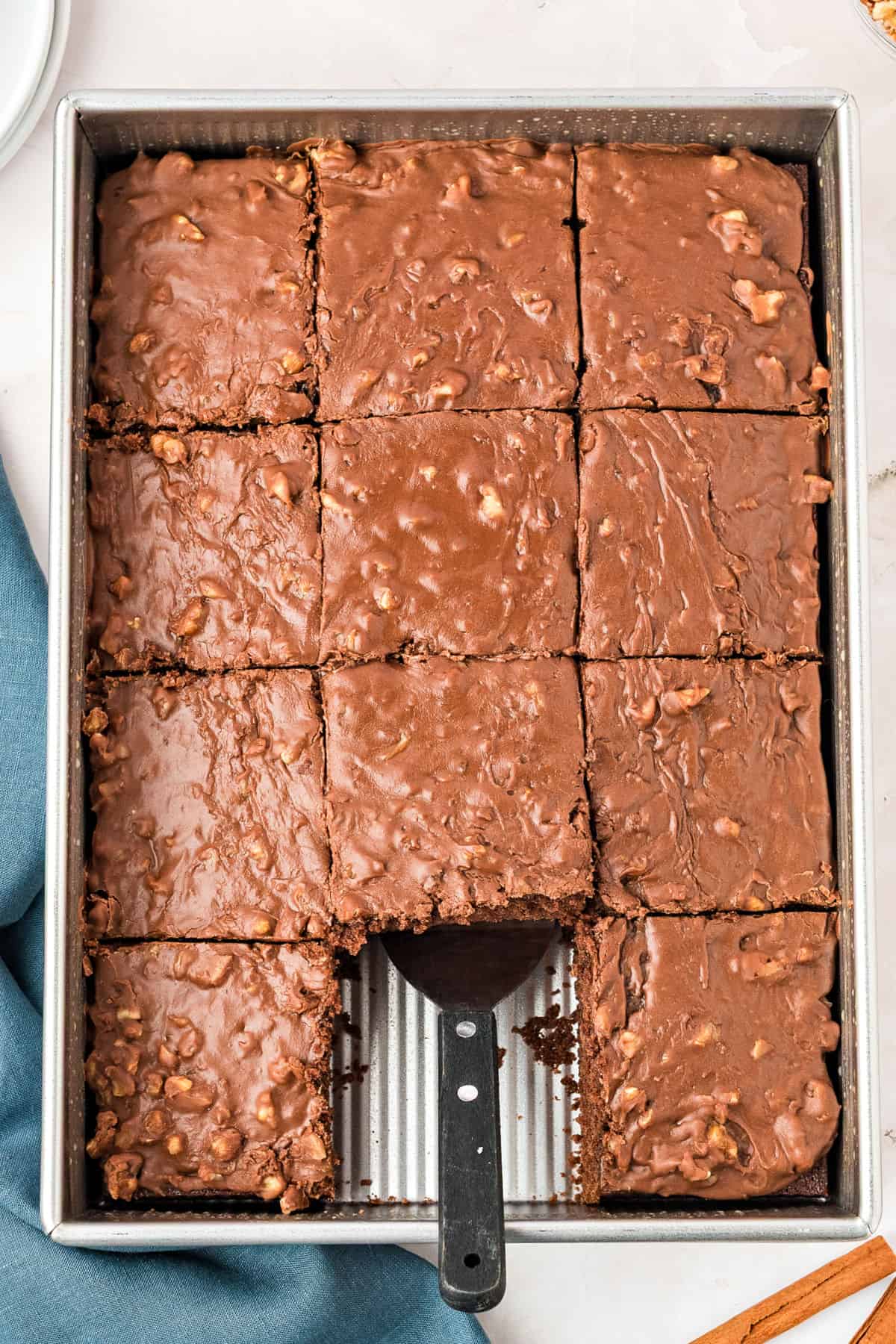
Vintage cocoa cake
You're essentially making a hot cocoa mixture on the stove and pouring it into your beaten eggs and dry ingredients. It sounds chaotic, but it works every time.
The technique of boiling butter, cocoa, and water together before mixing into the batter is very old-fashioned and designed for feeding many, for economy, and for ease.
The very popular condensed milk chocolate cake is a close relative to this buttermilk version.
Texas sheet cake is a genuinely old recipe and part of our vintage cakes category. It started showing up in American community cookbooks and church potluck circuits in the 1950s and 60s, and it's been a staple of Southern and Midwestern baking ever since.
Testing Notes
Cake pans you can use: The traditional Texas sheet cake is baked in a large rimmed half-sheet pan (13x18 inches), jelly roll pan or similar, which is 10x15 inches and is the one I used for this post. A 9x13-inch pan (more easily found in homes) gives you a thicker cake and changes the frosting-to-cake ratio, and, in my opinion, holds up better when sliced and transported.
Don't substitute the buttermilk for regular milk. The buttermilk is reacting with the baking soda and adding a slight tang that balances the sweetness. You can make homemade buttermilk in a pinch: add a tablespoon of white vinegar or lemon juice per cup of whole milk and let it sit for five minutes before using. It will curdle slightly.
Cocoa powder: Dutch-process cocoa gives you a deeper, darker, smoother chocolate flavor, is the more classic choice here and produces a noticeably richer color in the frosting. Natural cocoa gives you more of a bright, acidic chocolate punch. Both work.
Dry ingredients: they need to be sifted. Do so in a large bowl where you'll be mixing the final chocolate batter.
On the frosting timing: The single most common mistake with this cake is waiting too long to frost. Make your frosting while the cake is in the oven so you can pour it on within five minutes of the cake coming out. If your frosting starts setting up in the pan before you pour it, add a splash of milk and stir quickly.
Toasted walnuts: This is not a required step, but it makes a noticeable difference as it enhances the flavor and reduces the slightly bitter edge that raw walnuts can have. About 15 minutes in a medium oven until fragrant; be careful not to burn them! Let them cool completely before using so they stay crunchy. You can also use pecans.
It's key to spread the frosting over the warm cake so it seeps slightly into the top of the cake. If the cake is cold, it will not have the same effect.
For a fudgier cake, slightly underbake it: check at 20 minutes; the center should be just set, and a toothpick should come out with moist crumbs, not wet batter, but not dry either. And don't skip poking the surface before spreading the thick chocolate icing.
Process steps for the cake
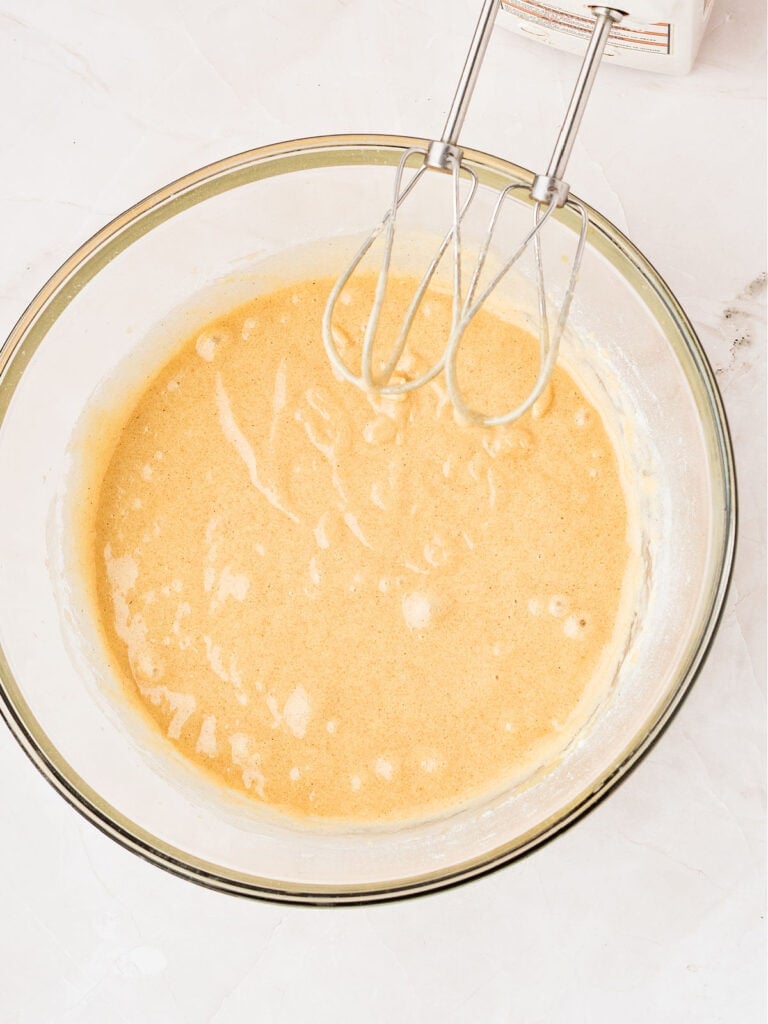
Beat until light
Except for the cocoa powder, sift the dry ingredients in a large bowl that can accommodate all the chocolate batter.
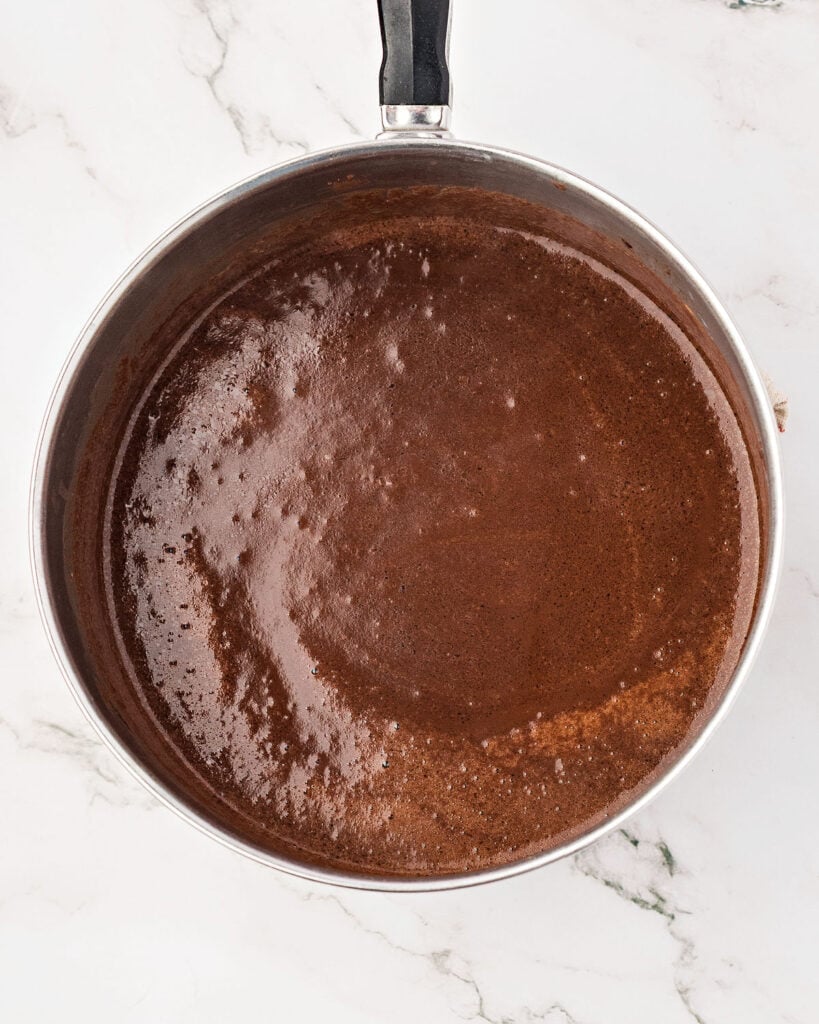
Stovetop
The chocolate custard is cooked on the stove, where you need to mix butter with cocoa powder and water. Remove when it breaks into a boil. This will ensure the cocoa dissolves well and 'blooms', which deepens the flavor.
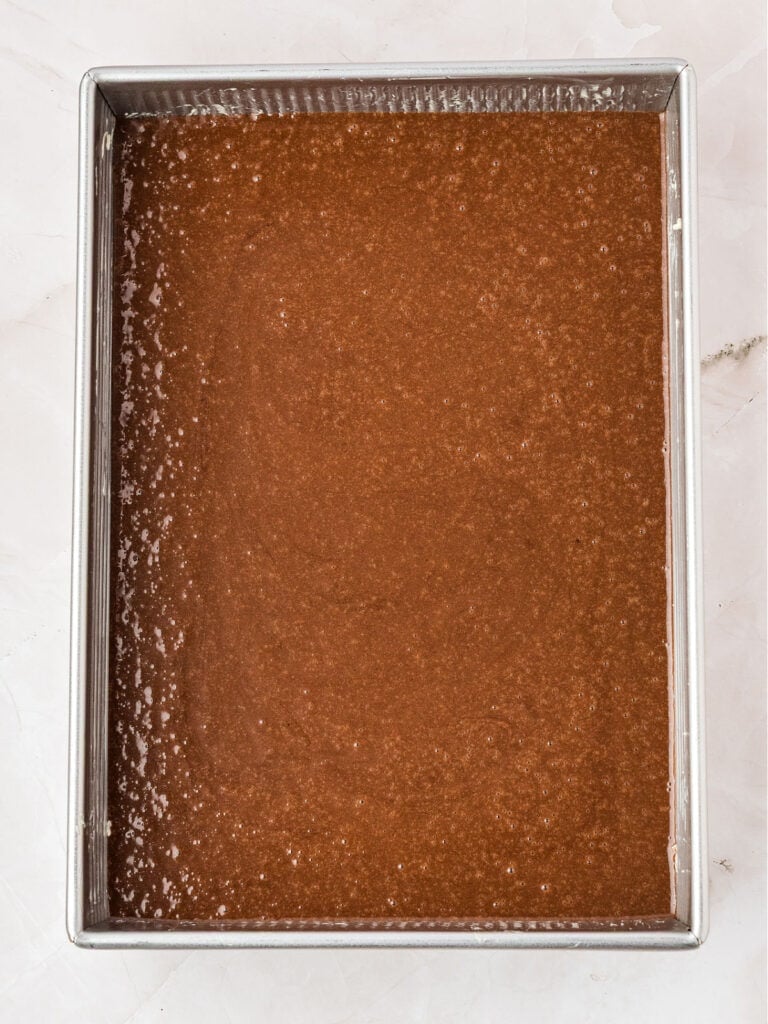
Cake batter
Both preparations above are then stirred together.
The final chocolate batter is quite thin, so I recommend you pour it into the prepared pan near the oven.
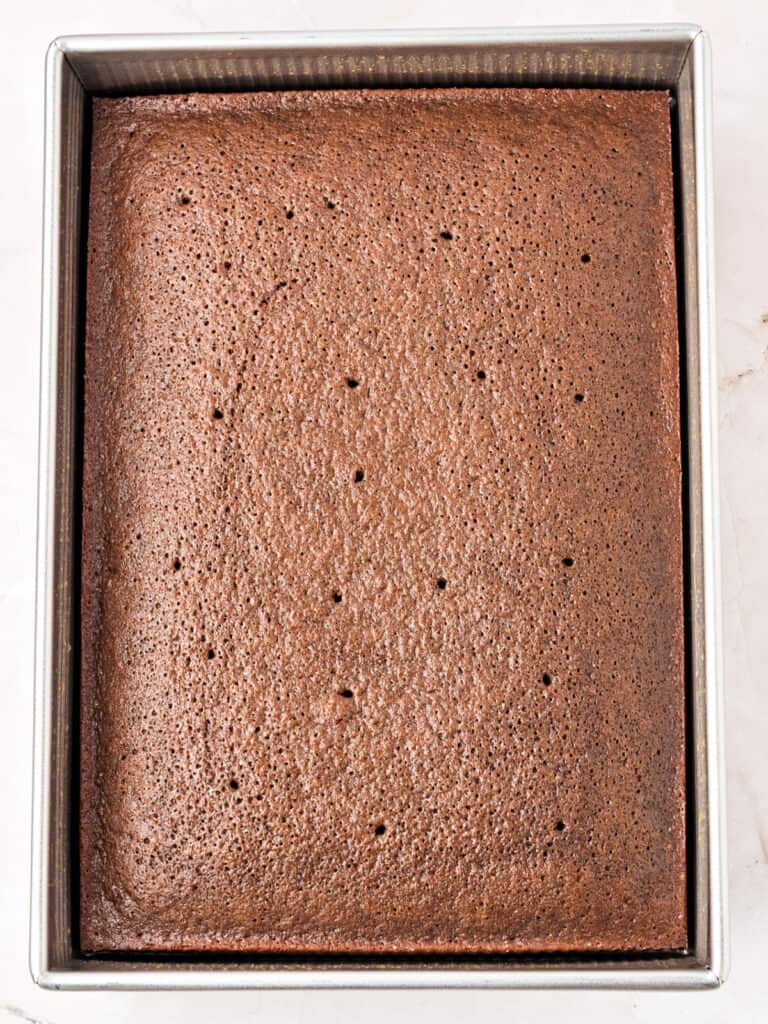
Poke the surface
Immediately when it comes out of the oven, pierce or poke holes with a brochette stick or toothpick. Then spread or pour the frosting to cover the surface before the cake cools down.
Process steps for the frosting
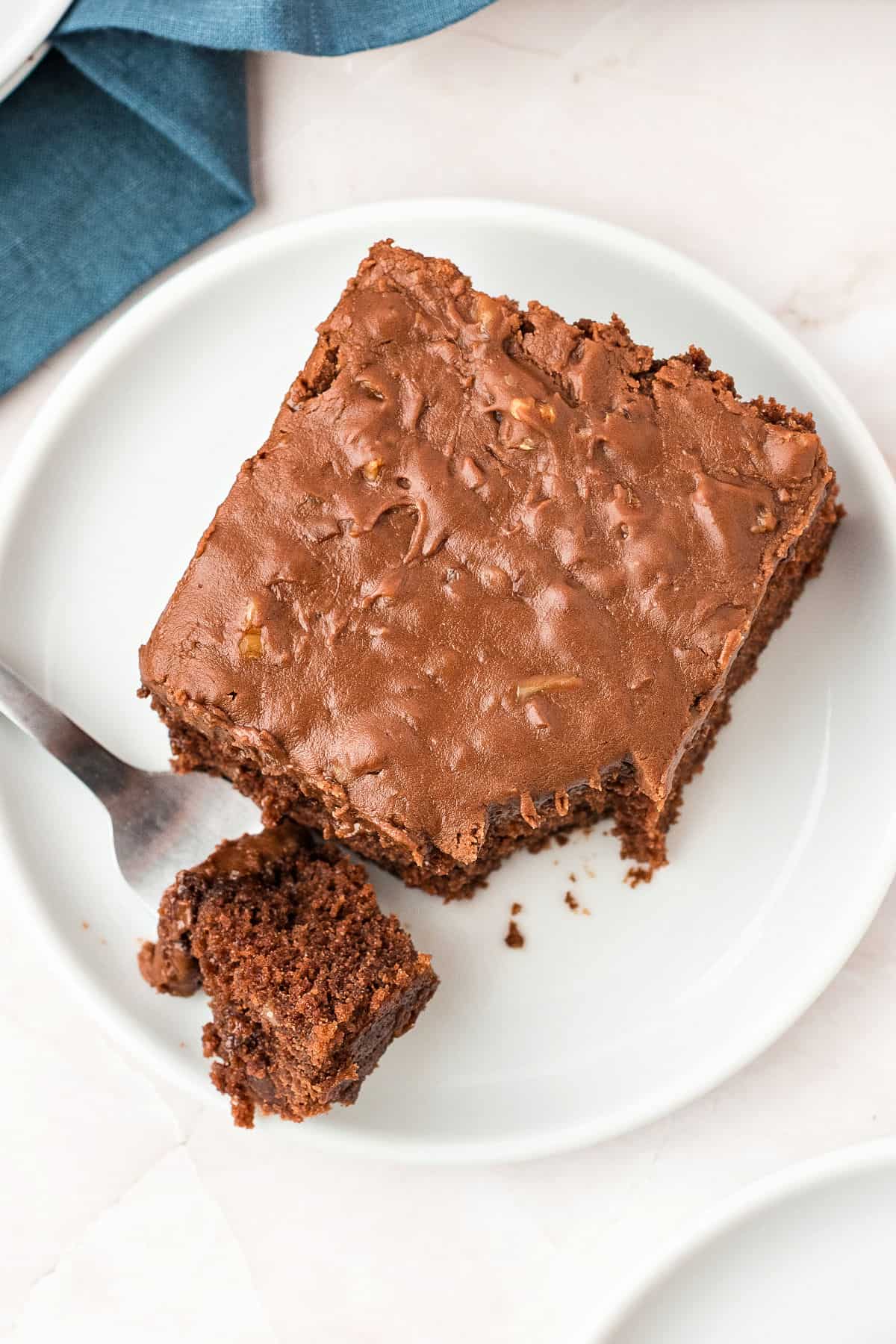
The chocolate topping with walnuts is an essential part of this old-fashioned chocolate cake recipe. The frosting or icing is sweet, with a lot of chocolate flavor. You can adjust the texture by adding more or less sugar.
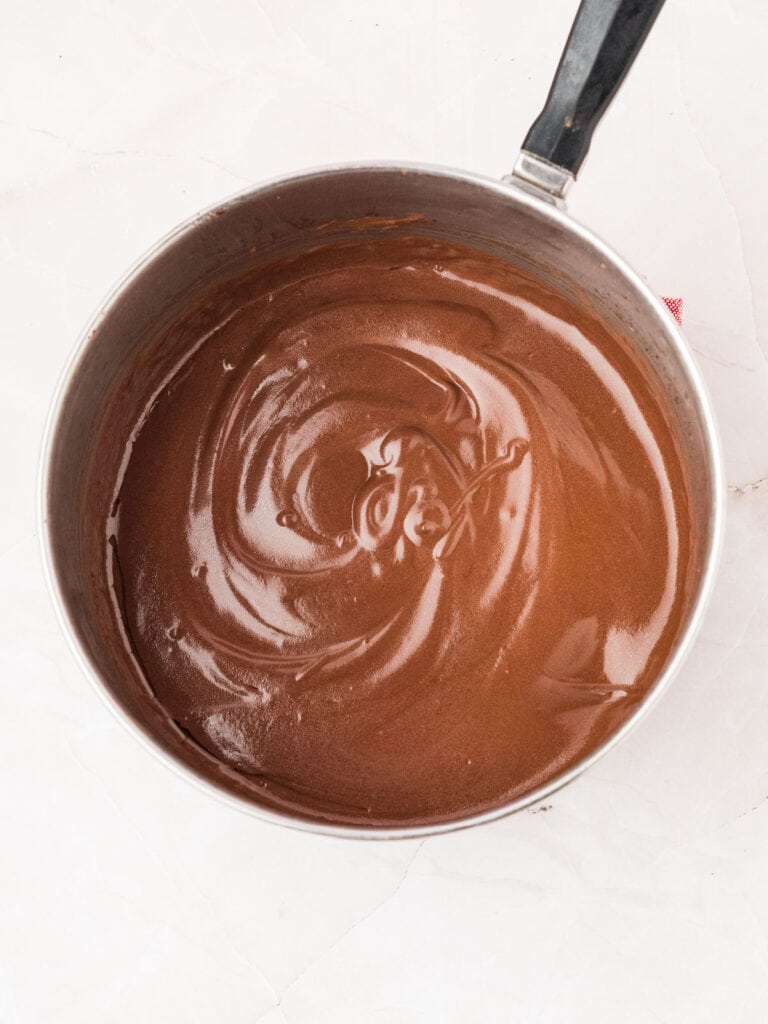
Chocolate custard
First, make the chocolate mixture on the stovetop. Make sure it's well integrated and smooth.
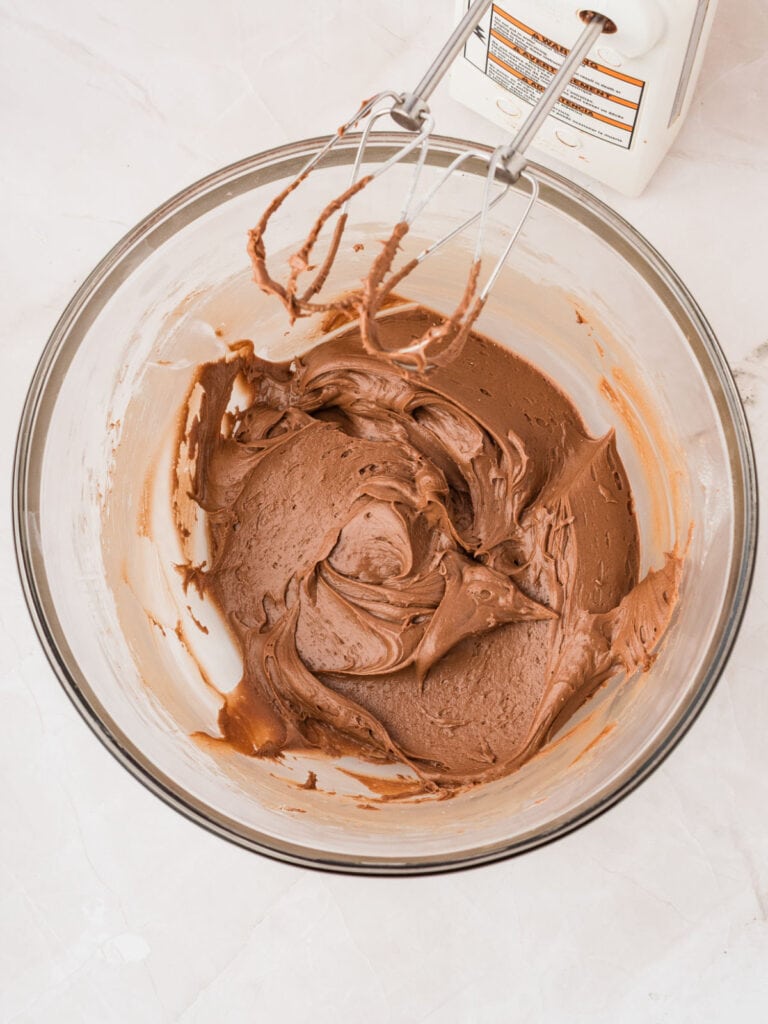
Final frosting
Once you add the powdered sugar, it's shiny and creamy. You'll want to eat it with a spoon, just saying!
Important: if you want a more pourable icing, reduce the amount of powdered sugar.
Have it ready before you remove the cake from the oven.
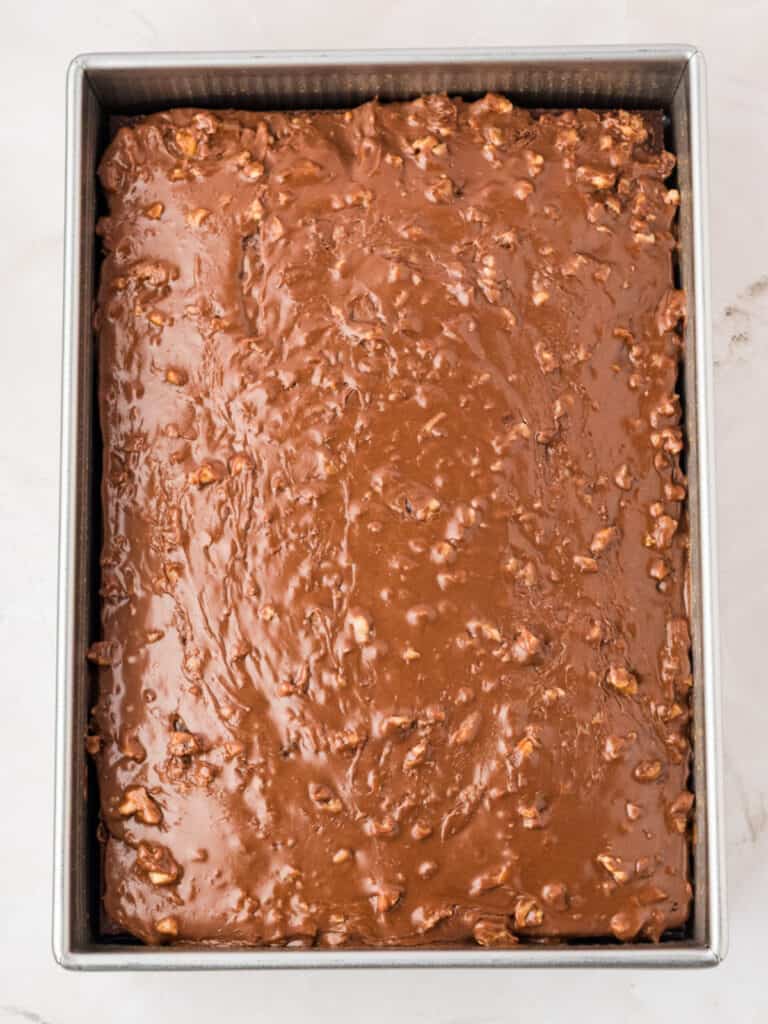
Frost the cake
Pour or spread the chocolate mixture while the cake is still hot. It will seep more into the baked cake, and the whole thing will be fudgier and moister.
If you made this recipe and loved it, you can comment below and leave a 5-star ⭐️ review. Also, if you had issues, let me know so we can troubleshoot together.
You can also subscribe to our FREE email series 'Baking the Best' and our regular newsletter. Or follow and save my recipes on Pinterest.
As an Amazon Associate, I earn from qualifying purchases. Read my disclosure policy.
Old Fashioned Texas Sheet Cake (with buttermilk)
Ingredients
Chocolate cake:
- 1 cup unsalted butter
- 1 cup water
- ⅓ cup unsweetened cocoa powder, I use Dutch-process cocoa powder
- 2 cups all-purpose flour
- 1 teaspoon baking soda
- ½ teaspoon salt
- ½ teaspoon ground cinnamon
- 2 cups granulated sugar
- 2 slightly beaten eggs, at room temperature
- ½ cup buttermilk, at room temperature
- 1 ½ teaspoons vanilla
Chocolate walnut frosting:
- ¼ cup butter or margarine
- 3 tablespoons unsweetened cocoa powder, I use Dutch-process cocoa powder
- 3 tablespoons buttermilk
- 2 ¼ cups sifted powdered sugar
- ½ teaspoon vanilla
- ½ cup chopped walnuts
Instructions
- Preheat oven to 350°F (180°C). Grease a 10x15-inch cake pan; set aside.
Make the cake:
- In a medium saucepan, combine 1 cup unsalted butter, 1 cup water, and ⅓ cup unsweetened cocoa powder. Bring to a boil, stirring constantly. Remove from heat.
- In a large mixing bowl, sift together 2 cups all-purpose flour, 1 teaspoon baking soda, ½ teaspoon salt, and ½ teaspoon ground cinnamon. Add 2 cups granulated sugar and stir to incorporate.
- Add 2 slightly beaten eggs, ½ cup buttermilk, and 1 ½ teaspoons vanilla to the dry the ingredients. Beat with an electric mixer on low to medium speed to combine.
- Add the cocoa mixture and beat until well blended, but don't overmix. Pour batter into the prepared pan.
- Bake for about 20-25 minutes or until the cake springs back when lightly touched and a cake tester or toothpick comes out clean. Sometimes it can take a few more minutes, so adjust the time to your oven. Don't overbake it. If using a half-sheet cake pan, the time will be less and vice versa if using a 9x13-inch pan.
- Remove from the oven, place the pan on a wire rack and poke the surface with a brochette stick or toothpick. This can be optional, but the icing seeps a little into the cake and makes it moister.
- Immediately pour hot chocolate frosting (below) over the warm cake and carefully spread it to cover the entire cake as evenly as possible.
- Completely cool the cake in the pan before cutting it into squares.
- Store leftovers, well covered to avoid dryness, at room temperature for 3 days, a week in the fridge or a month in the freezer. Eat at room temperature.
Make the chocolate frosting:
- In a medium saucepan, stir together ¼ cup butter or margarine, 3 tablespoons unsweetened cocoa powder and 3 tablespoons buttermilk.
- Cook over medium heat, stirring until it breaks into a boil; remove from heat.
- Beat in 2 ¼ cups sifted powdered sugar, sifted for easier mixing, and ½ teaspoon vanilla with an electric mixer at low speed until blended.
- Stir in ½ cup chopped walnuts and mix to incorporate.

Rate and review this recipe