


This recipe keeps the soul of an old-fashioned pound cake: rich, dense, reliable, but brightens it up with fresh orange zest and enough cranberries to make every slice pop up. The glaze is a citrus finishing coat that pulls everything together. It's quick, forgiving, and perfect if you like a little shine on your bundt.
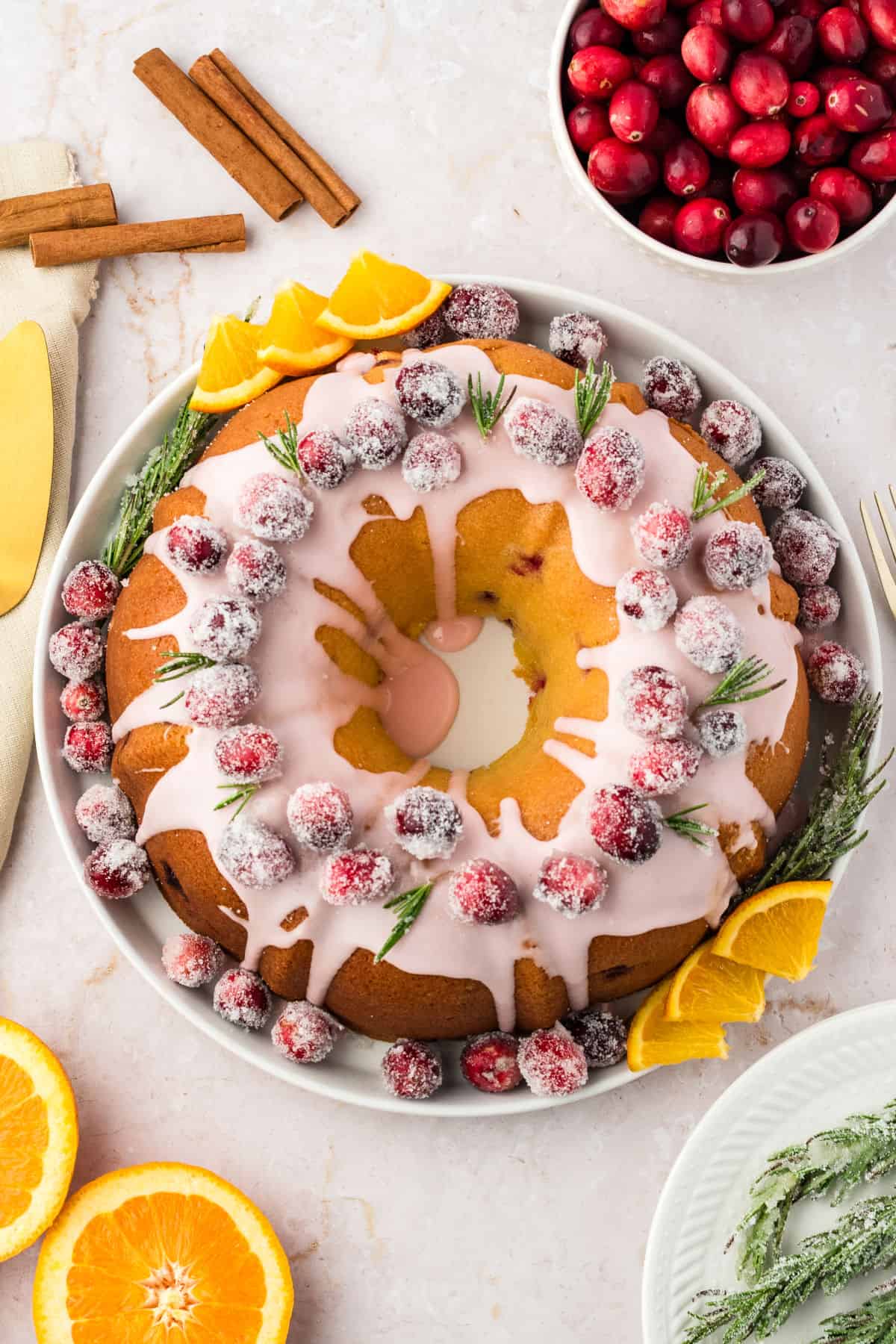
Festive dessert cake
It's that time when sparkly cranberries take center stage. And I do love sour in a cake, so all I want for Christmas is this cake. Yes, you can add some music to that, lol.
With its eye-catching glaze and sugar-coated cranberries, this recipe is perfect for a holiday brunch or Christmas potluck and has enough sweetness to balance the tart cranberries.
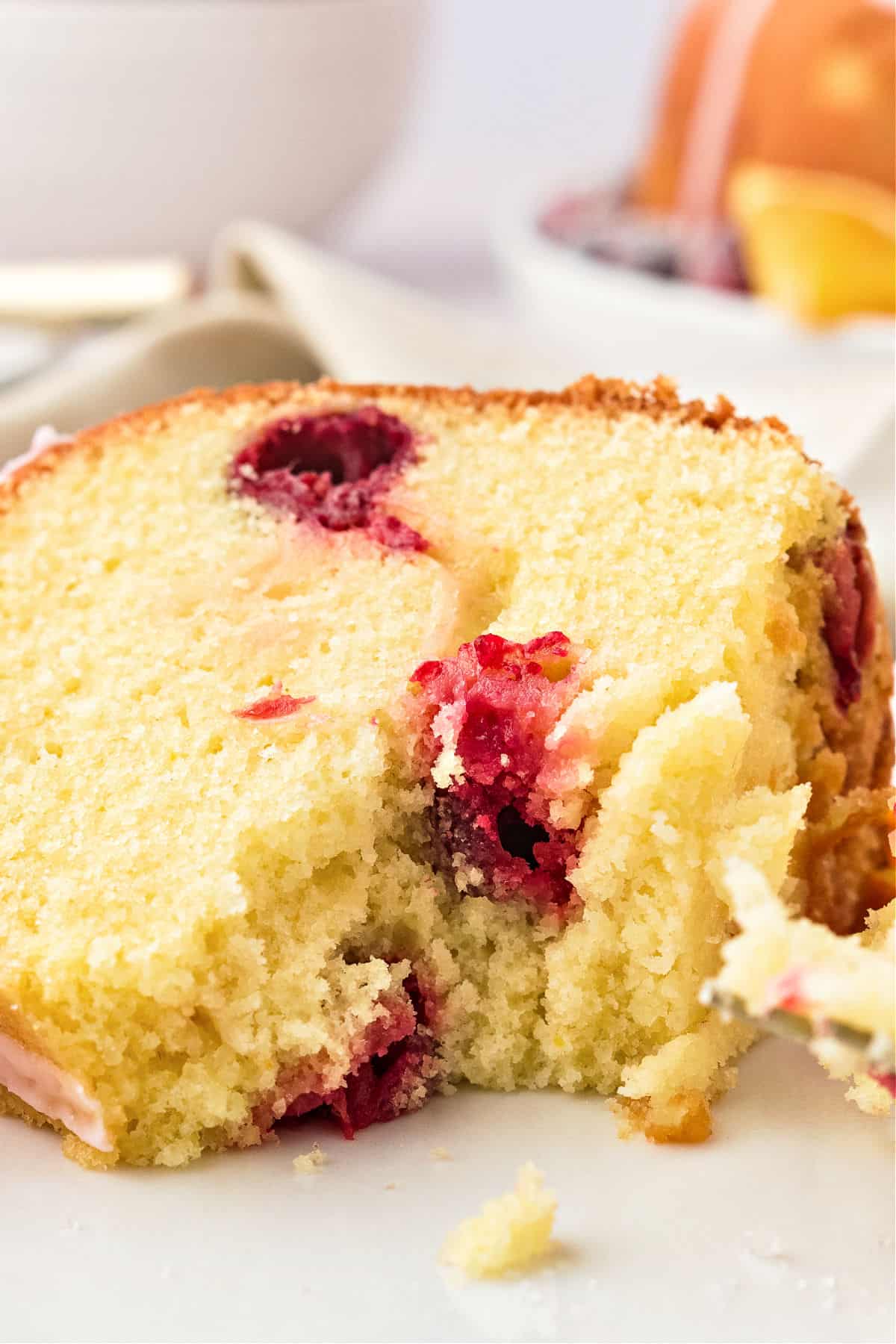
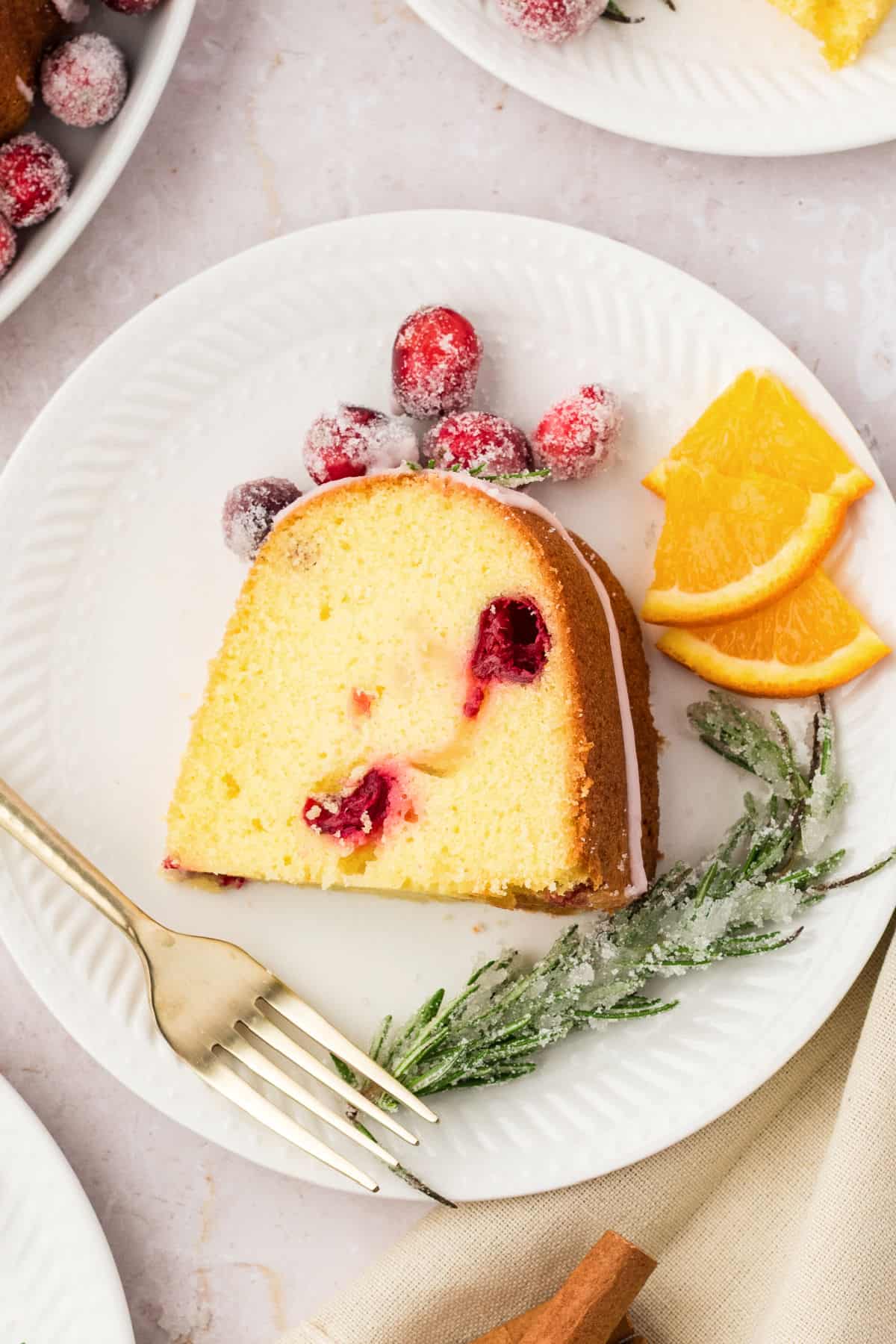
This pound cake is dense but tender because the butter and cream cheese are creamed until very light, the room-temperature eggs create lift, and the milk-orange juice mixture keeps the crumb moist without heaviness.
The glaze adds moisture, extra orange cranberry bright flavor, and a natural pale pink color.
It's a festive twist on this raspberry bundt cake, and more of a centerpiece than the simple cranberry coffee cake.
Testing Notes
Fresh cranberries or frozen ones can be used; both work. Frozen can be used straight from the freezer. I recommend using whole berries. You can chop them if you want to, but the color will be messy, and it's good to bite into an orange cake with tart bursts of cranberries.
The mixing technique affects texture. Always sift dry ingredients first to add air to the batter. When combining wet and dry ingredients, beat just until everything is well incorporated; overmixing develops gluten and creates a heavier cake. Alternate dry and wet ingredients for best results; they incorporate better. Start and end with dry ones.
This is a large cake, so using a large bowl with an electric mixer or a stand mixer with a paddle attachment is the best option, as it aerates the batter well. It's not a cake to make by hand.
Bundt cake pans I use: Though I tried numerous ones with different patterns, I now gravitate toward simple pans without intricate patterns. The cakes look plainer but are easier to remove, which is a big plus for me. The Nordic Ware elegant party bundt is my latest favorite, and the classic fluted bundt pan will always have a place in my kitchen.
Proper preparation and cooling are essential. Make sure your bundt pan is correctly prepared according to recipe instructions. Always use a cooling rack for dense cakes like this - if you don't have one, place the pan on something that allows air flow underneath, like stovetop burners.
The cake actually improves after the first day as flavors develop and the crumb settles, making it an excellent make-ahead option. Always serve at room temperature for the best flavor experience, as cold temperatures mute the taste. If making it in advance, freeze the whole cake without the glaze, so you don't crush it. Thaw at room temperature and glaze an hour or so before serving.
The cake can sit at room temperature for a day or two under a cake dome or loosely covered. Then, it should be refrigerated or frozen. The fridge clumps it a little, making it denser, so I'd rather freeze leftovers after a few days. I always slice it first. To freeze, cover first in plastic wrap and then aluminum foil or use a freezer-safe container. Thaw at room temperature.
Baking times vary between ovens and pans, so use visual cues and toothpick tests rather than relying solely on timing. An oven thermometer helps ensure accurate temperature.
Preparing the bundt pan
If you bake bundt cakes often, you've likely had one stick to the pan. It's frustrating-but preventable. Here are three reliable methods:
- Shortening and flour: Coat the pan thoroughly with soft shortening using your fingers or a brush, making sure to reach every corner, including the center tube. Dust with flour, rotating the pan to cover evenly, then tap out the excess over the sink.
- Cake goop (pan-release paste): Mix equal parts shortening, flour, and oil into a paste. Brush it onto the pan. Store leftovers in a jar-1 month at room temp or up to 3 months in the fridge. This is one of my favorite methods.
- Baking spray with flour: Only use baking spray that includes flour. Regular cooking spray isn't enough and often leads to sticking. I rarely use this anymore.
The recipe matters too: When I find a bundt cake that releases cleanly, even without perfect prep, I hold onto it-it's a keeper.
Process steps
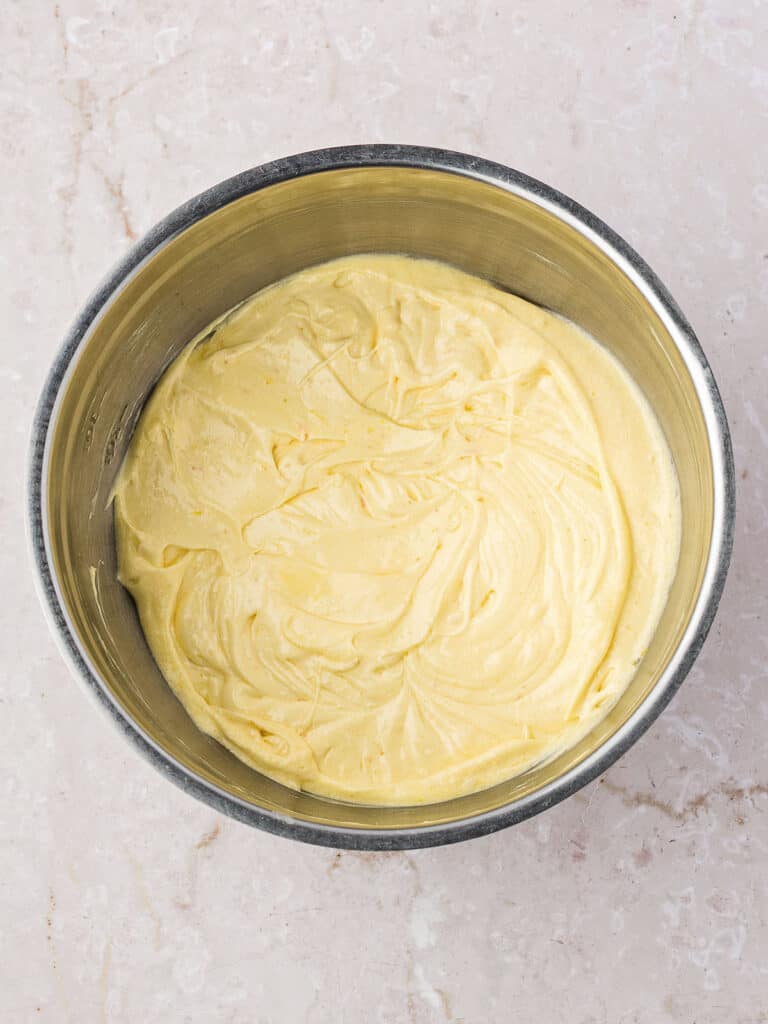
Cake batter
Make sure the butter is softened and well integrated with the sugar and eggs. This should take several minutes.
I use a large bowl and an electric mixer, but you can also use a stand mixer with the paddle attachment at medium speed.
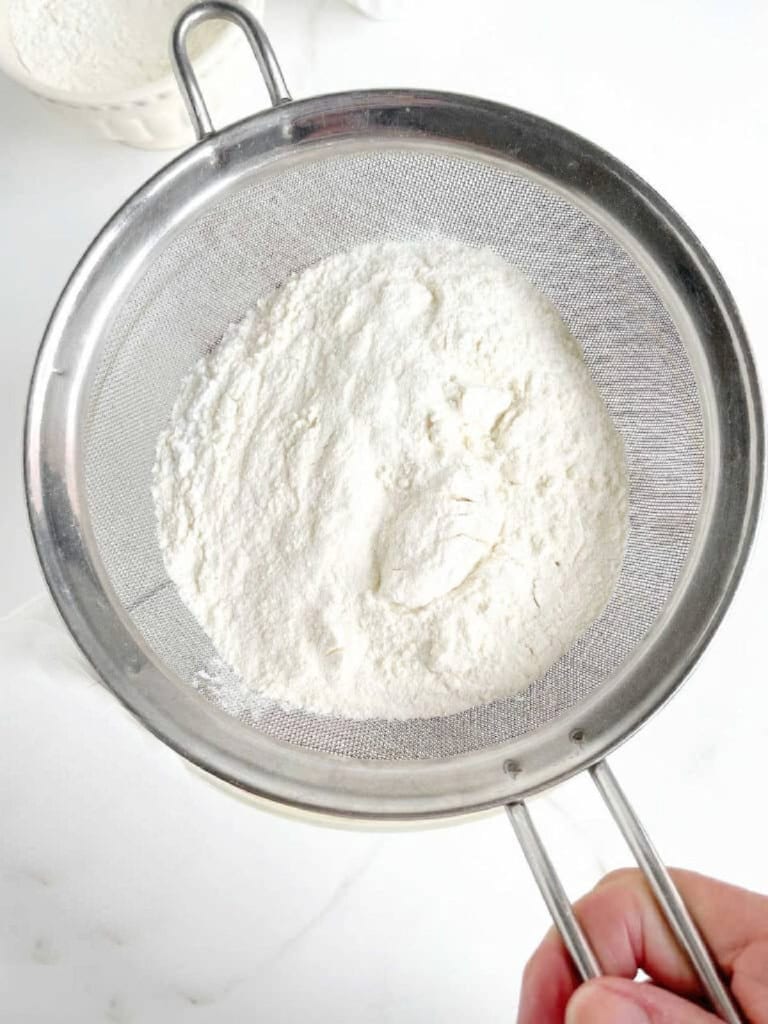
Sifting
The flour mixture has to be sifted to avoid impurities or clumped ingredients.
I have them measured and sift them directly over the batter, but you can sift them in another bowl first.
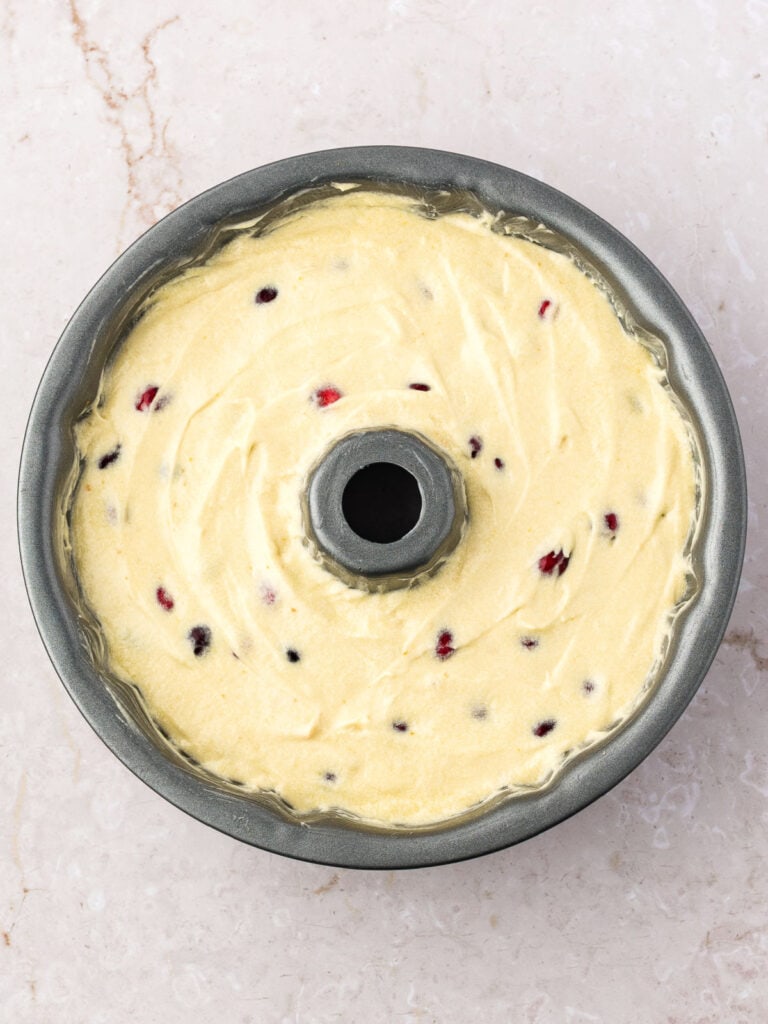
Cake batter
Bundt pans should not be filled more than ¾ of their capacity to avoid overflowing and allow the cake to bake well.
I favor simple patterns as there's less chance of the batter sticking.
Bundt cake baking tips
- Use the right-sized pan: this is important to avoid overflow and for the cake to fully bake in the estimated time. Though there can be variations due to ovens and pan materials, make sure the size is right, and it's not filled more than ¾ of its capacity.
- Cracked top: This is to be expected, so don't think there's something wrong if you're new to bundt cakes.
- Removing the cake from the pan: let it cool for 15 minutes, put a wire rack or plate covering the pan and carefully flip it over. The cake should release easily if the pan is well-greased. When you find a pan and a greasing method that works like a charm for you, don't let it go.
- Use a brochette stick or cake tester: place it in the middle of the batter. It should come out clean, with no crumbs or wet batter attached.
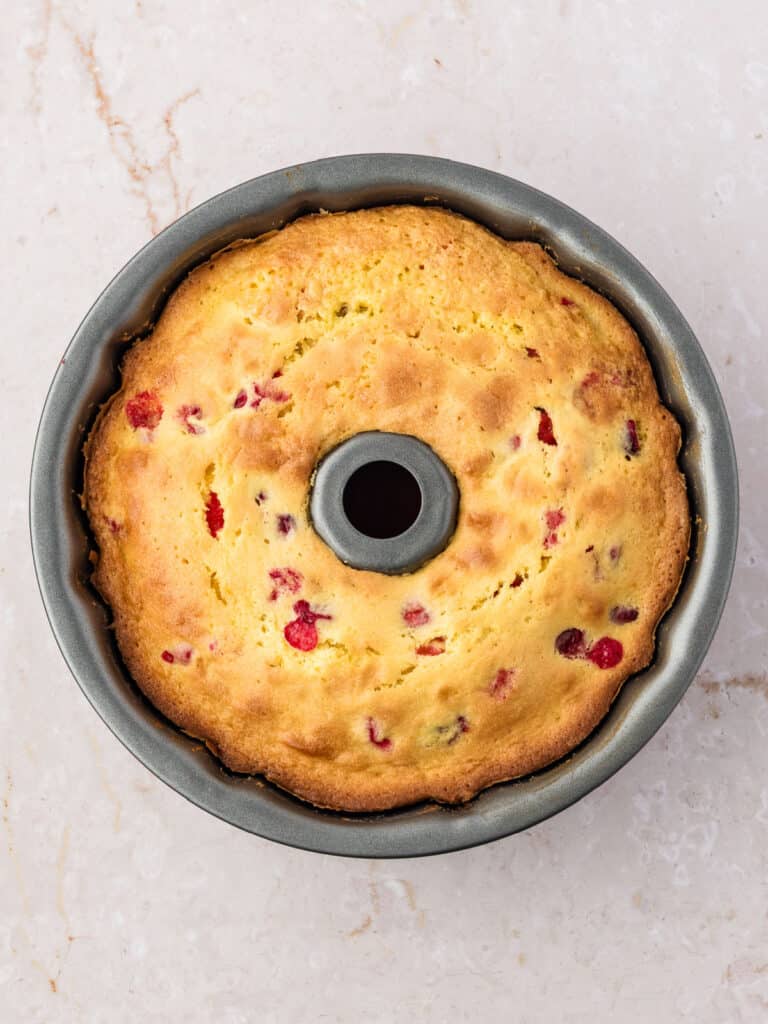
Releasing it from the pan
It will puff and then shrink a little as it cools down.
I wait about 20 minutes to remove it from the pan, but first, I check that the sides and center tube are not sticking (I use a smooth-bladed knife). Then, I flip it carefully as the cake is still tender and warm.
Pale pink glaze
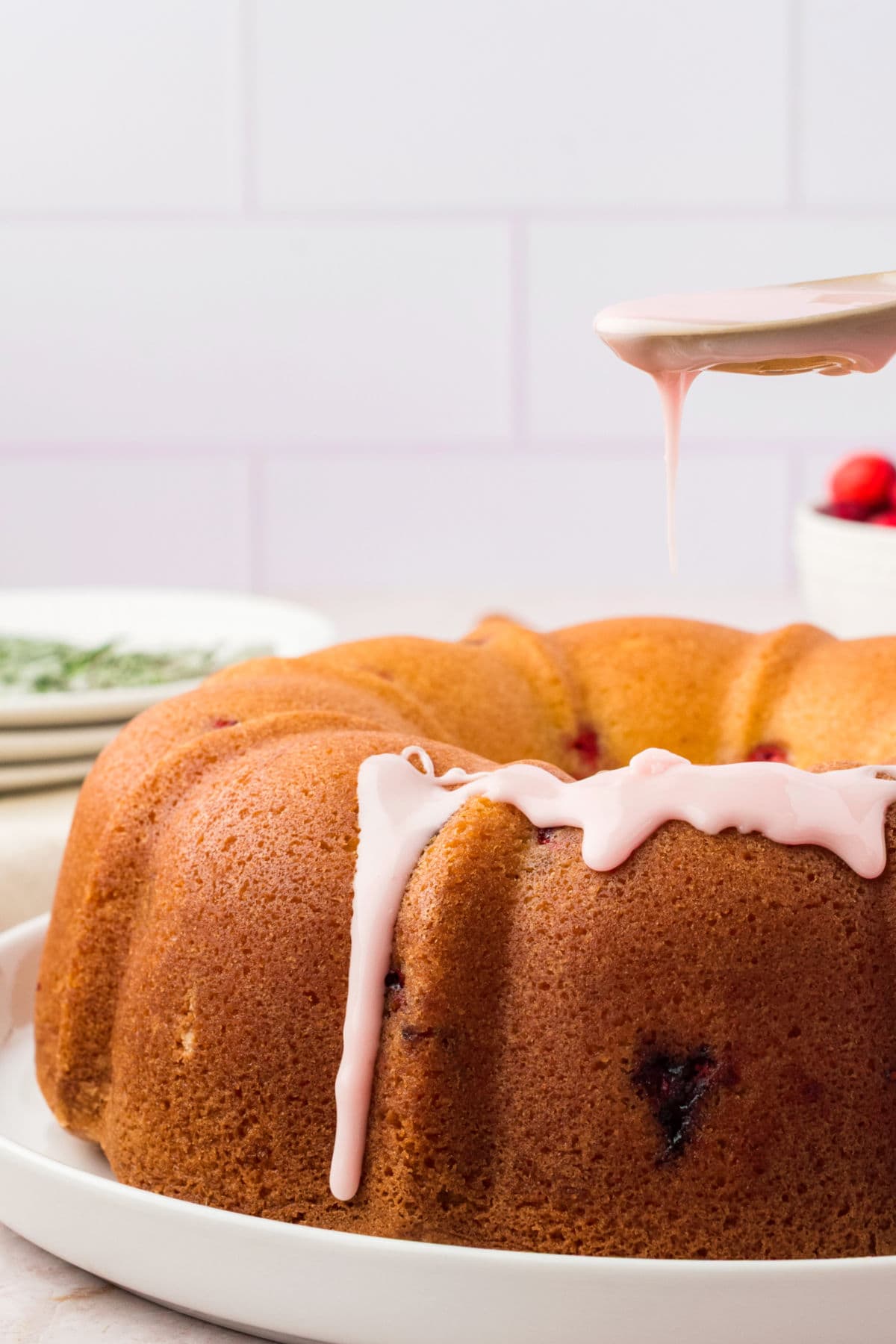
The lovely and very popular powdered sugar glaze is sweet and perfect for bundt cakes. To get a pale pink color, we use some cranberry juice together with orange juice, so you get a change from white and add some extra flavor.
To achieve a thick layer of icing, add juice until it has the consistency of very thick honey. It'll feel as though it's too dense, but when you pour a glaze, it takes a minute or more to fully run down the sides.
Place the cake on a wire rack over parchment paper and drizzle the pink glaze. You can scrape the glaze that dripped with a spatula to reuse it. Pour it over again quickly so the first layer doesn't settle much, or you won't have a smooth finish.
If using sugared cranberries, add them as the glaze is setting, but is not completely dry.
Pan sizes
Though this is a bundt cake, it is the type of recipe that can be made in different pans:
- Bundt cake - I use a 10-12 cup bundt cake pan, also known as a large bundt pan. This recipe also makes about 6 individual bundts, like the Coffee Chocolate Bundt Cakes.
- Sheet cake - bake it in a 9x13-inch cake pan and top it with orange-flavored cream cheese frosting.
- Loaf cake - one recipe yields 2 medium loaf pans. For a smaller cake, halve the recipe and make 1 loaf.
- Layer cake - I recommend two or three 8-inch layers. Fill with cream cheese orange frosting, like the sheet cake above. But don't overdo it so you have a lot of citrus flavor and crumb to bite into.

If you made this recipe and loved it, you can comment below and leave a 5-star ⭐️ review. Also, if you had issues, let me know so we can troubleshoot together.
You can also subscribe to our FREE email series 'Baking the Best' and our regular newsletter. Or follow and save my recipes on Pinterest.
As an Amazon Associate, I earn from qualifying purchases. Read my disclosure policy.
Orange Cranberry Bundt Cake with Citrus Glaze
Ingredients
For the cake:
- 1 tablespoon orange juice
- ¾ cup milk
- 1 cup unsalted butter, at room temperature
- 4 ounces cream cheese, at room temperature
- 2 cups granulated sugar
- 6 large eggs, at room temperature
- 1 tablespoon finely grated orange zest
- ½ teaspoon vanilla extract
- 3 cups all-purpose flour
- 1 ½ teaspoons baking powder
- ½ teaspoon salt
- 2 cups fresh or frozen cranberries, no need to thaw if frozen
For the cran orange glaze:
- 1 cup powdered sugar
- 1 tablespoon cranberry juice, fresh or bottled
- 1 tablespoon orange juice, fresh or bottled
Instructions
- Grease a large 10-12 cup bundt pan with soft shortening, cake goop, or baking spray with flour. Flour it if using the shortening option, shaking off excess. Set aside. See Notes below for more info.
- Preheat the oven to 350°F (180°C).
Make the orange cranberry batter:
- Stir 1 tablespoon orange juice into ¾ cup milk and let it sit for a few minutes; it might slightly curdle.
- In a large mixing bowl, beat 1 cup unsalted butter and 4 ounces cream cheese, softened, until smooth. Add 2 cups granulated sugar on medium-high speed and beat for 3-4 minutes, until pale and fluffy.
- Add 6 large eggs, one at a time, beating well after each addition.
- Mix in 1 tablespoon finely grated orange zest and ½ teaspoon vanilla extract.
- In a separate bowl, sift 3 cups all-purpose flour, 1 ½ teaspoons baking powder, and ½ teaspoon salt. You can sift them before in a separate bowl or have the ingredients measured and sift them directly over the butter mixture when prompted (my choice).
- Add the dry ingredients in 3 additions, alternating with the orange milk in 2 additions, beginning and ending with flour. Mix on low speed just until well combined; don't overmix or the cake will be tough.
- Gently fold in 2 cups fresh or frozen cranberries using a spatula, making sure not to crush them too much. There should be no streaks of flour in the bottom of the bowl. Pour the cake batter into the prepared bundt pan.
- Bake for 20 minutes at 350°F (180°C), then reduce the oven to 325°F (165°C) and bake 35-40 minutes more, or until a toothpick inserted into the center comes out clean. Time might vary depending on your oven and the pan you use.
- Let the cake cool in the pan on a wire rack for about 15 minutes, then carefully invert onto a wire rack. Cool completely before glazing.
Make the cranberry orange glaze:
- In a medium bowl, combine 1 cup powdered sugar with 1 tablespoon cranberry juice and 1 tablespoon orange juice.
- Mix until it's completely smooth, and you reach a thick but pourable consistency (like very thick honey).
- Drizzle over the completely cooled cake.

Rate and review this recipe