




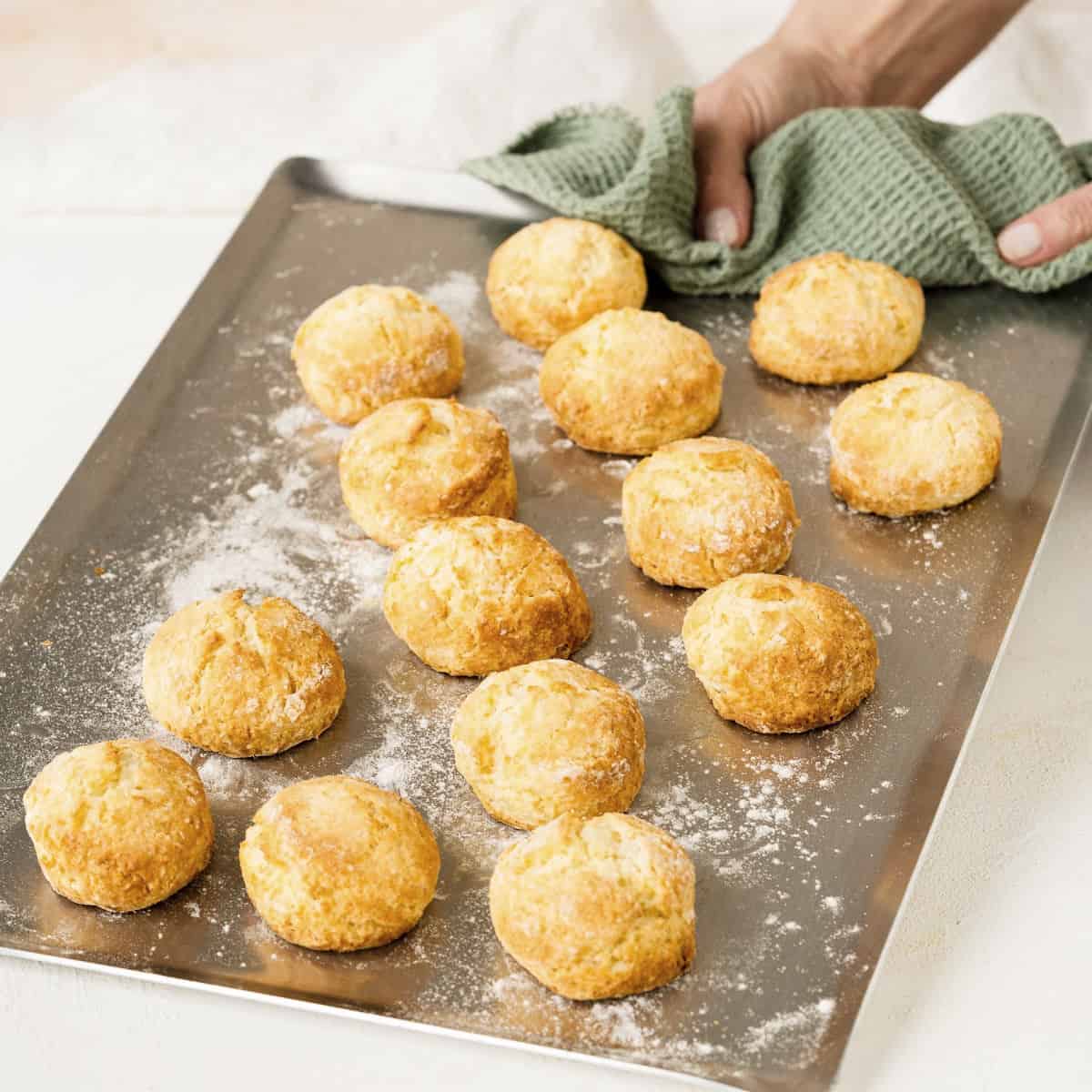
If you're a scone fan like me, you'll love this simple recipe, which is ready in less than an hour. Scones with buttermilk are soft and fluffy, with a tender crumb. All my top tips are included so you can make the best scones, even if you're a beginner. Did you know you can freeze them? That way, you can have freshly baked scones to order.
SAVE THIS RECIPE
A classic recipe
A neutral, very balanced buttermilk scone, neither sweet nor salty. They have a great crumb, dense enough but not heavy, with enough butter flavor to eat them plain.
It's a recipe to eat warm with butter and jam. Or whatever suits your fancy, just like with these mini scones or English raisin scones, two of our top bakes for brunch and afternoon tea.
Scone-making is a big deal in my family. My Irish great-grandmother passed down the recipe, according to everyone, just like she did with the Irish soda bread. But no one got the same results. They were always almost as good.
Or so they say. I never met her. And never ate scones made by her. I had an aunt who made them, and they were good.
Well, they have nothing to envy these buttermilk scones; these might even be better. The nerve, I know, if the family could hear. But it's true.
Why use buttermilk?
It makes scones more tender, so they have a better crumb and a richer texture. Depending on the amount used, it can also add a slight tang. This recipe is very balanced, flavor-wise.
Buttermilk can be purchased in the grocery store or online, or you can easily make your own (find how-to in the recipe card's notes).
- Mary ⭐️⭐️⭐️⭐️⭐️
Excellent recipe! These are the lightest scones I ever made. I put my dough into a cast iron skillet to save time cutting out rounds, and it baked beautifully ☆☆☆☆☆ Thanks for this fabulous recipe!
- Ali ⭐️⭐️⭐️⭐️⭐️
I've tried several scone recipes, and these are the best!
- Swati ⭐️⭐️⭐️⭐️⭐️
Super easy and absolutely delicious scones!! Usually, my scones turn out to be hard, but this recipe gave the absolute perfect scones... no need to buy them anymore. Must try!!

Testing notes
Paula's baking tips that can make a difference.
Baking powder: It's essential to help the scones rise, so make sure it's not expired.
Very cold ingredients: I'm not kidding when I say very cold butter. I cut it and put the pieces in the freezer for 5 minutes before using them. And don't take the liquid ingredients out before you start mixing the scones. They belong in the fridge until you need them.
Don't work the dough much. It should come together, but might still have floury patches. You don't need to work it until it's smooth, like pie dough. It is uneven, with dry spots sometimes, and that's good for flakiness later.
A rather high oven is necessary: they need that extra heat (and baking powder) to rise. If you happen to forget to turn the oven on before you start mixing, please don't leave the baking sheet with the cut scones waiting on the counter. Put them in the fridge or freezer for the ten or fifteen minutes it takes for the oven to reach its temperature.
Chill before baking: To get tender and fluffy results, the scones need to be cold before going into the oven. So put the tray with the cut scones in the freezer for 15 minutes before baking.
These are a blank canvas for other flavors. You can add citrus zest, seeds (lemon and poppy seeds always work), vanilla extract, ground spices such as cardamom or cinnamon, mini chocolate chips, dried cranberries or raisins, or a tablespoon of minced herbs for a savory touch. Don't go crazy; just add ¼ cup or so of dried fruit or nuts and ½ a teaspoon of extracts or spices. This is not a large recipe.
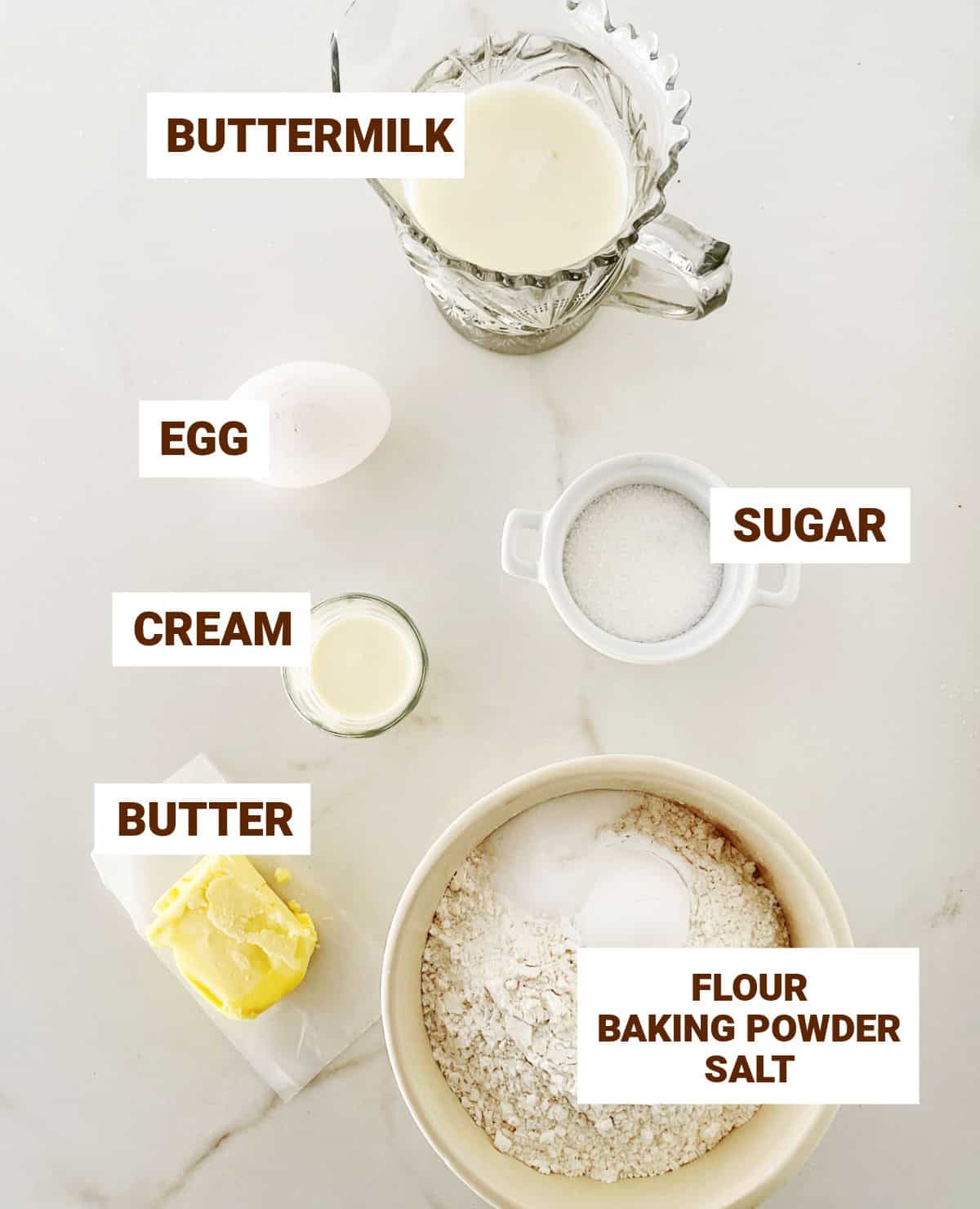
Quantities are listed on the recipe card towards the end of this post. The Ingredients page has more details and lists the brands we use.
Steps to make scones
The mixing of dry ingredients with butter can be done in 2 ways:
- By hand - a bowl where you integrate the cold butter with your hands or with a pastry cutter. This can take a few minutes as the butter needs to be the size of peas and small beans because it will be irregular.
- Food processor - the butter and dry ingredients are integrated by pulsing a few times. This is way faster and less messy (no hands involved), and the only thing to watch out for is not getting carried away and processing too much. The butter pieces should be irregular, the size of peas and beans.
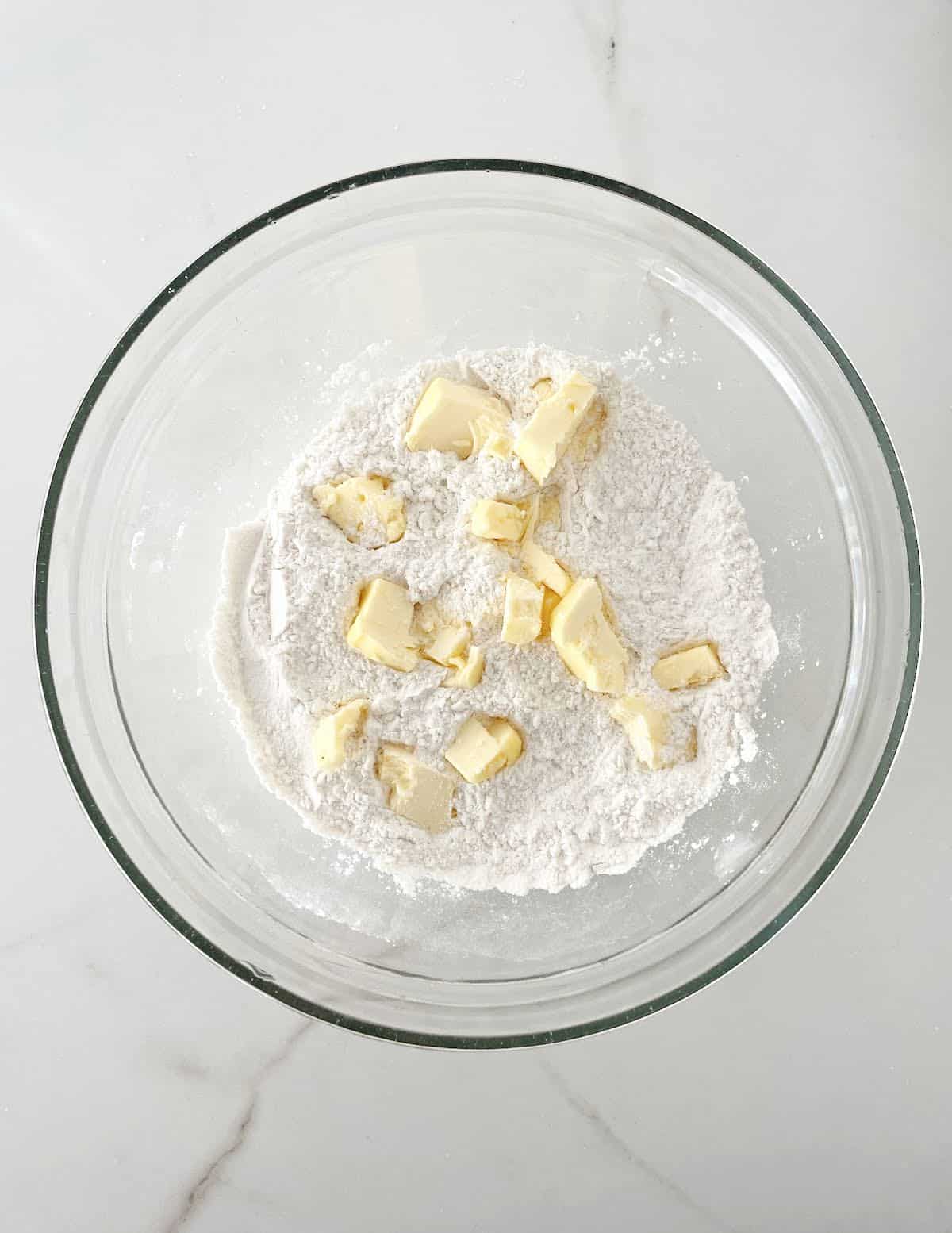
- Stir to combine the dry ingredients in a large bowl and scatter cold butter pieces on top.
- Work the butter with your hands or a pastry blender until the pieces are the size of small beans. It will be irregular.
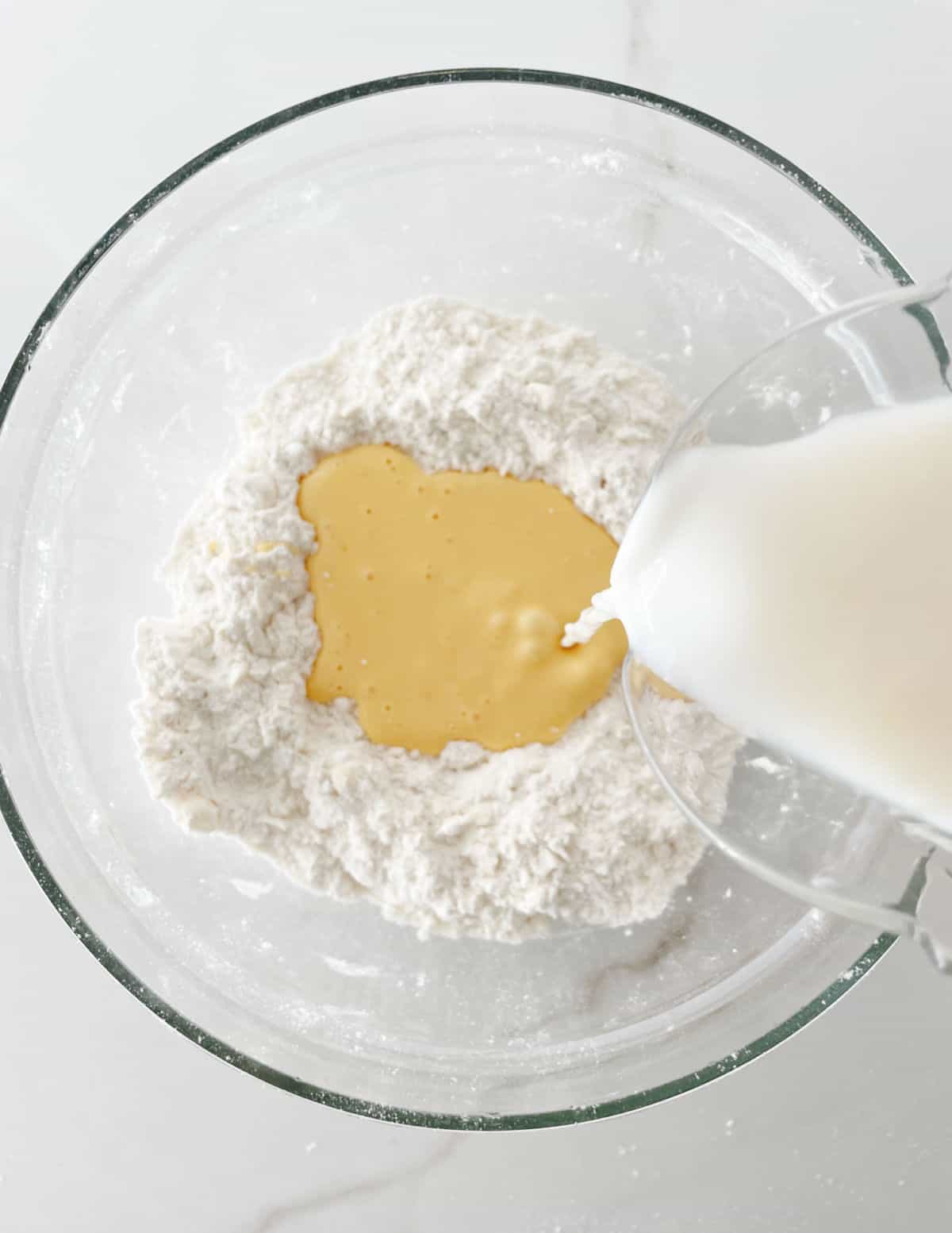
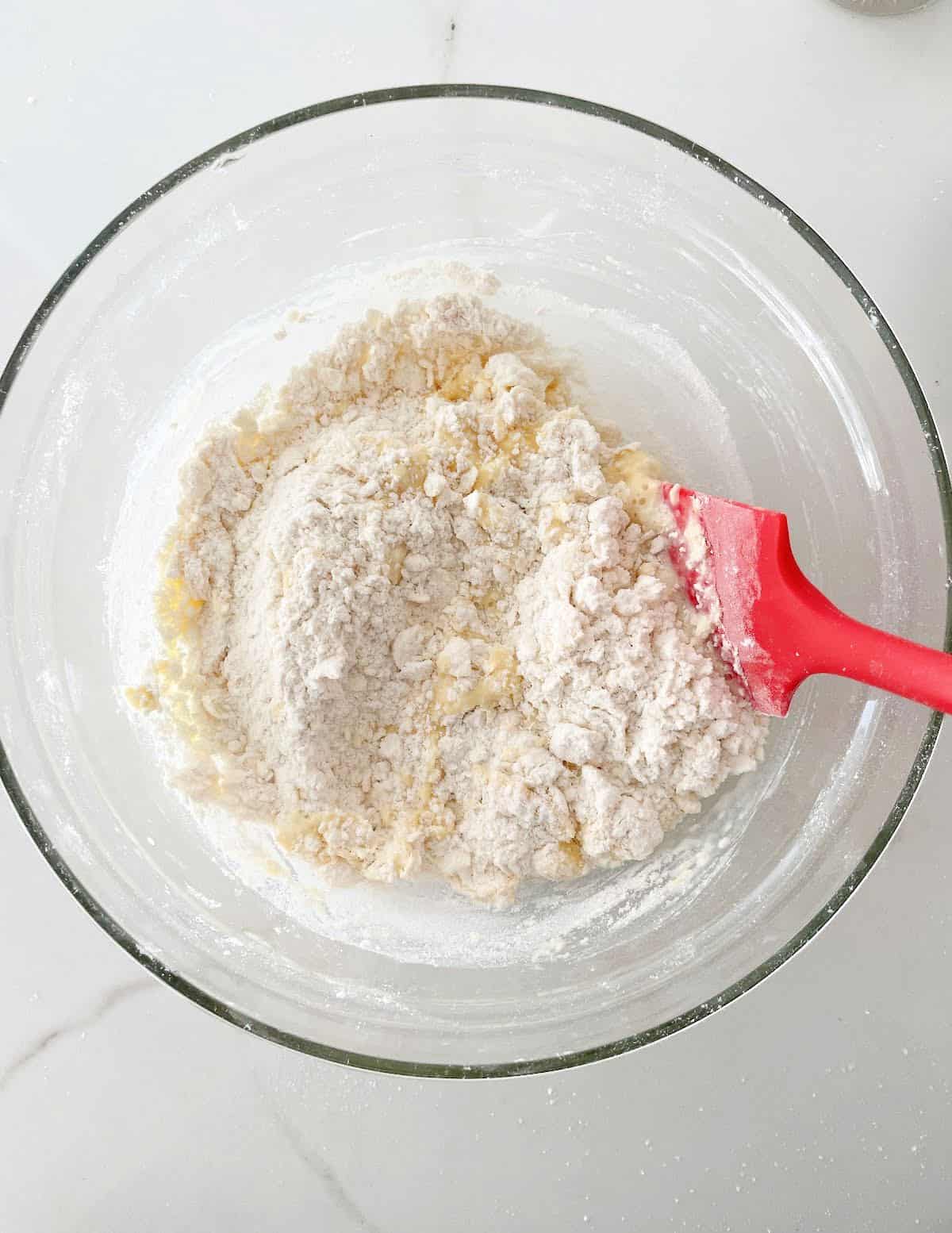
- Lightly beat the egg in a small bowl and mix it with the buttermilk and cream. Add the wet ingredients to the dry ingredients and stir with a fork until a few dry spots are left. Don't overmix!
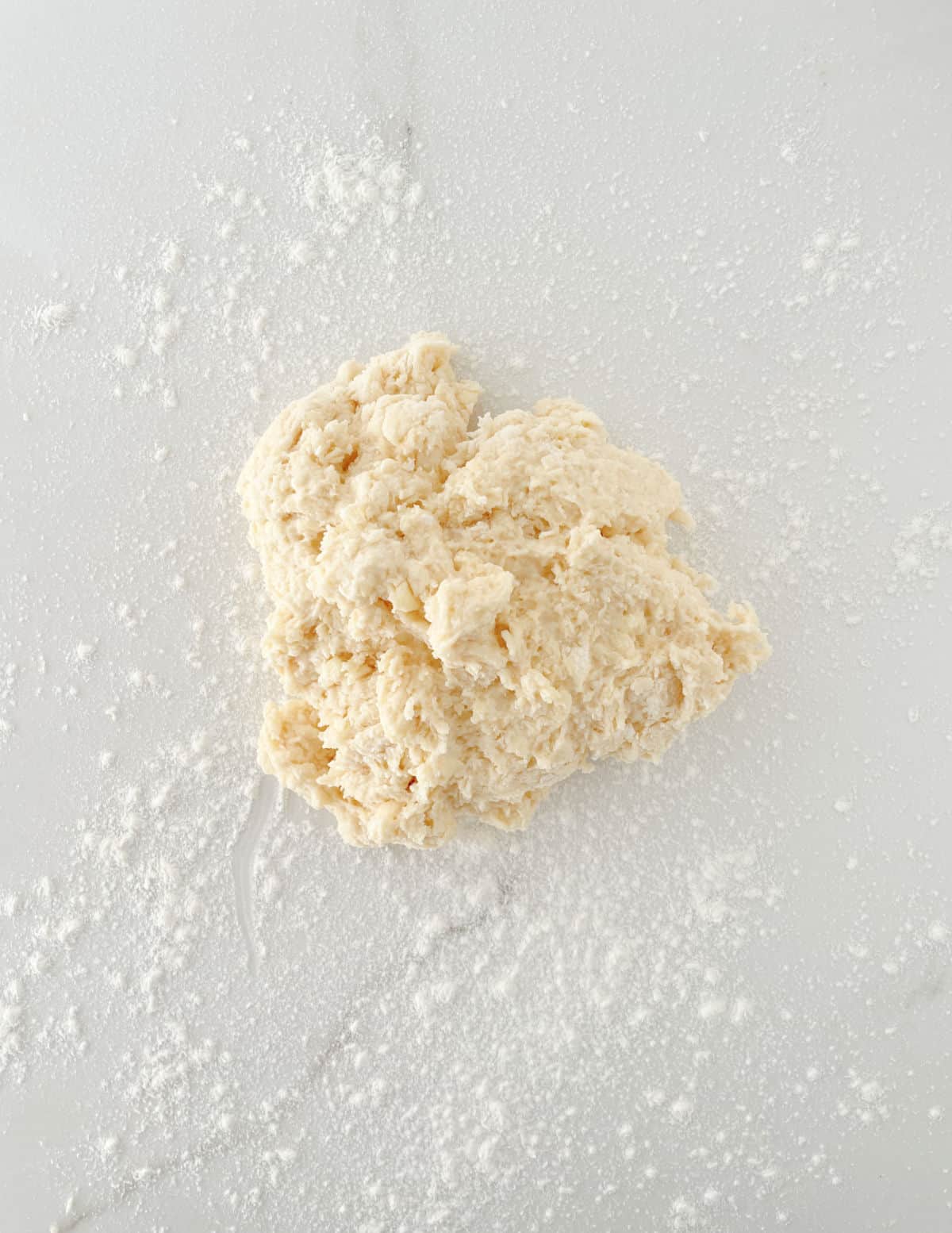
- Transfer the shaggy scone dough to a lightly floured surface. Gather it into a disc, folding it onto itself (to create layers and thus, flaky scones) and patting it lightly, and working it as little as possible. A dough scraper (like a large spatula) helps with this part. It will be irregular, and some spots will be more floury than others.
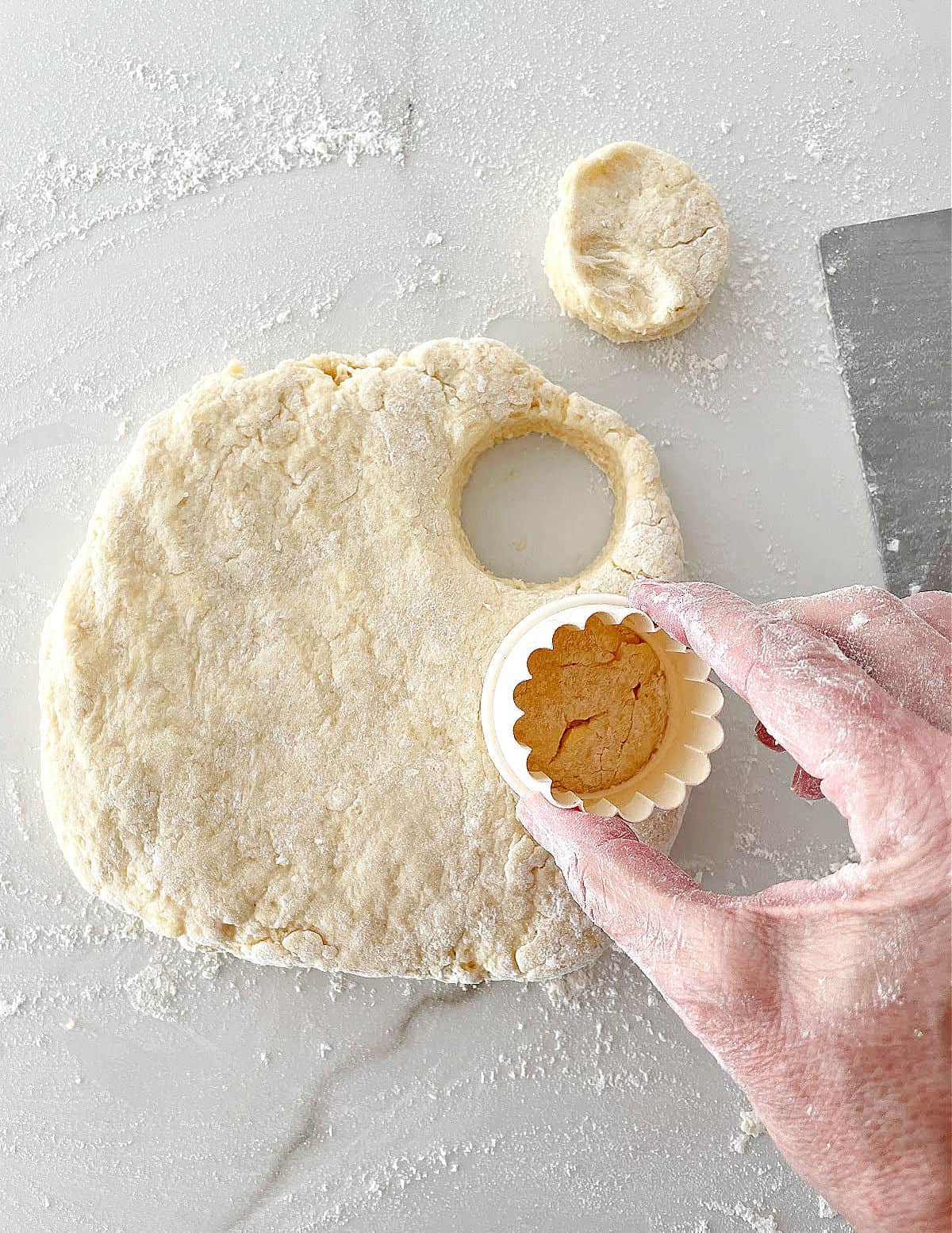
- For classic round scones, use a medium round cookie cutter. For wedges or triangles, use a kitchen knife, as we do with the orange cranberry scones.
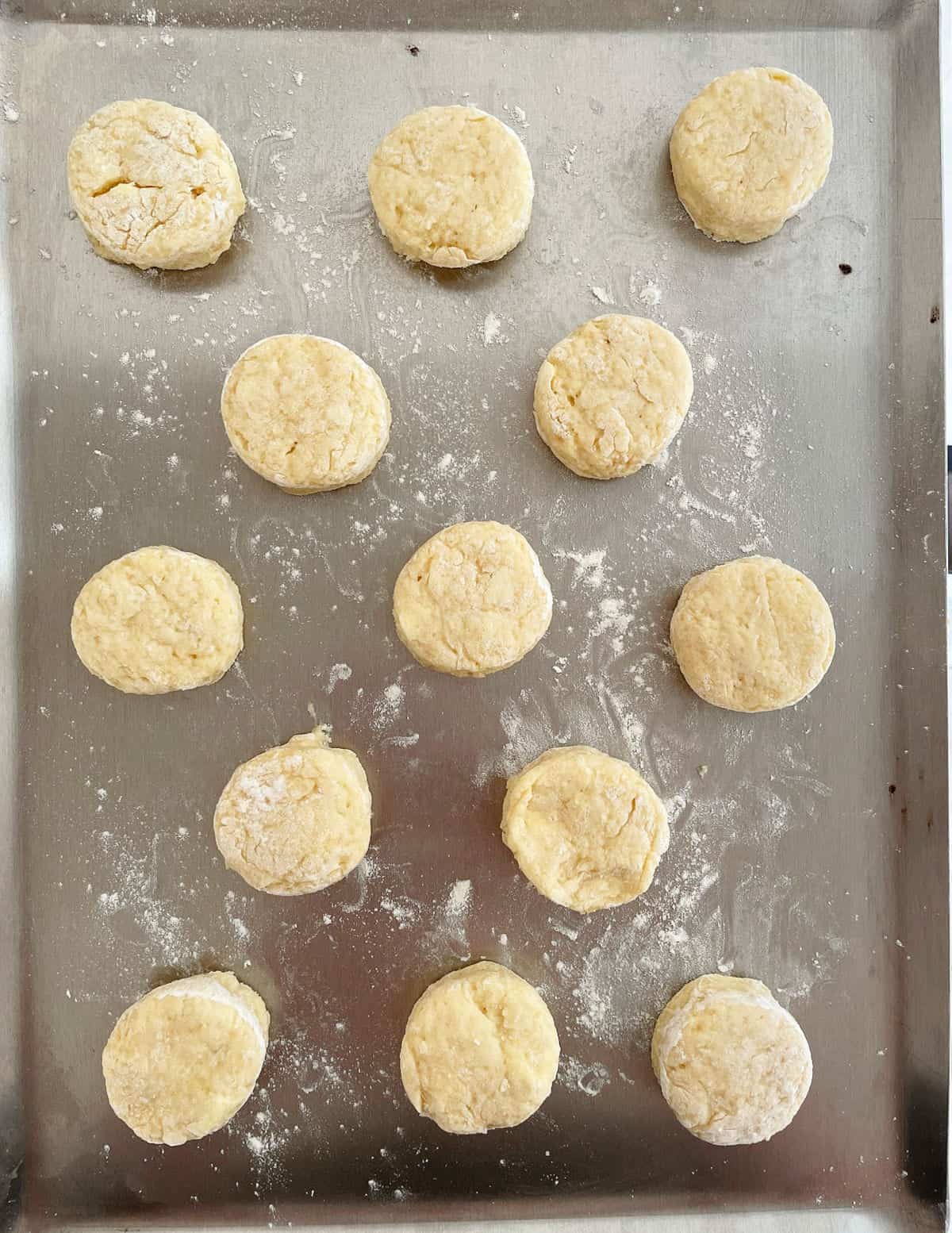
- Place them on a cookie sheet lightly dusted with flour. They should not stick after being baked, but if you're more comfortable lightly buttering the sheet or using parchment paper, go ahead.
Baking
- Preheated oven: this is non-negotiable. Scones need the first spring that the hot oven provides. If you forgot to turn it on, leave the cut scones in the fridge or freezer while the oven preheats to the correct temperature.
- When are they baked? The best way is to lift one a little with a fork and check that the inside is fully baked. It should de dry, not wet.

Freezing scones
Scones freeze like a dream. You can keep a batch frozen at all times and bake to order!
Freeze the already-cut rounds until they are rock solid, then transfer them to a freezer-safe bag. That way, they will be covered and occupy much less space in your freezer.
When you crave warm, fluffy scones, bake them directly from the freezer in a 375°F/190°C oven.
Coatings
I like them plain; they turn out with a matte floury finish that I love. But I think most people prefer a shiny coating before going into the oven, so they bake to a bright golden brown. So here are some ideas:
- Brush them with milk/egg and sprinkle them with sugar for a sweeter and crunchier version
- Brush them with water, and sprinkle with grated Parmesan or sesame seeds to make them savory. Eat them with ham and cheese.
- Brush them with egg wash (an egg, lightly beaten with a tablespoon of water) for a more golden finish.

As an Amazon Associate, I earn from qualifying purchases. Read my disclosure policy.

Fluffy Scones with Buttermilk (freezable)
Ingredients
- 2 cups all-purpose flour
- 2 ½ teaspoons baking powder
- 1 teaspoon salt
- 3 tablespoons sugar
- 4 tablespoons butter, very cold and in small pieces
- 1 egg, cold
- ½ cup buttermilk
- 2 tablespoons whipping or heavy cream, cold
Instructions
- Make sure the ingredients are cold. I put the butter pieces in the freezer for 5-10 minutes, and keep the buttermilk and cream in the fridge up to the last minute.
- Have ready a cookie sheet lined with parchment paper, greased or dusted with a little flour.
- Preheat oven to 375ºF (190ºC).
- In a large bowl, put 2 cups all-purpose flour, 2 ½ teaspoons baking powder (don't forget it or your scones won't rise!), 1 teaspoon salt and 3 tablespoons sugar. Stir to mix.
- Scatter 4 tablespoons butter, cold and in small pieces, on top and start working it into the flour mixture. You can use a dough cutter. Mix it with the dry ingredients, but be careful not to warm it too much. If you feel it starts to soften, pop the bowl in the fridge for a few minutes, or the freezer, until it firms up again. The butter should have some pieces the size of peas.
- Lightly beat 1 egg in a small bowl to mix it, so it integrates better.
- Make a well in the middle of the dry ingredients, and add the egg, half the buttermilk, and 2 tablespoons whipping or heavy cream.
- With a fork or spoon, lightly stir and begin to incorporate the flour. The flour and butter should be wet, but dry spots must be seen. Add the rest of the buttermilk a little at a time. You might end up using all of it or not.
- Transfer to a clean surface or counter that is lightly dusted with flour.
- Gather it and turn it onto itself a few times. The dough will be floury and messy, but you don't want to work it too much or make it as smooth as pie dough. After a few turns, it will come together if you take a bit and squeeze it; it should come together and not be too wet or too dry.
- Press the whole mixture about 1-inch thick. The outer parts might be dry, don't worry.
- With a round cookie cutter (I use a flower shape sometimes because I like how irregular they bake) cut the scones and put on the prepared pan, leaving 2 inches or so between them.
- Repeat with the remaining dough, bringing in the outer dry parts and incorporating them into the dough. Work it as little as possible so the butter stays cold. When all you're scones are cut, take the baking sheet to the freezer for 5 minutes or the fridge for 15 minutes.
- Then bake the cold scones, directly from the refrigerator or freezer, for 20 minutes or so, until puffed, dry, and a bit golden. If you open one slightly, it should be dry inside.
- I recommend eating them freshly baked. Keep leftovers in tins and re-warm in a medium oven before eating.
Video
Notes
Very cold ingredients. I put the pieces of butter in the freezer for 5-10 minutes while preparing the rest of the ingredients. And butter, cream, and milk belong in the fridge until you need to pour them. Don't work the dough much. You don’t need to work it until it’s smooth, like a pie dough. It is an uneven, rough dough. A rather high oven. They need that extra heat (and baking powder) to rise despite all that butter and cream. Preheated oven! If you forgot to turn the oven on, put the baking sheet with the cut scones in the fridge or freezer while the oven preheats. Freezing: freeze the already cut scones (I pop them directly in the baking sheet) until they are rock solid, then transfer them to a Ziploc bag. That way, they will be covered and occupy much less space in your freezer. Bake them directly from the freezer in a 375°F/190°C oven. Serving: warm with butter and honey or jam never fails. You can eat them plain with a cup of coffee or tea or use them for sandwiches.

Mary Hamlin says
I have a question. Instead of baking can this recipe be deep fried to make scones fluffy and airy. I used to make scones deep fried with left over pizza dough from one of our pizza restaurants for the little league baseball games and they were either dusted in powder sugar or eaten with butter and honey.
Paula Montenegro says
Hi Mary, I never tried deep-frying scones and am doubtful how they will turn out. Pizza dough has yeast, which is a very different leavening agent.
Trudence says
Light, flaky, best ever recipe, thumbs up all round, thank you, Paula!
Kelley Raleigh says
Love the recipe. Question! My scones get a bit doughy or soft when I store them. What’s the best way to store them to keep them fresh and flaky?
Paula Montenegro says
Hi Kelley! Yes, scones don't hold well really. I store them in a tin or container, or wrapped so they don't dry out, but always warm them in the oven (regular not microwave) if they're not fresh. My grandmother used a kitchen towel to wrap them well. But the only way to bring them back to life IMO is to warm them up.
Mary says
Excellent recipe! Lightest ever scones 🥰. I put my dough into a cast iron skillet to save time cutting rounds and it baked beautifully. Thanks for this great recipe ☆☆☆☆☆
Mary says
Excellent recipe! These are the lightest scones I ever made. I put my dough into a cast iron skillet to save time cutting out rounds and it baked beautifully ☆☆☆☆☆ Thanks for this fabulous recipe!
Ali says
I've tried several scone recipes and these are the best!
Paula Montenegro says
Thanks Ali! I think so too.