




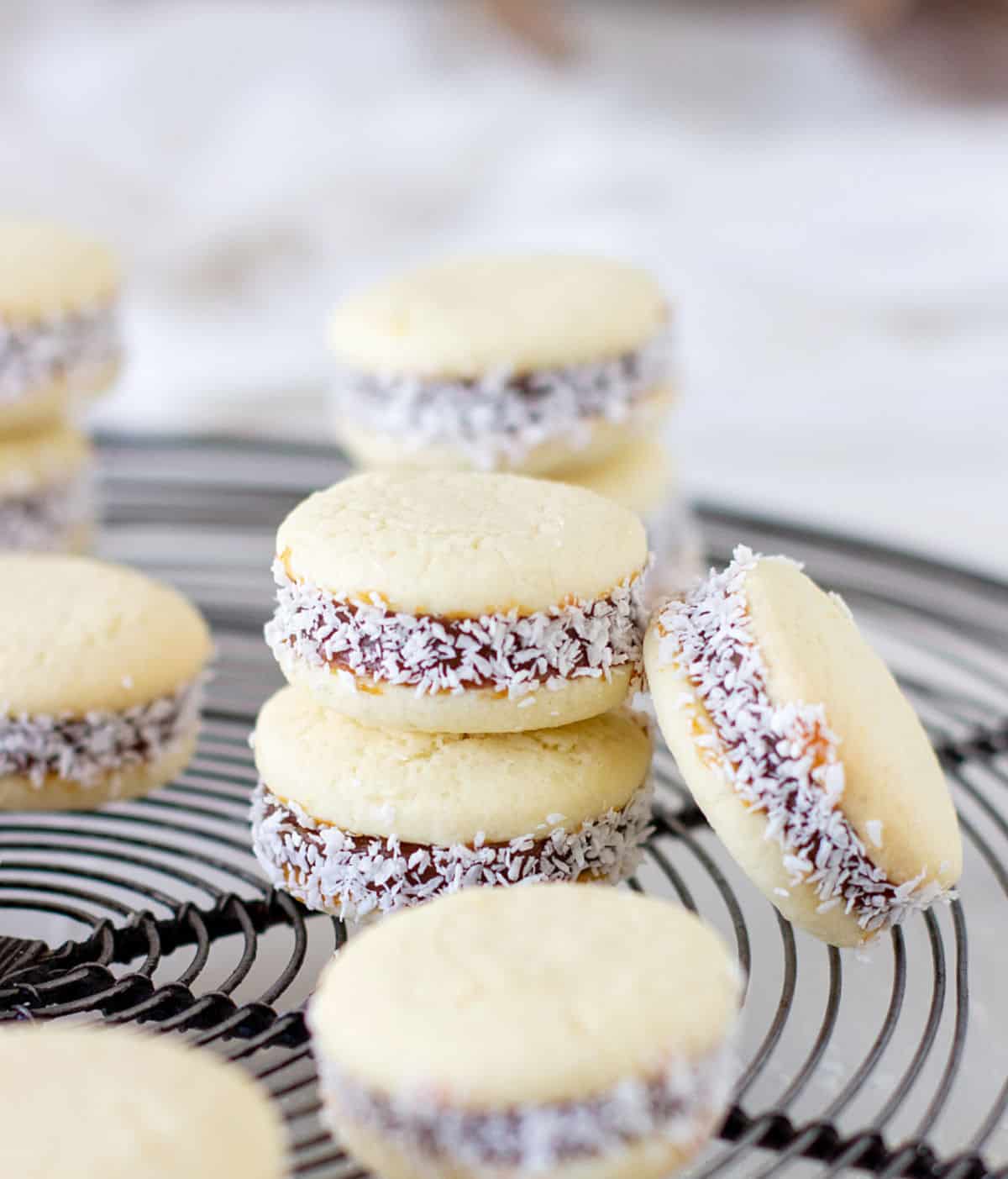
These alfajores are made from two soft, cornstarch cookies that are filled with gooey dulce de leche (a caramel-like spread). They're sweet with a melt-in-your-mouth quality. This is the most traditional and perfect recipe of them all. If you never had alfajores, you're in for a treat.
SAVE THIS RECIPE
I know alfajores
Alfajores come in many variations, including different fillings, coatings, and shapes. They are often served with coffee or tea and are a popular snack or dessert.
To my knowledge, the oldest that are relevant to this day are these cornstarch alfajores, which are different from these shortbread-style alfajores.
I'm from Argentina, and, as I told you in the post about walnut alfajores, we are the biggest consumers of these sweet snacks worldwide. The array of different options you can buy here is mind-boggling.
So trust me when I say that this is the only recipe you'll ever need for traditional cornstarch alfajores.
The original recipe hails from a 90-year-old cookbook by Doña Petrona (our own Julia Child) and is still the recipe we all adapt. It's sort of like the chocolate chip cookies recipe from Toll House. It's where they all start, isn't it?
Overall, the combination of delicate crumbly texture, subtle flavor and sweet filling is what makes cornstarch alfajores so delicious and beloved by so many.
What are alfajores?
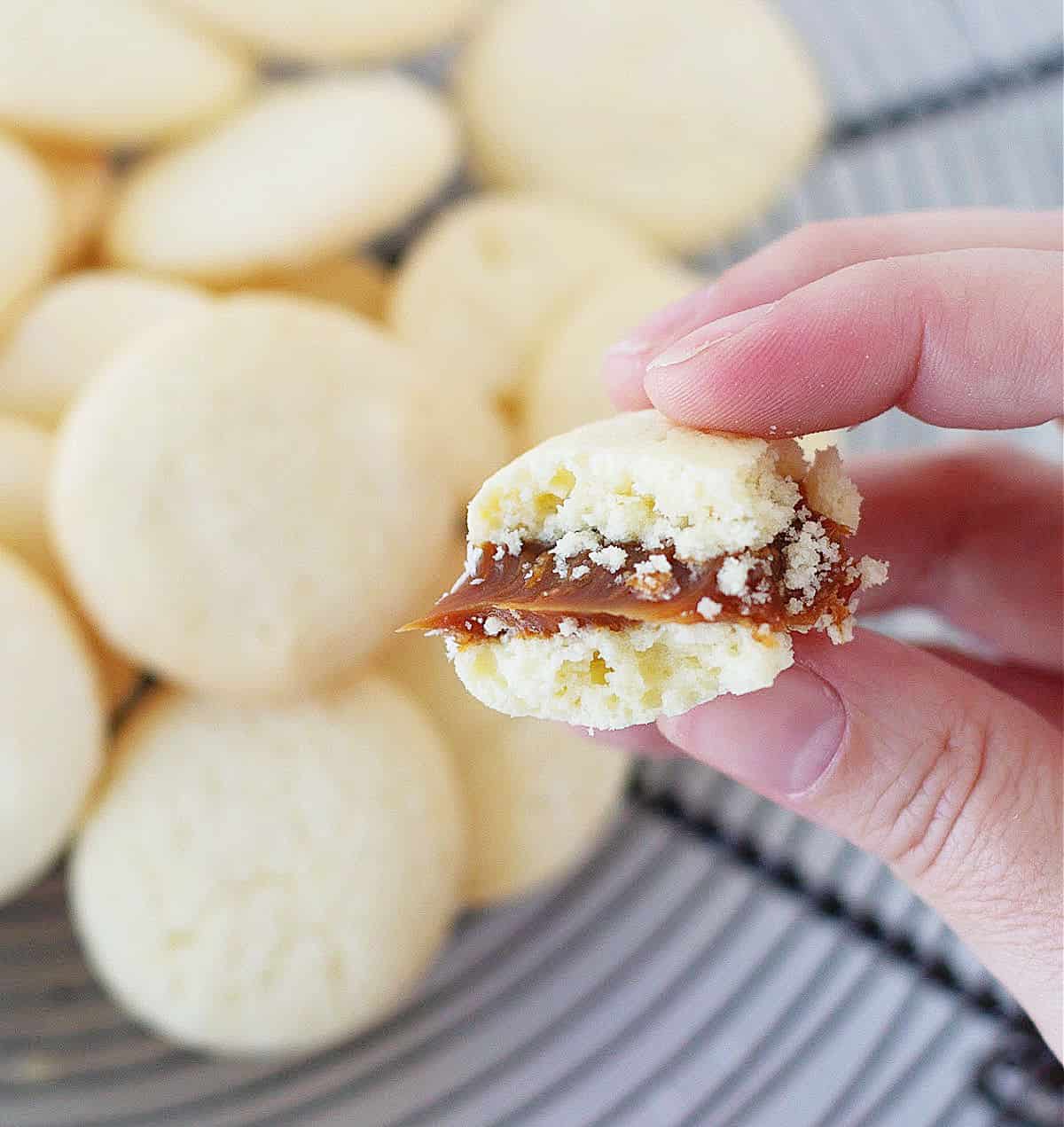
An alfajor (singular) is a sandwich made of two discs of dough with a filling in between. It is a sandwich cookie. ALL are filled with dulce de leche unless specified in the name, like chocolate mousse alfajores or quince jam alfajores.
Alfajores have a unique combination of textures and flavors. They are delicate yet rich, crumbly yet creamy, and sweet yet balanced.
They are very popular in South America, especially Argentina, Perú, and Uruguay.
The most in-demand are probably chocolate alfajores because, well, they're chocolate-covered. Then there are shortbread alfajores, which are usually small and great for tea time, with a cup of coffee, or as finger food at a celebration.
Ingredient Notes
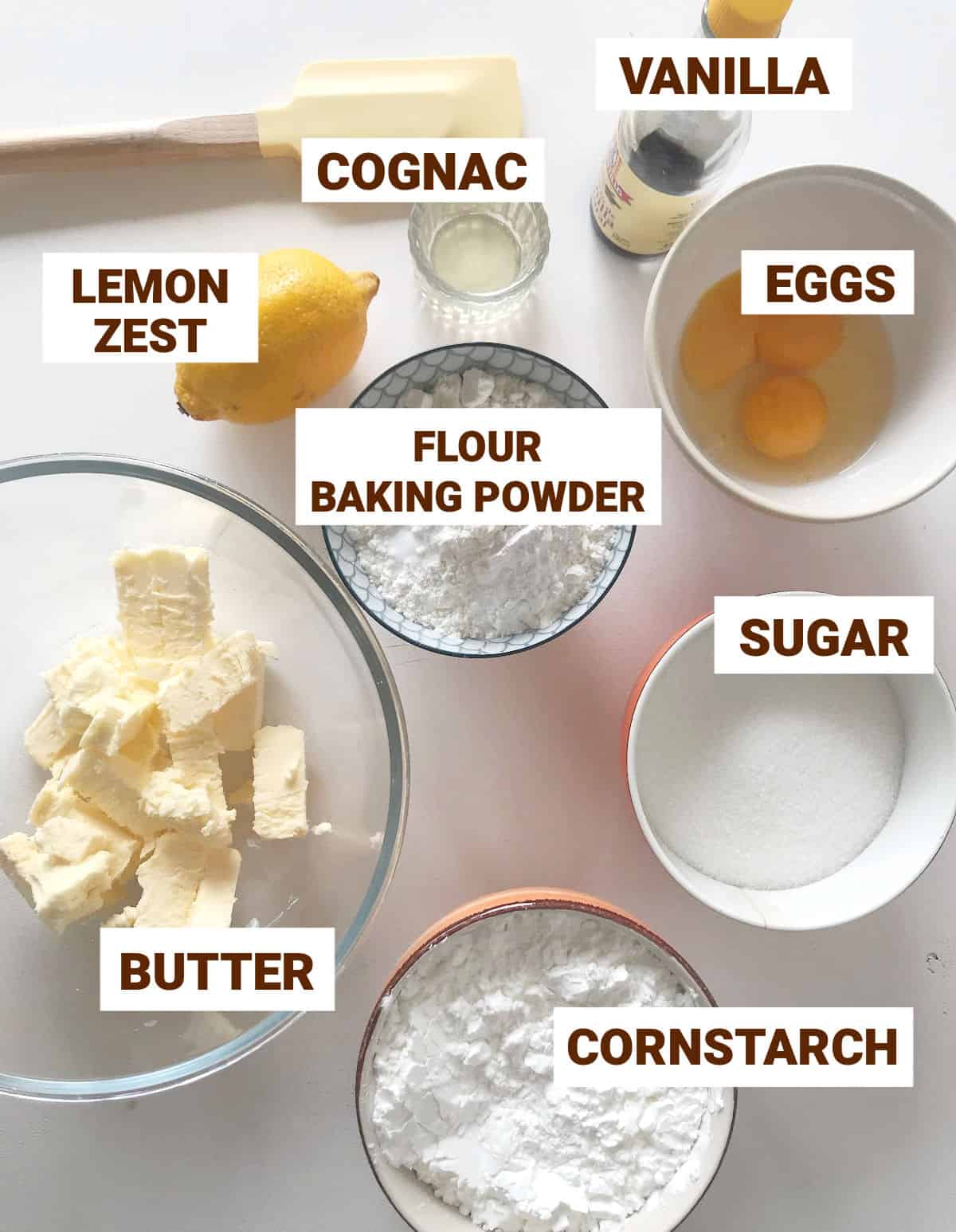
Quantities are listed on the recipe card towards the end of this post. The Ingredients page has more details and lists the brands we use.
- Cornstarch: it's essential for that crumbly texture and a main ingredient.
- Baking powder: Make sure it's not expired.
- Cognac: You can also use brandy or whisky. It evaporates during baking and leaves behind a wonderful flavor. If you don't want alcohol, omit it and use more vanilla.
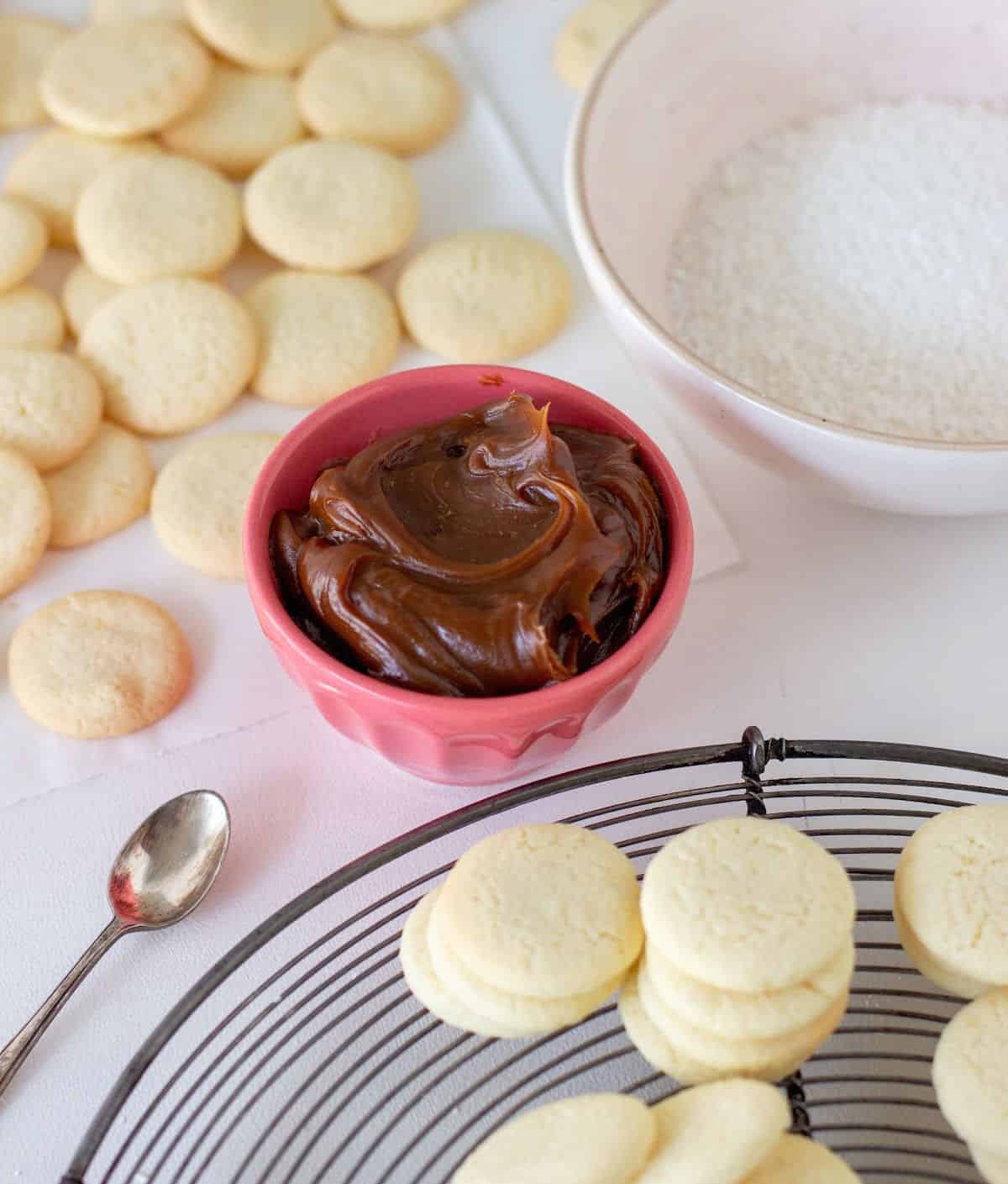
- Dulce de leche: we're using it as a filling, so we need the thicker kind, the one labeled 'repostero', which means pastry or baking. I use and recommend dulce de leche repostero Vacalin.
About the liquor: This recipe features a magic flavor trio of lemon, vanilla, and cognac (or brandy, or whisky). The synergy between these three flavors is one for the books. None of them is the star, but together, they are magic.
Variations & substitutions
- Don't use liquor: though I recommend using it, omit it if you can't use it. Add ½ a teaspoon more vanilla extract.
- Rolling: coconut is the traditional ingredient, but you can roll them in finely ground nuts or leave them plain.
- Fillings: being simple cornstarch cookies with an indefinite flavor, you can use different fillings like nut butter, buttercream, or a light ganache. Still, I highly encourage you to try them with dulce de leche first.
Magic flavoring
I specifically want to acknowledge the flavoring in this recipe.
It has 3 components: lemon zest, vanilla extract, and cognac (or brandy).
Though they are nothing special, when you add all three to a recipe in the right proportions, the result is fantastic!
None shine on its own but there is a deep, caramel, fresh flavor that I think is unmatched.
It's not vanilla, it's not lemon, it's not caramel, it is magic. Maybe that's stretching it a bit? Well, you can be the judge of that.
It reminds me of the flavor of red velvet cake. What does it taste like? What is so special about it? It simply has a fabulous flavor. This flavor trio reminds me of that.
The alfajores dough is a simple vanilla dough with cornstarch. It sounds easy and it is. It's all about the right proportions of flour and cornstarch.
- By hand: I use a large bowl, a whisk, and a spatula. If the butter is soft, mixing everything by hand should be simple.
- Electric mixer: you can use a handheld mixer but make sure you use it at low speed. This is not a dough that needs beating or anything like it. If you use a stand mixer with the paddle attachment, mix at the lowest speed.
The final dough is soft to the touch and neither sticky nor dry. It needs to be refrigerated before rolling.
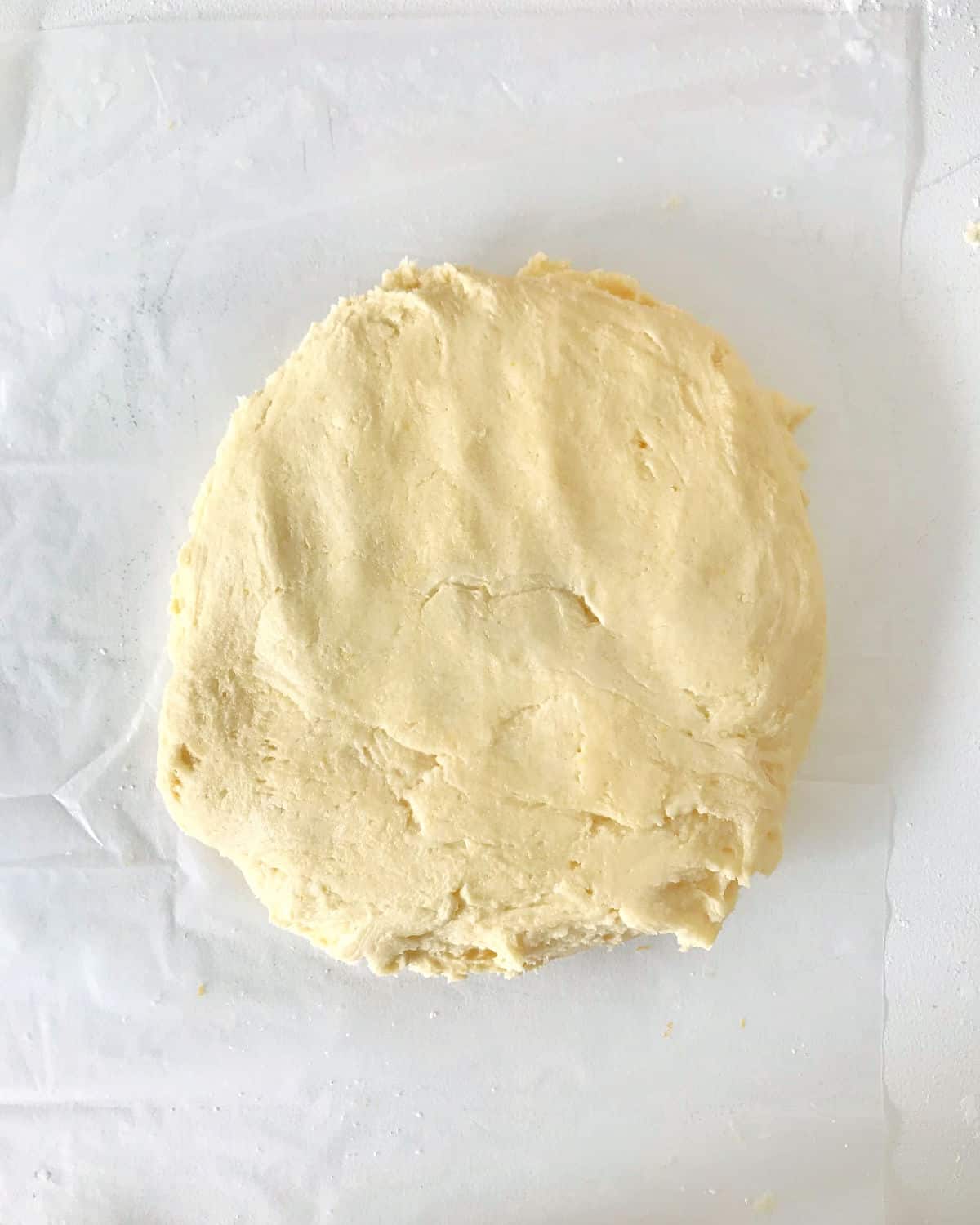
Rolling the dough
After refrigerating the dough for a few hours, it's time to roll and cut.
This dough is soft and very easy to handle. A lightly floured counter and a good rolling pin are all you need.
Cookie cutters: I use a small round cutter, which is the traditional shape of an alfajor. The dough doesn't change much during baking, and the cookies will mostly keep their shape, so you can, technically, use other forms. Still, I recommend using simple patterns.
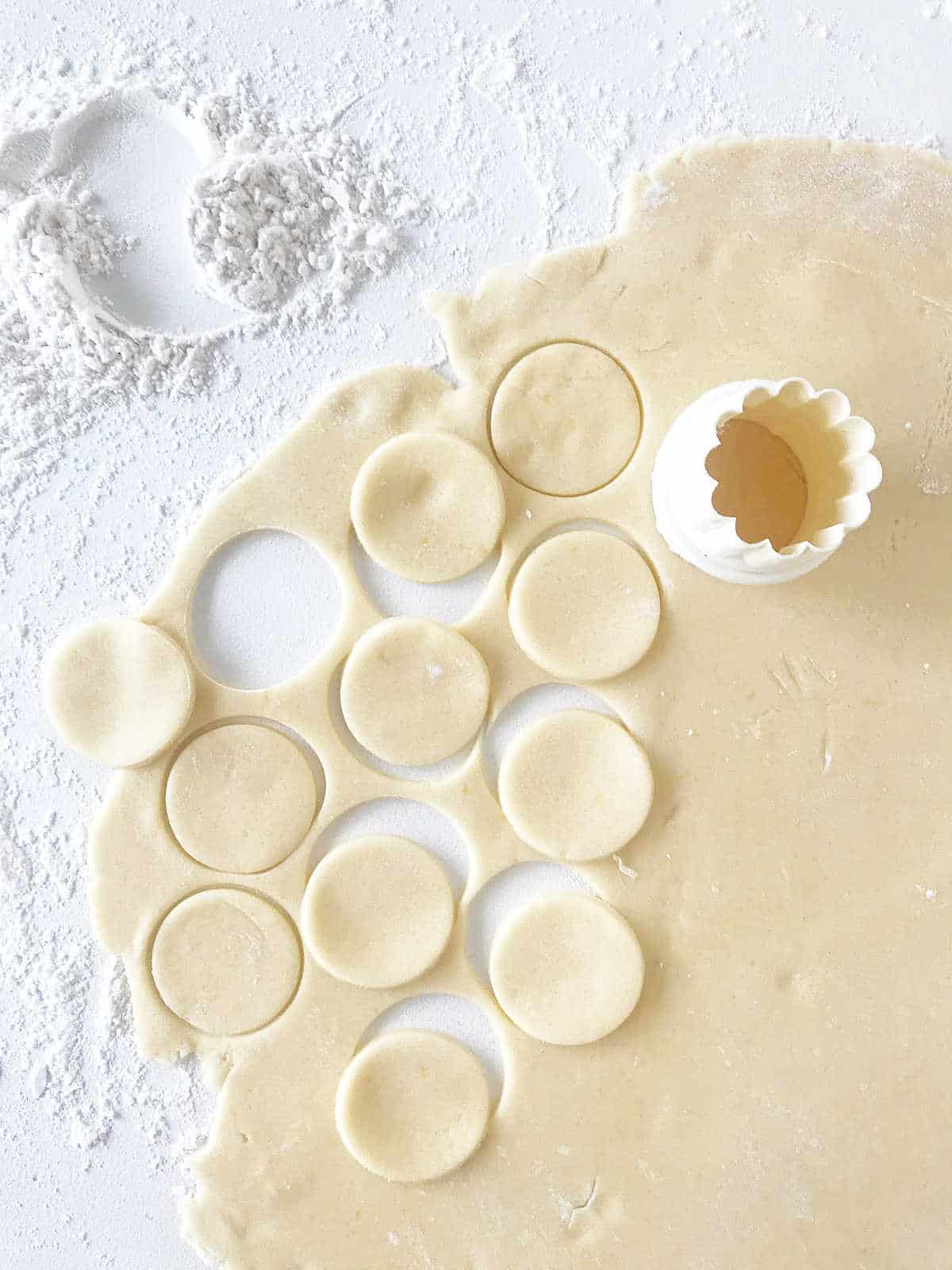
- Preheated oven: always make sure it's on before you start rolling the dough. If you forgot, place the sheets in the fridge while the oven gets to the desired temperature.
- Preparing the cookie sheets: I use parchment paper or lightly buttered sheets, both work well.
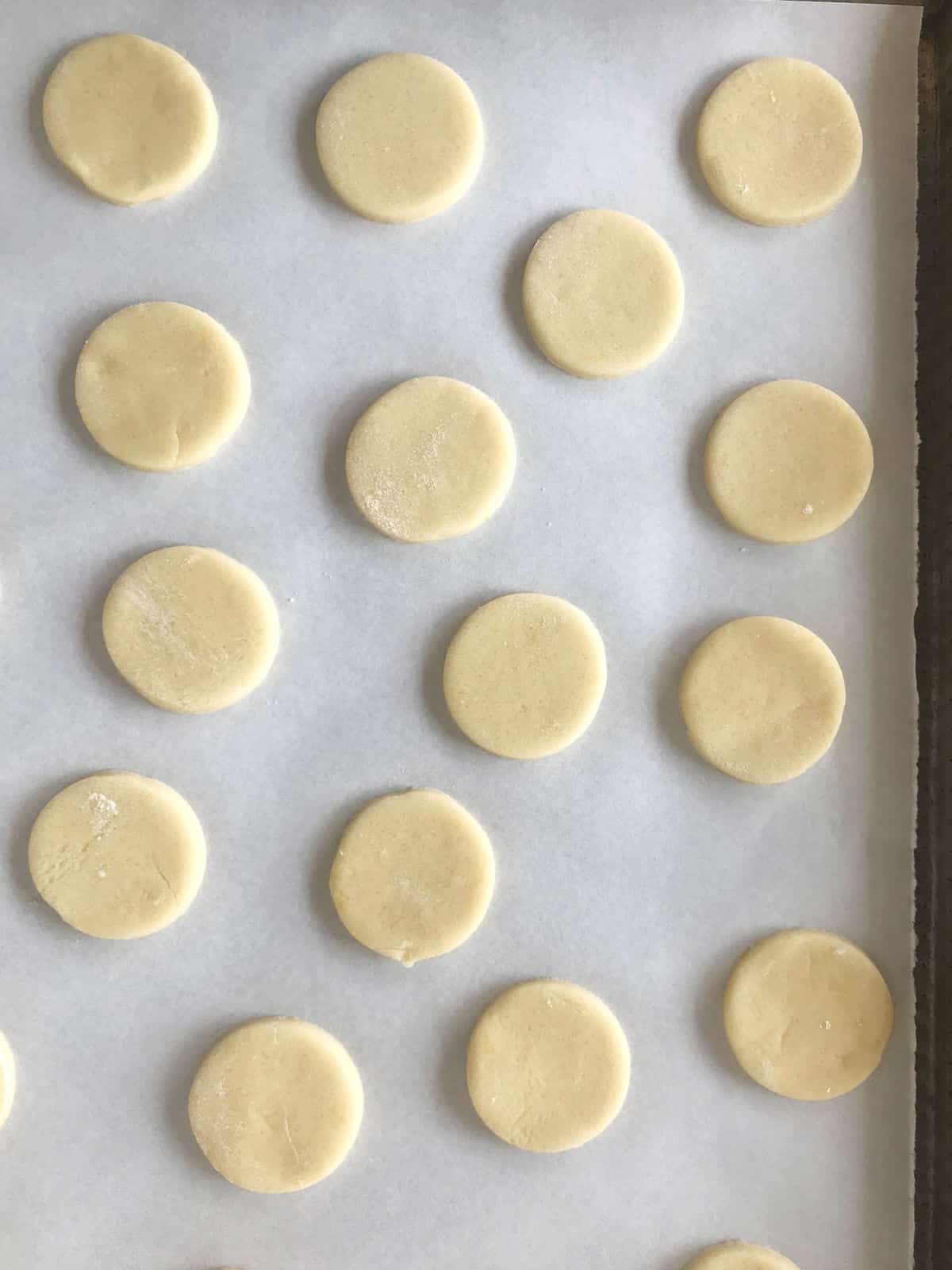
- Leave some space between the rounds, so they can grow during baking.
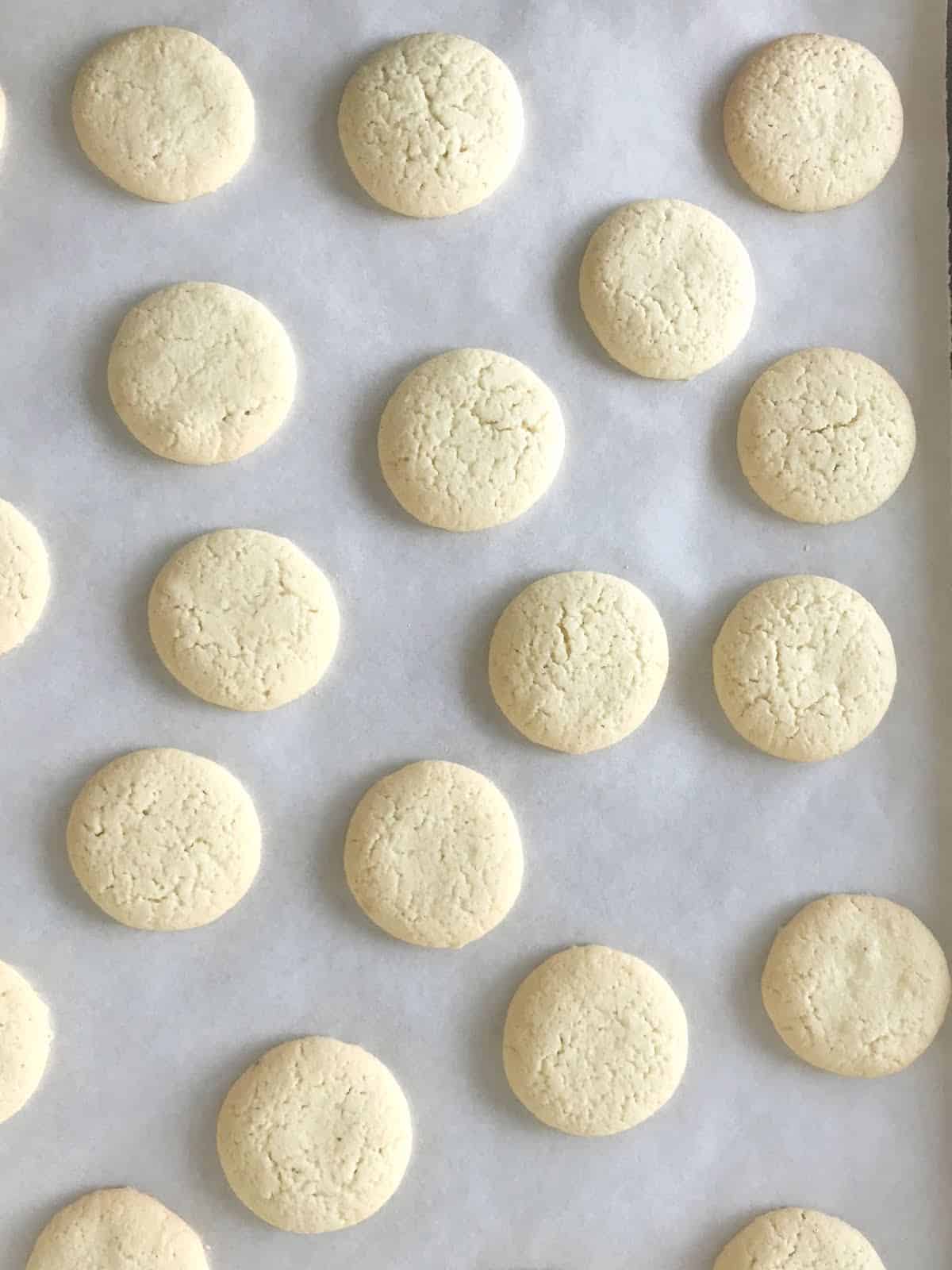
- These are light-colored, delicate cookies, so bake until barely starting to color. Don't be tempted to bake them longer, as they will be too crisp and won't soften as they should when filled.
What is dulce de leche?
Dulce de leche is a sweet milk jam, a cousin to caramel, made with milk, sugar, and baking soda, the latter being accountable for its dark color.
It takes a few hours to make and there are as many tips and tricks as there are grandmothers in this country. Each with its own recipe.
We have an abundance of commercial brands and styles, pretty much like peanut butter in the US, so we hardly make it at home.
The flavor is very sweet, similar to caramel but not quite. It does have a milk undertone, something that caramel lacks, and some might say it's not as sophisticated, and they might be right. I'm a raving fan so my opinion is biased.
Vintage Kitchen Tip
For fillings, you need to use what we call pastry dulce de leche. It's much thicker than the regular kind. Look for the word Repostero on the label. The best one available online (that we also use here!) is Vacalin Dulce de Leche Repostero. Another good one is Veronica dulce de leche repostero. If you want to buy in bulk a great one is San Ignacio repostero (22 pounds) or Vacalin repostero (22 pounds).
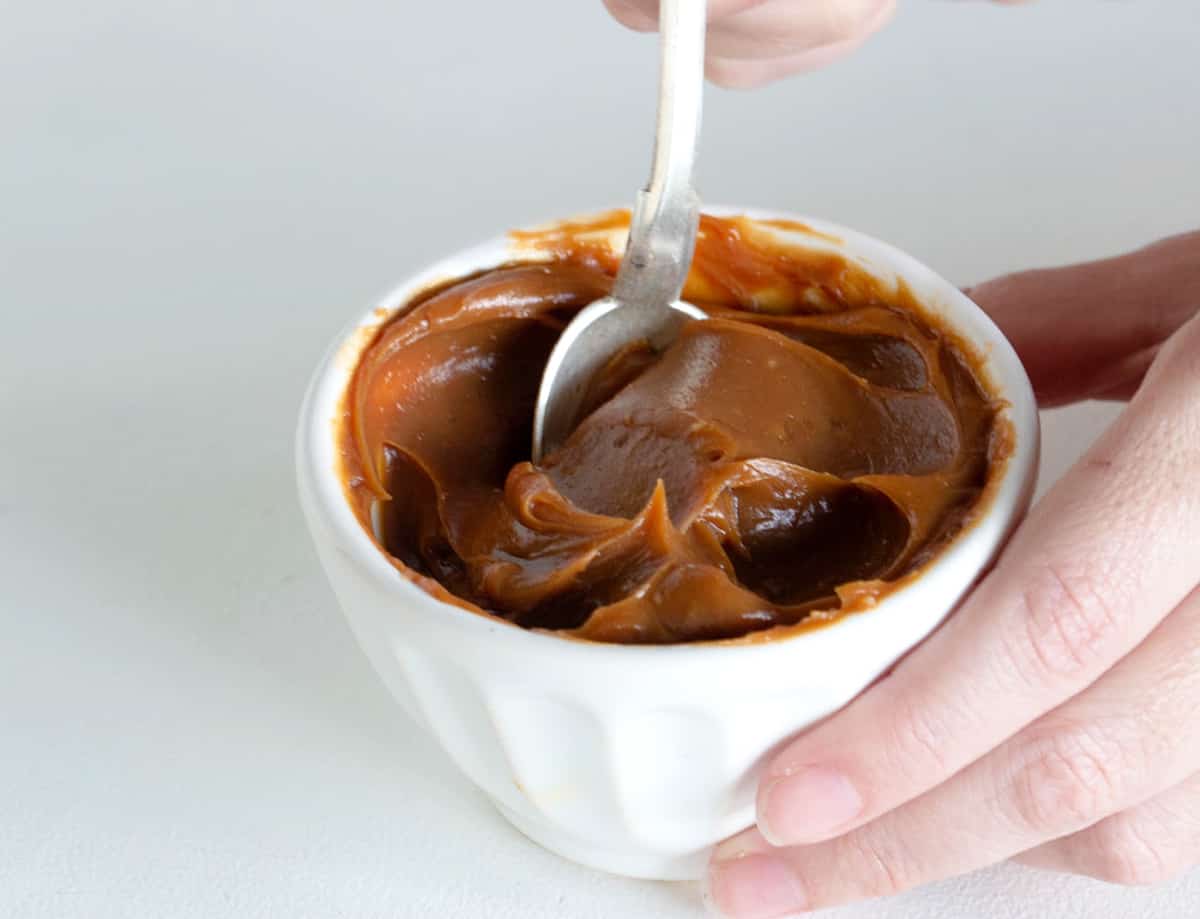
Filling the alfajores
The traditional filling was, is, and will always be dulce de leche.
Piping bag: you can use it with a smooth, plain piping tip for a more even filling, or use a teaspoon and get more of an irregular filling.
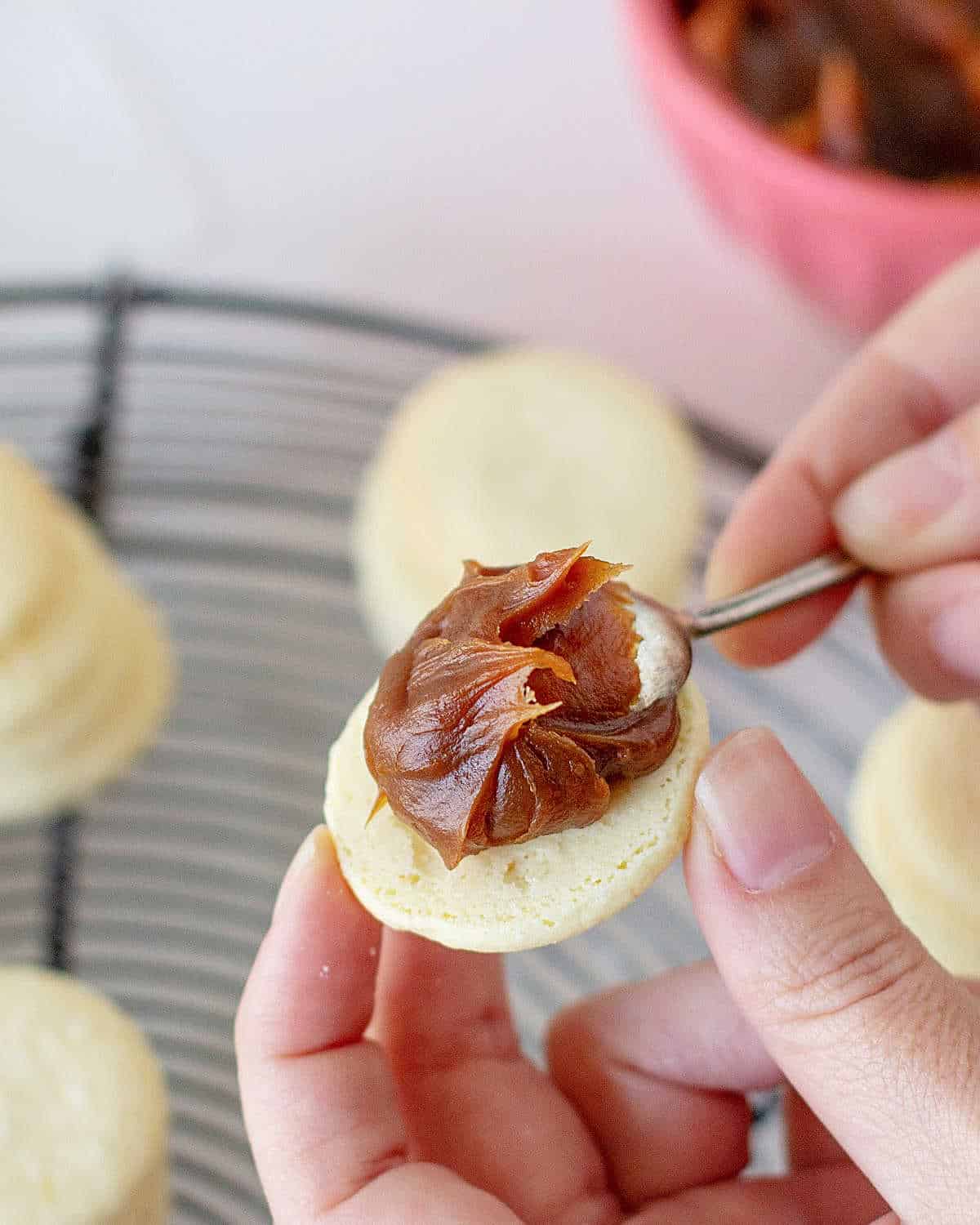
- Use a teaspoon or a piping bag for this part. Piping the dulce de leche it will be neater and you probably won't need to smooth out the edges.
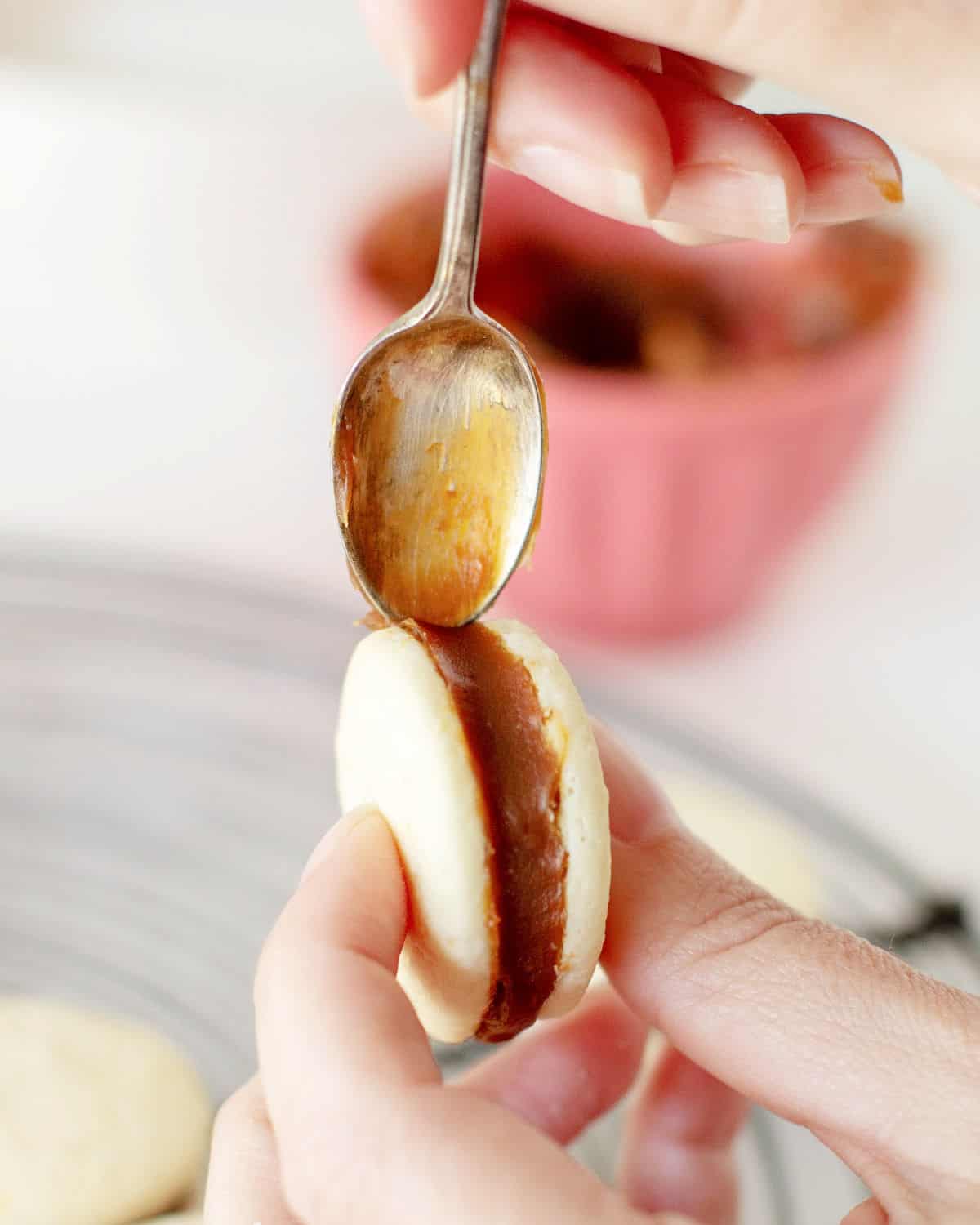
- Swipe the bottom of a teaspoon around the edges. This will even out the dulce de leche that overflowed when you pressed down the top cookie and make it easier for the coconut to adhere. You can skip this step, of course, but the alfajores will be easier to handle.
Rolling in coconut
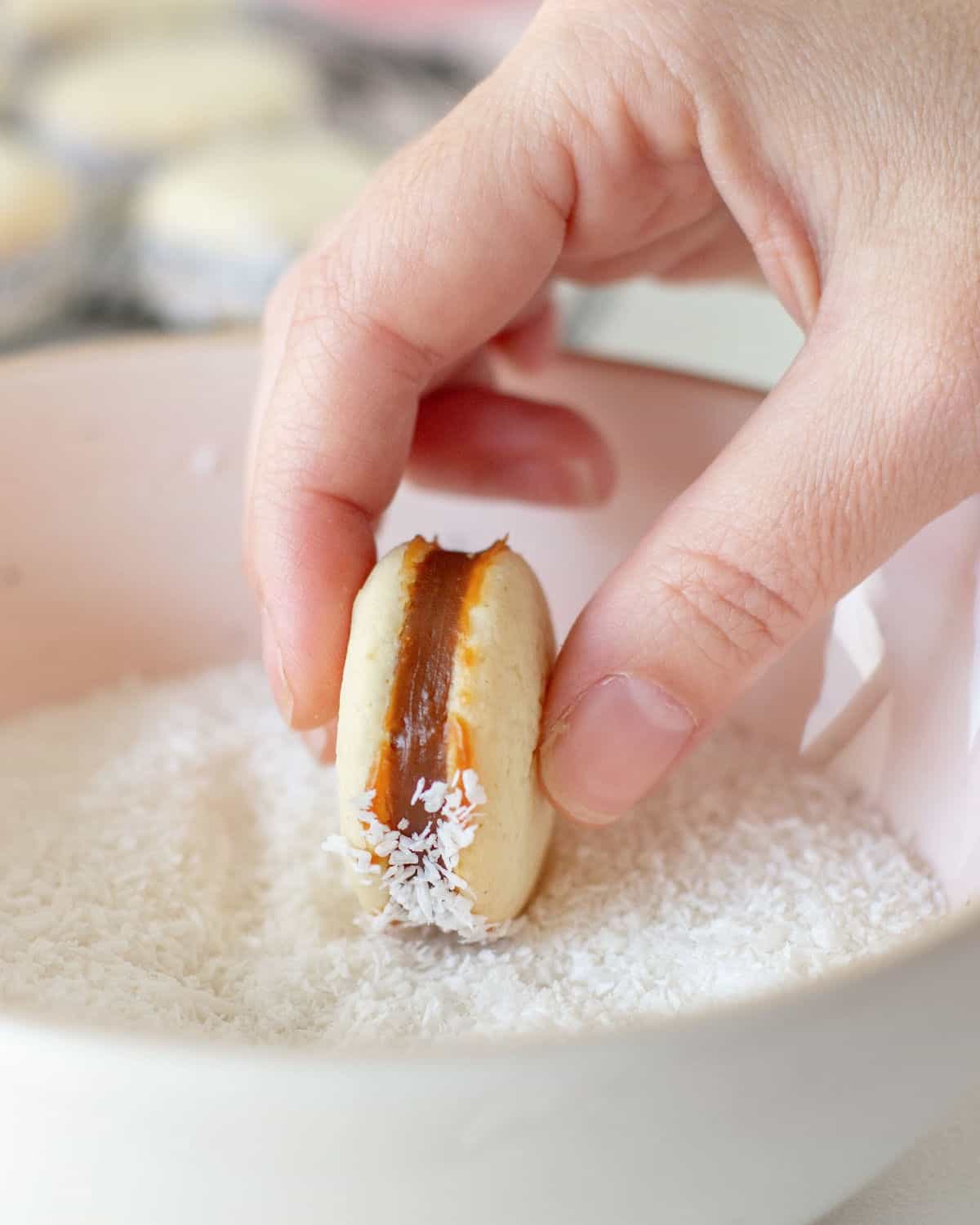
Rolling the sides in unsweetened shredded coconut is the way these beauties roll. Coconut and dulce de leche are a match made in heaven. Truly spectacular!
Coconut border: this step, on the other hand, is completely optional. It pairs fantastically with the rest of the ingredients, but alfajores are also amazing without it. So, don't buy shredded coconut just for this.
Kitchen Notes
- Organization: read the recipe first and ensure you have ingredients at the correct temperature, utensils and equipment needed, and enough workspace. This will make the process so much easier.
- Baking time: consider that all ovens and pans are different, even if they look similar. The baking time in my recipes is as accurate as possible, but it might take you more or less time. You can use a thermometer (like the OXO oven thermometer) to check that your oven is at the right temperature. I recommend tracking how your oven works and what tiny details you might need to adjust.
- Make-ahead: As with most cookie doughs, it can be made ahead and kept for 4-5 days in the refrigerator or up to a month in the freezer. Always make sure you wrap it well in clingy plastic. Otherwise, the top layer will dry out.
- Storage: The unfilled cookies can be kept in an airtight container for about a week. Fill them several hours ahead of the time you're planning to eat them so they have time to soften a little. Consider that the dulce de leche transfers moisture to the cornstarch cookies, and they will be softer when you bite into them.
- Eat them and be very happy.
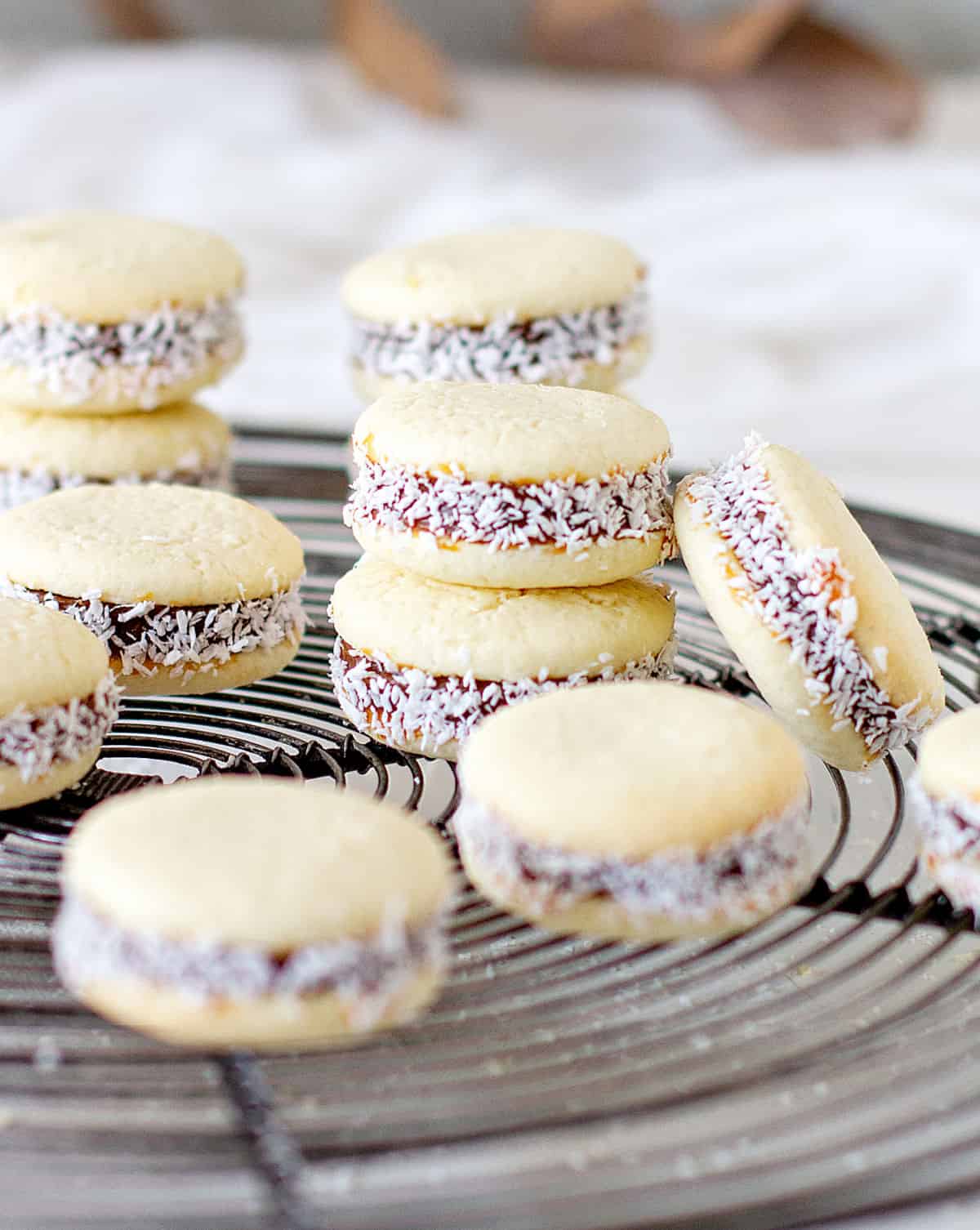
I sure do hope you try this recipe for cornstarch alfajores.
It's an easy-to-work-with dough, and they are incredibly yummy. I imagine many of you have never tried them, so trust me when I say the flavor is amazing and that they will become a favorite fast.
As an Amazon Associate, I earn from qualifying purchases. Read my disclosure policy.
Ingredients
- 11 tablespoons unsalted butter, ½ cup + 3 tablespoons, at room temperature
- 1 cup sugar
- 2 egg yolks, at room temperature
- 1 egg, at room temperature
- 1 tablespoon cognac, or brandy or whiskey
- ½ teaspoon vanilla extract
- ¼ teaspoon lemon zest
- 1 cup all-purpose flour
- 2 cups cornstarch
- ½ teaspoon baking powder
- pinch of salt
- 1 cup pastry dulce de leche, the thick type labeled 'repostero'; I use and recommend Vacalin dulce de leche repostero.
- ½ cup unsweetened shredded coconut, for rolling (optional)
Instructions
- Mix 11 tablespoons unsalted butter and 1 cup sugar in a large bowl, until very creamy, using a spatula, handheld mixer, or a wooden spoon.
- Add 2 egg yolks and 1 egg and mix well to incorporate.
- Add 1 tablespoon cognac, ½ teaspoon vanilla extract, and ¼ teaspoon lemon zest. Mix well.
- Add the sifted 1 cup all-purpose flour, ½ teaspoon baking powder, pinch of salt and 2 cups cornstarch gradually, mixing very well until no streaks of dry ingredients remain. The final dough will be very soft and silky but not sticky.
- Pat it into a disc, wrap the dough in plastic wrap or freezer sheets, and let it rest in the refrigerator for 30 minutes, like any sweet dough. At this point, it can be refrigerated for 3 days or frozen for a month, always well wrapped to prevent dryness.
- Preheat oven to 325°F (170°).
- On a floured surface, roll dough to ½ cm thick (about ¼ inch).
- Using a round cookie cutter, cut circles and place them on a buttered cookie tray or use a Silpat. In my experience, they tend to stick when using parchment paper, but then, all papers are different depending on where you live. Thickness and size are totally up to you; I suggest you try different combinations and see which one works best for your taste.
- Gather the scraps, roll them again and cut more alfajores cookies until you use up all the dough.
- Bake for 10-12 minutes or until barely starting to color. Let cool completely on a wire rack.
- Put about a tablespoon of dulce de leche (with a spoon or with a piping bag) and fill one round, flat side up. Press lightly with another round, flat side down forming the alfajores.
- With the back of a small spoon, wipe any dulce de leche that has overflowed. This will leave a path for the coconut to stick.
- Put ½ cup unsweetened shredded coconut on a small plate or bowl and roll the sides of the alfajores until coated. Or leave the sides plain.
- Eat them and be happy.

Solana says
Thank you so much for this amazing recipe! My Abuela used to make these for me when I was little and she has had a lot on her plate recently, so I wanted to make them for her. I didn’t have cognac, so I used rum flavoring instead and they turned out amazing. ¡Muchas gracias!
Paula Montenegro says
De nada Solana! So happy to read this and that your grandma enjoyed them!
Ann-Marie says
I’m in the UK and made these amazing biscuits for the first time today! I work in a primary school and our topic for this term has been South America, I thought I would make these as a nice treat for the children! They look amazing!
Paula Montenegro says
Hi Ann-Marie, so happy you liked them! Here in Argentina kids eat alfajores probably every day. There are a million different types, but these are the old-fashioned, most traditional ones. Have a great week!
Mina says
Hi, so excited to try this recipe but was wondering if the lemon zest could be replaced by lime zest instead. Thank you
Paula Montenegro says
Hi Mina! It certainly could. It's not the traditional flavoring and lime zest is sharper than lemon in my opinion, but go ahead if you like it. Have a good week!
Soumya says
Nice recipe looks delicious. Cannot wait to try it!
Sam says
I made this on the weekend for my Chilean family and they absolutely loved it. Only difference was I didn’t have cognac but I had rum, so I used that. I used my stand mixer to make the dough and because it was late I put in the fridge overnight. In the the morning I took out and whilst preheating oven I rolled the dough into logs and then sliced using my finger as a measurement guide. Came out perfect sizes. I didn’t have time to make dulce de leche so used top n fill caramel instead which is not a bad substitute. Gracias por la receta.
Paula Montenegro says
So happy you all liked them Sam! They are great with so many fillings. And making logs is definitely much easier than rolling the dough. Have a great week!
Kathleen says
I just made these wonderful cookies using your recipe and all I can say is...where have these been all my life? I cheated and bought Merienda bottled DDC (delicious) but they were so easy to make, baked perfectly and are absolutely delicious. My picky husband even likes them! Thank you so much for posting this recipe!
Paula Montenegro says
I love that you loved them Kathleen! They're one of our most eaten recipes here and with good reason. Have a great weekend.
Patzi says
This was a very easy recipe to follow. I put the dough in the refrigerator for ten minutes before rolling out. Very nice dough and important to roll out evenly, I did 1/4”. Cookies can be fragile but if you don’t overcook them, they handle well. I did slightly overcrowd them, so give them a little room. This will ensure they stay relatively round. It does take time to put the DDL on and roll in coconut, yet I find the process relaxing and fun. Also,I used a 2” cookie cutter which was perfect so you can pop one cookie in your mouth at once. Next time I will try dipping them in chocolate rather than coconut. Thank you.
Paula Montenegro says
So happy to read this Patzi! Thanks for letting us know your experience. My grandmother used to make tiny ones that you could eat in one bite too! Have a great weekend.
Ali Umana says
Hello there... the cookies were very soft after baking...not sure what happened there...
Paula Montenegro says
Hi Ali, by soft you mean they spread too much or they retain their shape but are too crumbly? This is a crumbly cookie as it has a lot of cornstarch. But they should hold well.
Kat says
Hi!
Your dulce recipe is super delicious, I had to add confectioner sugar to it to help it solidify. Sifting it helped with the cristallisation a bit. My dough is very crumbly though. I put it in the fridge. as I got busy, and took it out for it to get room temperature. Is that normal and how do I fix it???
Paula Montenegro says
Hi Kat! If you can't roll it because it's too crumbly, add a little milk, maybe a teaspoon or two and gather it together. Try to touch it as little as possible, don't knead it, only gather and fold with your hands until you can make a ball of dough. Wrap it and refrigerate it for at least an hour before rolling. Let me know how it goes.
Kari says
I made your dulce de Leche recipe to go with these cookies. It is delicious, but it is not thick and spreadable. How do I get it the consistency you need for these cookies?
Paula Montenegro says
Hi Kari, you can thicken it with cornstarch. There's an explanation in the post for White Chocolate Cones in the recipe card. Hope this helps.
Maria says
I can't wait to make these! Since I'm planning on making my own dulce de leche, would 1 14 oz. can of condensed milk be enough? And by "50 small rounds" of cookies, do you mean 50 cookie sandwiches or would 50 individual cookies make 25 sandwiches? Thanks!
Paula Montenegro says
Hi María! That would be 50 individual cookies to make 25 alfajores. A can should be more than enough.
Make sure it's very thick. There is an old blog post that helps you thicken it White Chocolate Cones
Let me know if you need anything else. Happy baking!
Maria says
Thanks for getting back to me so soon! You mentioned another version of this that’s covered in chocolate, do you have a recipe for that?
Paula Montenegro says
I don't have it posted yet. Will do so in the coming weeks or months. So many recipes I need yet to share!
Caitlin says
Thank you for this wonderful recipe! I have made these twice with my own dulce de leche and they come out perfectly.
Paula Montenegro says
So happy to hear that Caitlin!
Brenda F says
My husband is Argentinian and his mom made Alfajores for him from scratch all the time. I made your recipe for him because I want him to have the taste of home. No pressure. These were absolutely perfect. I was worried about adding the alcohol but the flavor was perfect. I followed the recipe exactly. My husband was amazed. Thank you!
Paula Montenegro says
SO happy to hear that! Yes, the flavor works really well, doesn't it? Have a great weekend.
Karla says
Hi Paula,
Looking forward to making these! Quick question - what's the texture of the cookies? Are they soft or more crumbly/breakable?
Thank you!
Paula Montenegro says
Hi Karla, they are crumbly but the texture is soft from the cornstarch. But once they're filled, they will get softer as the dulce de leche transfers some of the moisture to the cookies. Hope this helps!
Louise says
Hi Paula! Lemon zest is approximately how many grams?
Paula Montenegro says
Hi Louise, it's a small amount, maybe less than 1/2 a teaspoon. I don't know in grams since zest doesn't weigh much, but about 1 gram or so. Hope this helps.
Beverly Santiago Sia says
Is it ok if I make this without the cognac? Will that make a big difference in the recipe? Thank you
Paula Montenegro says
You can make it without Beverly. I would maybe add an extra 1/2 teaspoon vanilla.
Rachel Shpayher says
Hi,
Do you have the recipe for dulce de LECHE? I’m looking for that recipe and I can’t find it to make the cookies.
Thanks!
Paula Montenegro says
Hi Rachel, I'm finishing one that will be up this week! You can buy it online or make it with condensed milk or from scratch. There are many recipes online, I haven't tried them but they sound good.
Lori Zyne says
Very good. Easy to make. Can you freeze the cookies after they have been filled?
Paula Montenegro says
Glad you liked them Lori! You can freeze them. You can also freeze (or keep them in airtight tins for a week) the unfilled cookies and fill them at the last moment. Dulce de leche keeps in the fridge for a long time.
Adriana says
They are just delicious, loved this recipe
Alexandra says
Can I make it without cornstarch?
My dad is from Uruguay and I know that he would love it.
Paula Montenegro says
Hi Alexandra,
You can in theory. But this is the cornstarch version of alfajores, so it's the main ingredient. There are other recipes that use shortbread, maybe that would be more suitable if you don't want to use cornstarch.