
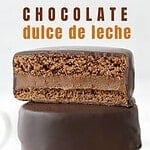

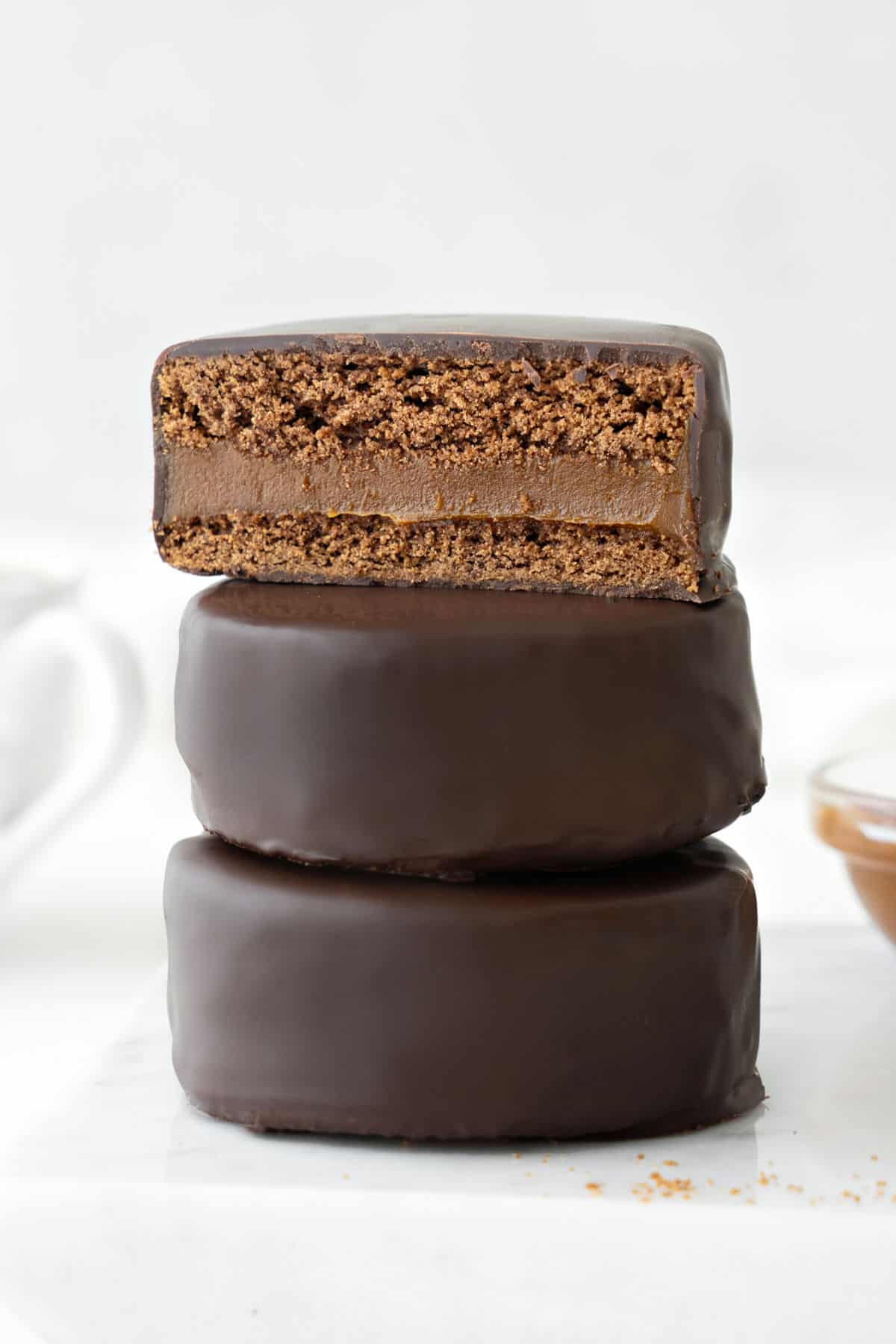
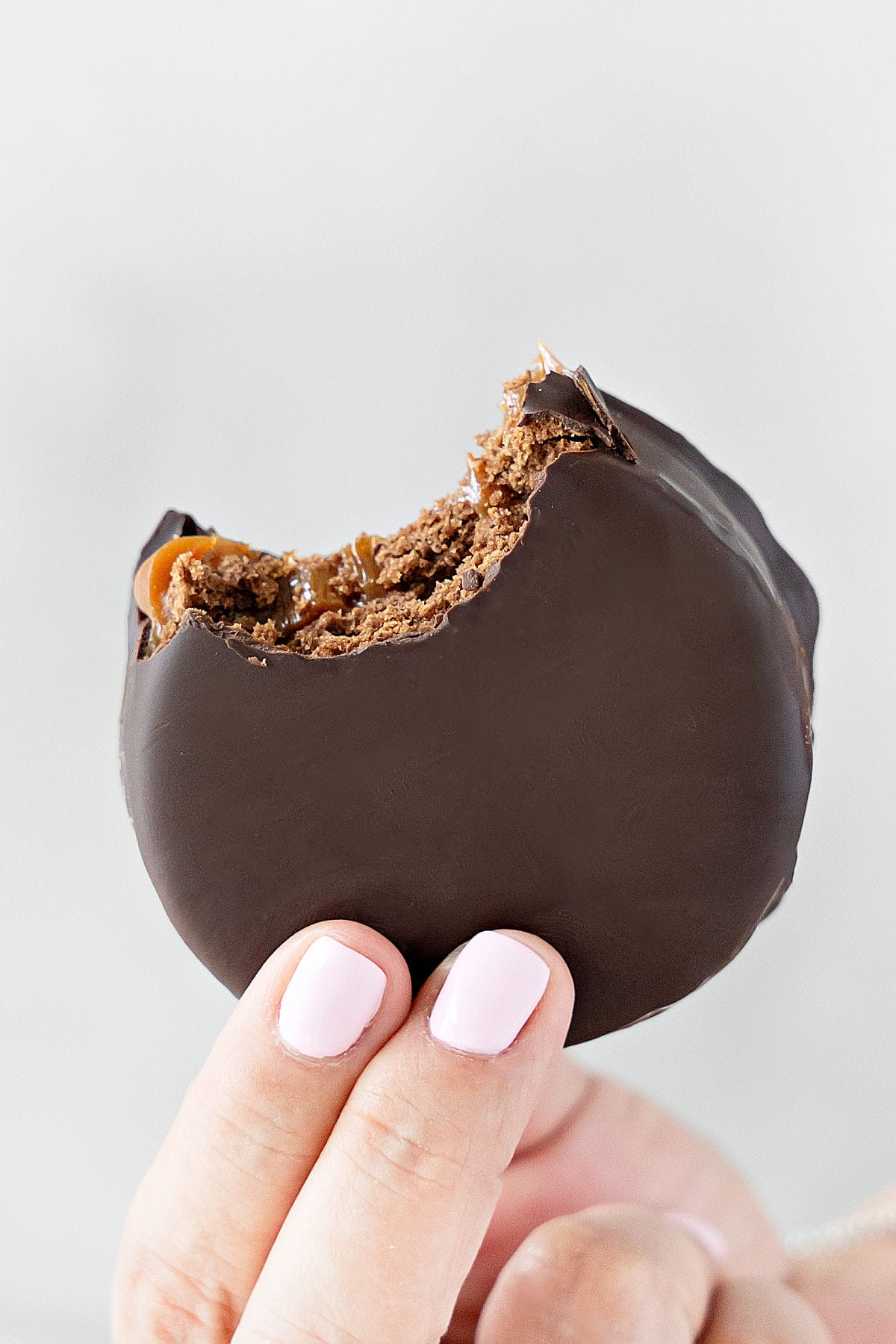
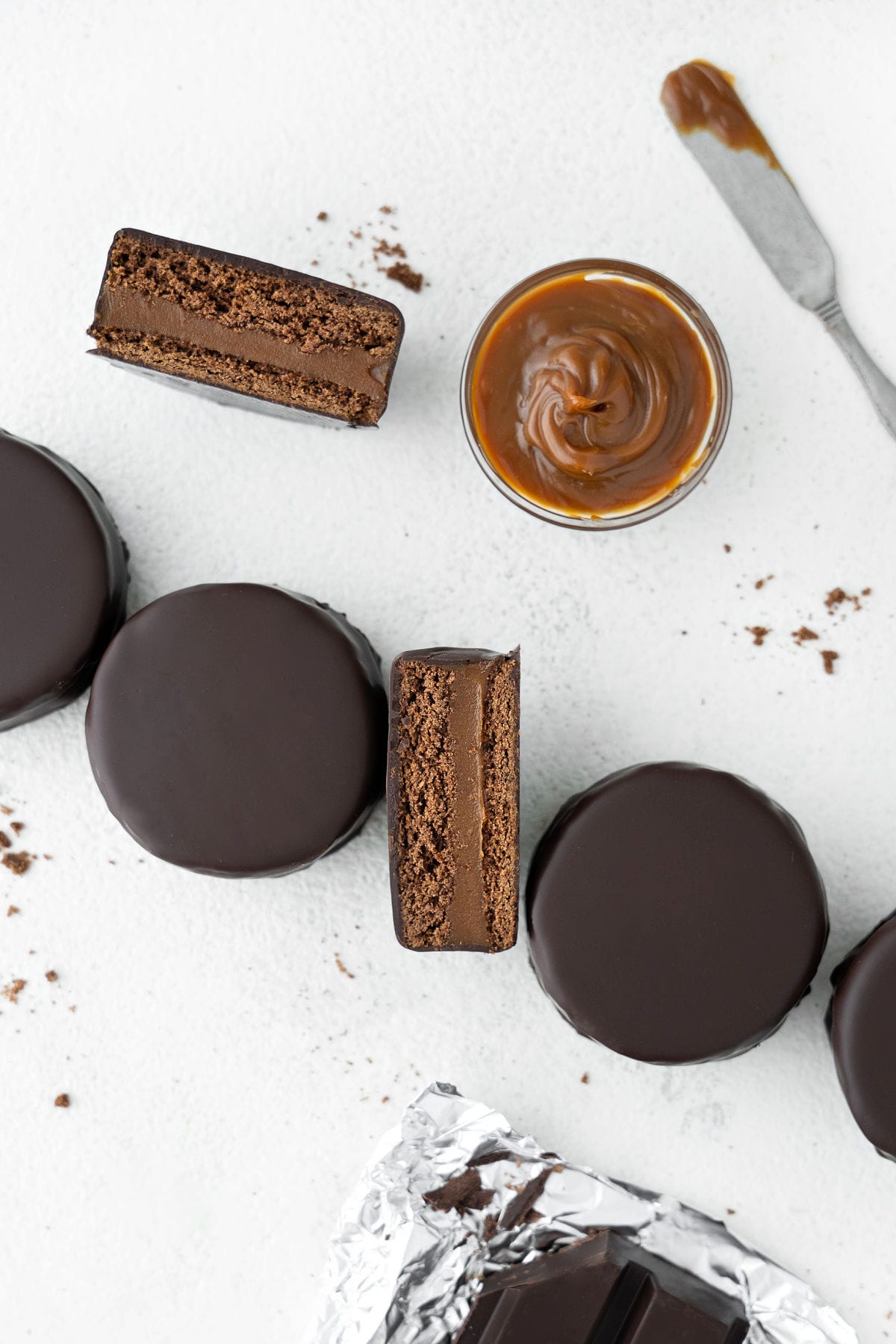
This is a fantastic recipe for Argentina's famous alfajores marplatenses. Plain chocolate wafers are filled with thick dulce de leche and covered in dark chocolate. They're by far the most popular ones: sweet, with a soft cocoa powder dough, and covered by a thin, hard chocolate layer that should crack when you bite into it.
Making them from scratch is an experience, and I share all my tips so they come out perfect.
SAVE THIS RECIPE
Most popular ones
If you never had a chocolate alfajor before, you're in for the best surprise!
When someone says alfajores in Argentina, they usually refer to these chocolate-coated ones, ALL are filled with dulce de leche unless specified. They hail from Mar del Plata, a beach city, where alfajores Havanna (a brand) are the most famous ones.
An alfajor (singular) is a sandwich made from two cookies with a filling in between, very popular in South America, especially Argentina, Peru and Uruguay. A cookie sandwich, or a sort of wagon wheel with a different filling, depending on the type of alfajor.
So far, I posted the vintage cornstarch dulce de leche cookies, the smaller, perfect for a coffee break shortbread alfajores, and my own take on a more modern version, the walnut cookie alfajores.
We have a lot of great brands here in Argentina (the largest consumers of alfajores), especially after the pandemic, when many more artisanal and very good small brands appeared.
So making a good one from scratch was a challenge that I'm happy to say was a definite success! These are sweet and rich, with that unique flavor from the cocoa powder and the citrus zest, and the layer of good chocolate covering it.
The only caveat? Though you can technically eat them in the next few hours after you make them, they are best (and I highly recommend it) when rested for at least a day before eating. Two days is even better. These are meant to be soft, with the only crunch from the perfectly tempered chocolate coating. It's really worth the wait.
Testing notes
Organization: Read the recipe first and ensure you have the ingredients at the correct temperature, equipment, enough workspace and plan for the time they need to rest before eating them. This will make the process so much easier.
These are light-colored, delicate cookies, so bake until barely starting to color. Don't be tempted to bake them longer, as they will be too crisp and won't soften as they should.
You need to use thick dulce de leche for the filling. The regular type just won't do. This is key and not to be overlooked! It should have the word "repostero' in the label.
These alfajores need to rest for a day or two before you eat them, or up to a week or two. The dulce de leche will transfer moisture to the chocolate wafers, softening them, and the flavors will meld beautifully. As I mentioned before, you can eat them fresh, but it's not the same. Store them covered in a cool, dry place.
They improve with time: Like store-bought ones, the texture, flavor and moisture improve as the days pass after the chocolate coating. That's why the resting period mentioned above is so recommended. And necessary if you ask me.
The chocolate dough can be made ahead and kept for 4-5 days in the refrigerator or up to a month in the freezer. Always make sure you cover it well in plastic wrap or a Ziploc bag. Otherwise, it will dry out. Make-ahead chocolate wafers: the plain, unfilled cookies can be kept in an airtight container for about a week.
Eat them and be very happy.
How to make the chocolate dough
Cookie cutters: I use a small round cutter, which is the traditional shape of an alfajor. The dough doesn't change much during baking, and the cookies will mostly keep their shape, so you can, technically, use other forms. Still, I recommend using simple patterns.
Easy dough
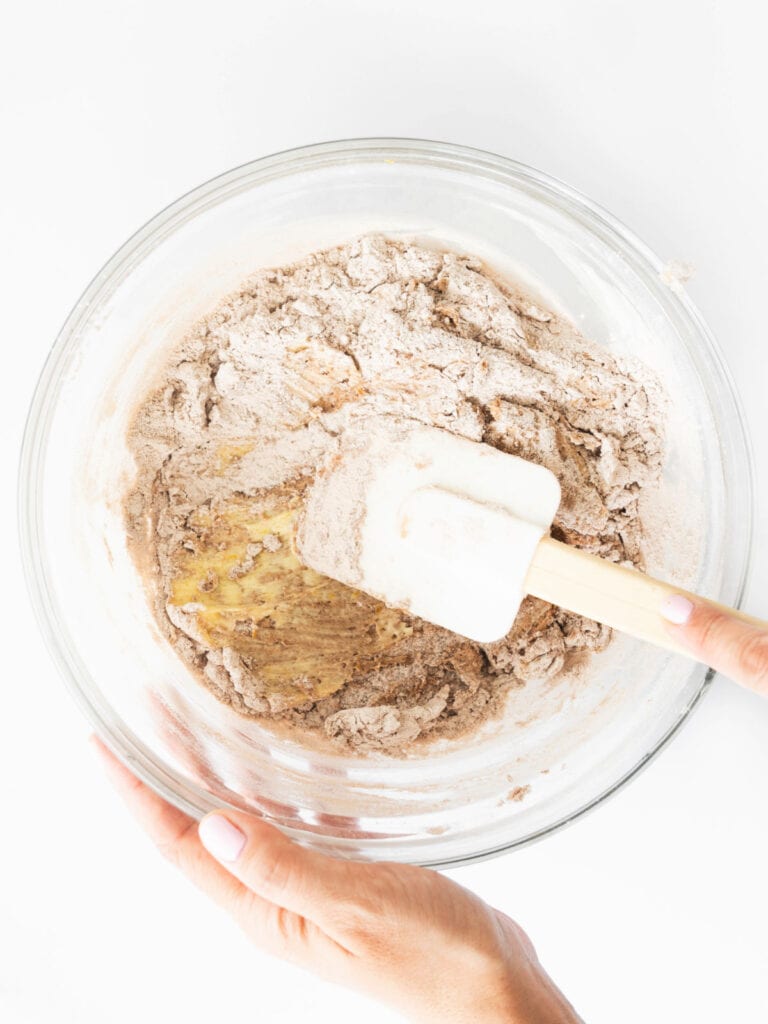
By hand: I use a large bowl and a spatula. If the butter is soft, mixing everything is simple.
Electric mixer: You can use a handheld mixer, but make sure you use it at low speed. This is not a dough that needs beating or anything like it. If you use a stand mixer with the paddle attachment, mix at the lowest speed.
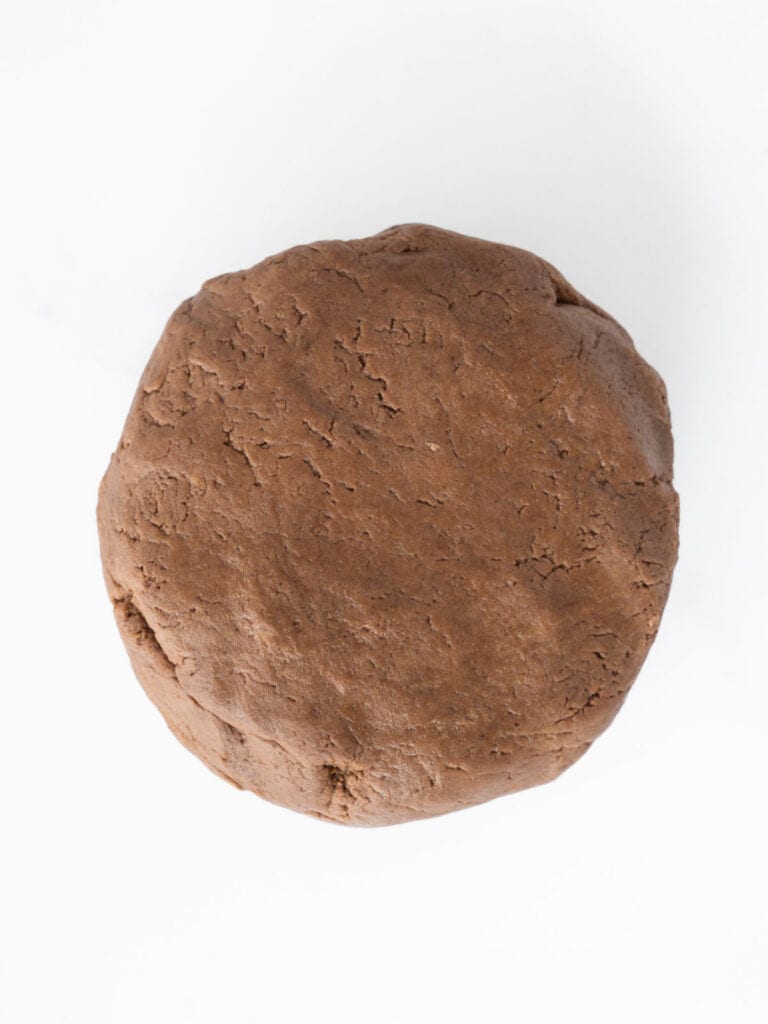
Resting
The final dough is soft to the touch and neither sticky nor dry. It needs to be covered in plastic wrap (or freezer sheets, as I do) and refrigerated before rolling.
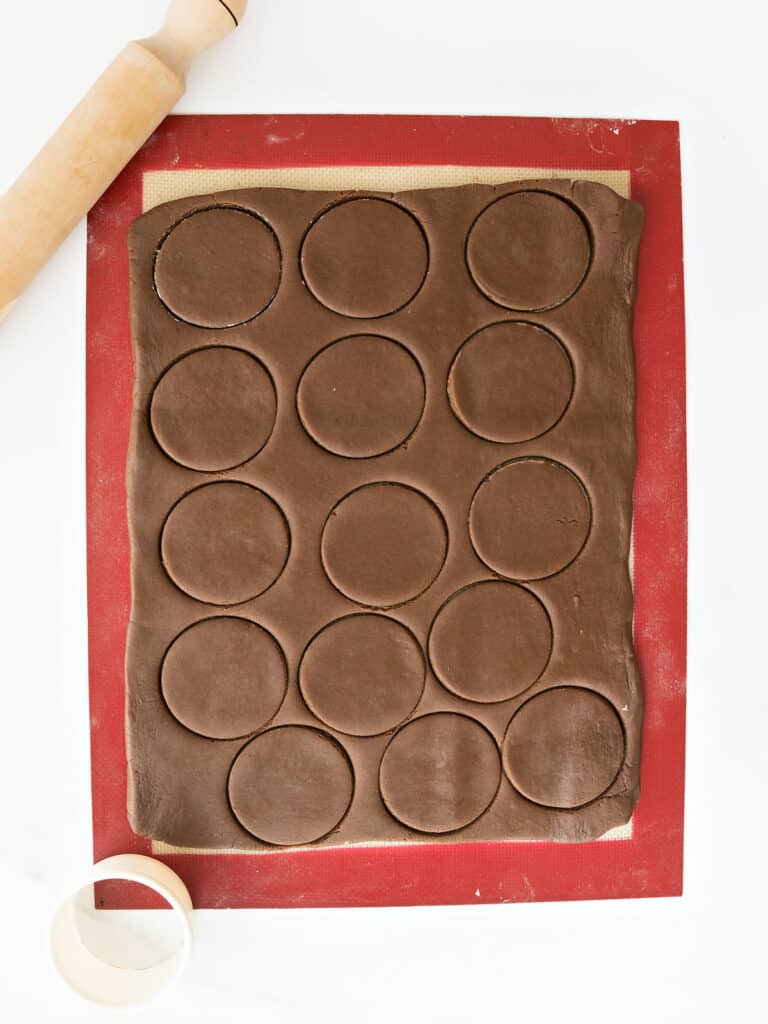
Rolling and cutting
Use a rolling pin to roll the dough in 2 parts, as it's easier to keep it cool and to work with. If you are making alfajores for the first time, I recommend you roll thinner and thicker cookies (a few of each), bake them and see which ones you like the most.
- Preheated oven: always make sure it's on before you start rolling the dough. If you forgot, place the sheets in the fridge while the oven reaches the desired temperature.
- Preparing the cookie sheets: I use parchment paper or lightly buttered sheets; both work well.
- You should leave space between the rounds, but not much, since the cookies won't expand much.
Dulce de leche filling
Dulce de leche is a sweet milk jam, a cousin to caramel, made with milk, sugar, and baking soda, the latter being accountable for its dark color.
For fillings, you need to use what we call pastry dulce de leche. It's much thicker than the regular kind. Look for the word "repostero" on the label.
Dulce de Leche brands I recommend
The best one available online (that I also use here!) is Vacalin Dulce de Leche Repostero. Another good one is Veronica dulce de leche repostero. If you want to buy in bulk, a great one is San Ignacio repostero (22 pounds) or Vacalin repostero (22 pounds).
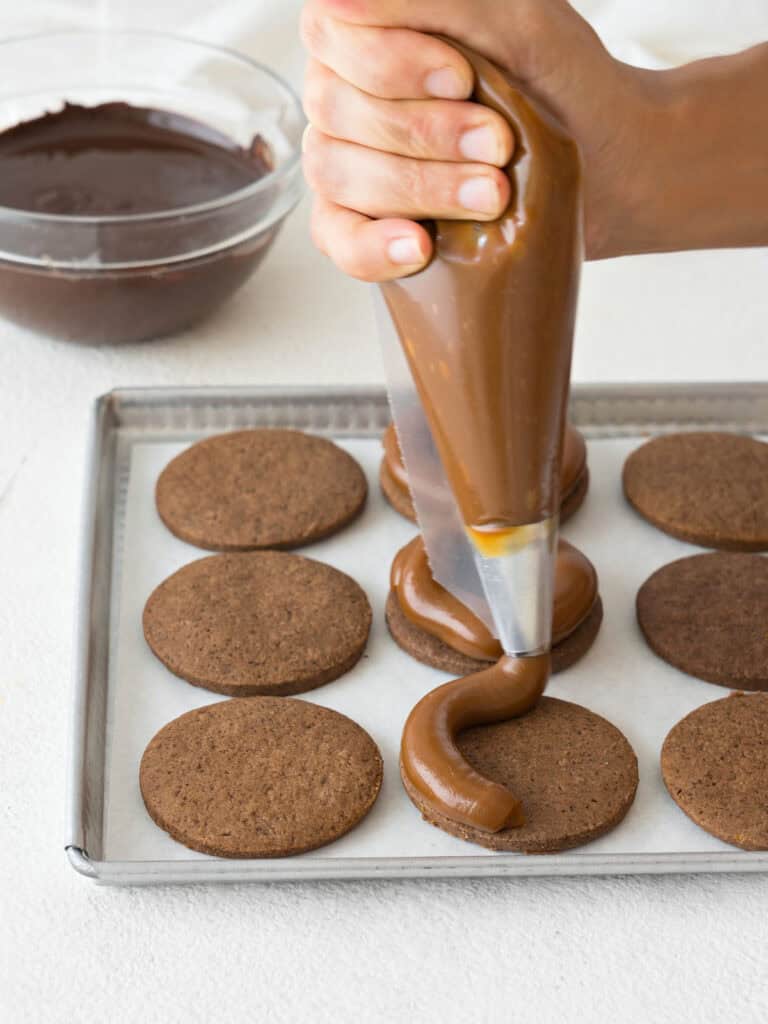
Pipe or spoon
The traditional filling was, is, and will always be dulce de leche.
Filling-cookie ratio: this is a fundamental part of an alfajor, and chocolate alfajores usually have a good, thick layer of dulce de leche, similar to the cookies. Some of us rate them according to how much filling they have (the more the better for me!).
Piping bag: You can use it with a smooth, plain piping tip for a more even and neater filling, or use a teaspoon and get more of an irregular filling.
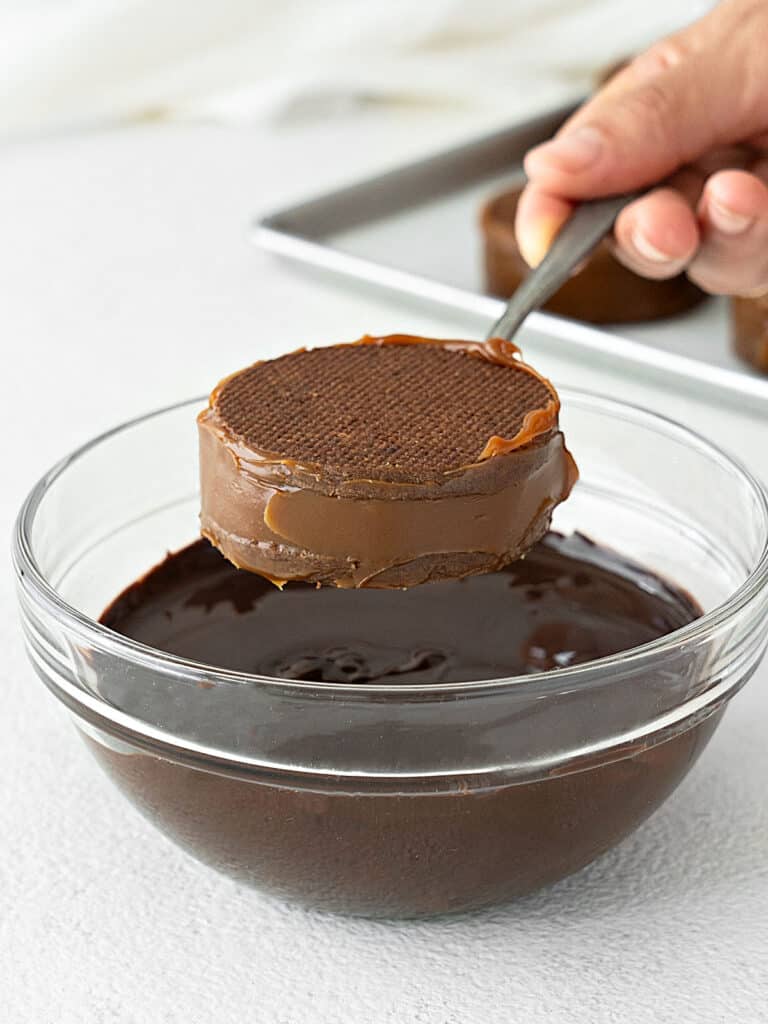
Dipping
Smooth out the sides of the sandwich with dulce de leche so you have an even wall of jam. Do so with a smooth-bladed knife or an offset spatula.
Coating chocolate alfajores
Type of chocolate to use: I like tempered chocolate for a shiny, thin coating. If you're not used to tempering it yourself (most people aren't), use tempered chocolate like Ghirardelli dark coating wafers.
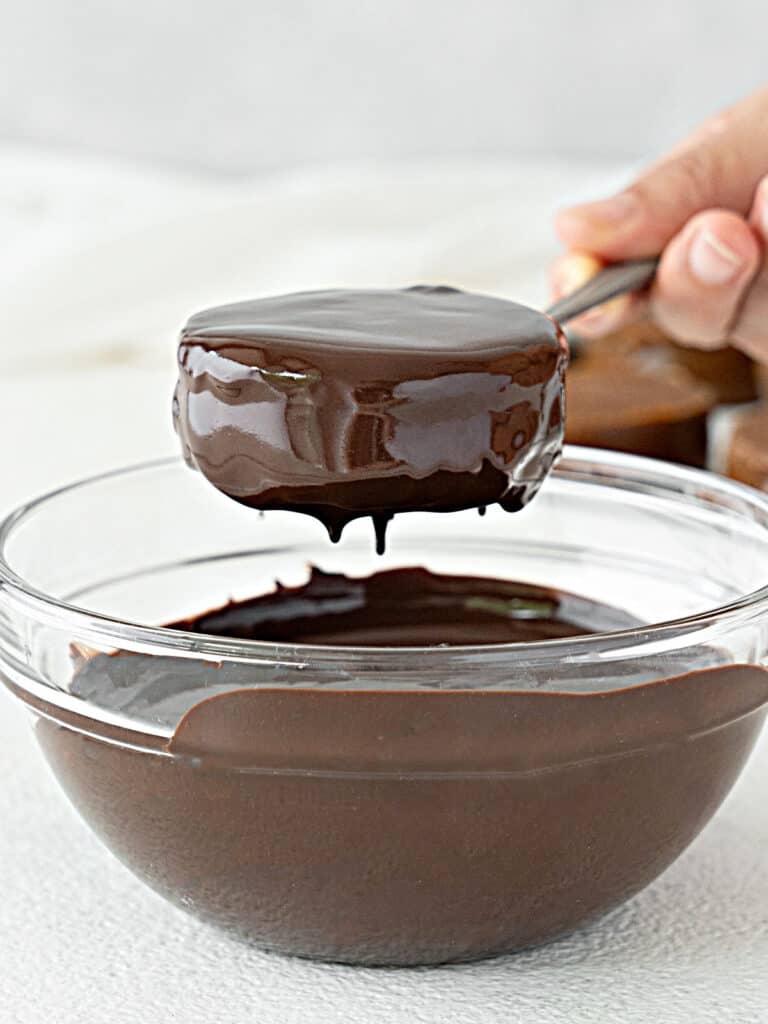
Coating
Let the excess chocolate drip so the layer is thin. It's important not to get a very thick chocolate coating.
As an Amazon Associate, I earn from qualifying purchases. Read my disclosure policy.
Best Chocolate Alfajores (Argentinian recipe)
Ingredients
Chocolate cookie dough:
- 10 ½ tablespoons unsalted butter, at room temperature
- ¼ cup granulated sugar
- 2 ½ tablespoons runny honey
- ½ teaspoon lemon zest, finely grated
- ½ teaspoon orange zest, finely grated
- 1 large egg, at room temperature
- 1 teaspoon vanilla extract
- 2 cups all-purpose flour
- ⅓ cup cornstarch
- 1 teaspoon baking powder
- 1 teaspoon baking soda
- pinch of salt
- 3 tablespoons unsweetened cocoa powder
Filling:
- 2 ½ cups thick or pastry dulce de leche, 2-3 tablespoons per alfajor
Chocolate coating:
- 14 ounces semisweet melting chocolate
Instructions
Make the chocolate dough:
- Cream 10 ½ tablespoons unsalted butter and ¼ cup granulated sugar until smooth. Add 2 ½ tablespoons runny honey, ½ teaspoon lemon zest and ½ teaspoon orange zest. Mix briefly.
- Add 1 large egg and mix until incorporated. Add 1 teaspoon vanilla extract and mix.
- Sift 2 cups all-purpose flour, ⅓ cup cornstarch, 1 teaspoon baking powder, 1 teaspoon baking soda, a pinch of salt, and 3 tablespoons unsweetened cocoa powder. Add to the butter mixture, using a spatula to combine until a soft dough forms. Do not knead, simply integrate the ingredients well until you have an even-colored dough.
- Cover the dough with plastic wrap and refrigerate 1 to 2 hours and up to 4 days.
- Preheat oven to 325°F (170°C).
- On a lightly floured surface, roll the cold dough about ⅙ inch. Cut plain rounds of about 2.5 inches and place on lined baking sheets. They do not expand a lot, but leave ½ an inch or so between them.
- Bake 8 to 10 minutes, until set and dry but still pale. It should not be hard around the edges or colored.
- Cool completely on a wire rack. At this point, you can store them in an airtight container or jar for a day or two before filling.
- Place half of the cookies on a flat surface (I use a clean baking sheet), flat side up, and pipe or spoon 2 ½ cups thick or pastry dulce de leche, using about 2-3 tablespoons for each. Top with another cookie, flat side down, pressing gently to make the filling reach the edges.
- Smooth the edges by running a smooth-bladed knife around them, using more dulce de leche if necessary. It will make an even wall of dulce de leche all around it.
For the chocolate coating:
- Melt 14 ounces semisweet melting chocolate in a wide bowl that accommodates dipping an alfajor comfortably.
- Place each alfajor on top of a large fork, and dip it into the melted chocolate. Flip it over carefully with the fork to coat it completely, then lift it carefully and let excess drip off. You want a thin coating if possible.
- Place the coated alfajores carefully on parchment paper or a silicone mat that has been set on a baking sheet. Move or shake the pan slightly before fully set to avoid thick bases. Let the coating set at room temperature.
- Let the alfajores rest at room temperature for 1 or 2 days before eating. Don't refrigerate them. Place them in an airtight tin or container so they soften and meld flavors. They can be stored for a week or two, sometimes more.

Patricia Elina Ragsdale says
I am excited to make the chocolate Alfajores. "Alfajores del Mar de Plata" I remember when I was little and we visited our family in Buenos Aires, we went to Mar de Plata and I remember the "Alfajores del Mar de Plata" (Havanna-before they had stores everywhere). What a treat that was! what a great memory it is. I make your "Alfajores de Maicena" all the time, my 1st cookies I ever made as a little girl. They taste exactly like the recipe from Dona Pedron we grew up with ( my mother's cook book) We used to have to make homemade Dulce de Leche from condensed milk in cans because you could not find dulce de leche in the US. Thank you for bringing such special memories back
Frances says
Hi, I am looking forward to making these, they sound delicious. How many biscuits does the recipe make ? We are a family of 6 and I am sure we will all want at least two each !
Frankie
Paula Montenegro says
Hi Frances! It makes 24 cookies, so you’ll have 12 alfajores.
Frances says
where can I get dulce de leche in sweden ? or is there a substitute ?
Paula Montenegro says
Hi Frances, I would try amazon Sweden. If it's not there, look for supermarkets or stores that carry argentine products. If there's a bakery that carries items with dulce de leche, ask them where you can get it.
There's no substitute really for the thick one needed for this filling, as you could make it from condensed milk and keep it in the fridge so it thickens a little, but it will soften too much later, as alfajores are meant to be room temperature.
Frances says
Thank you, I will have a go at boiling and using corn flour. I am longing to taste one !