
This recipe is a classic French dessert sauce with a rich, creamy texture and a sweet vanilla flavor. It's not complicated to make (there is a step-by-step video!), even though the yolks are cooked on the stove, which can be intimidating sometimes. Serve it as a sauce for fruit desserts, cakes, pies and puddings.
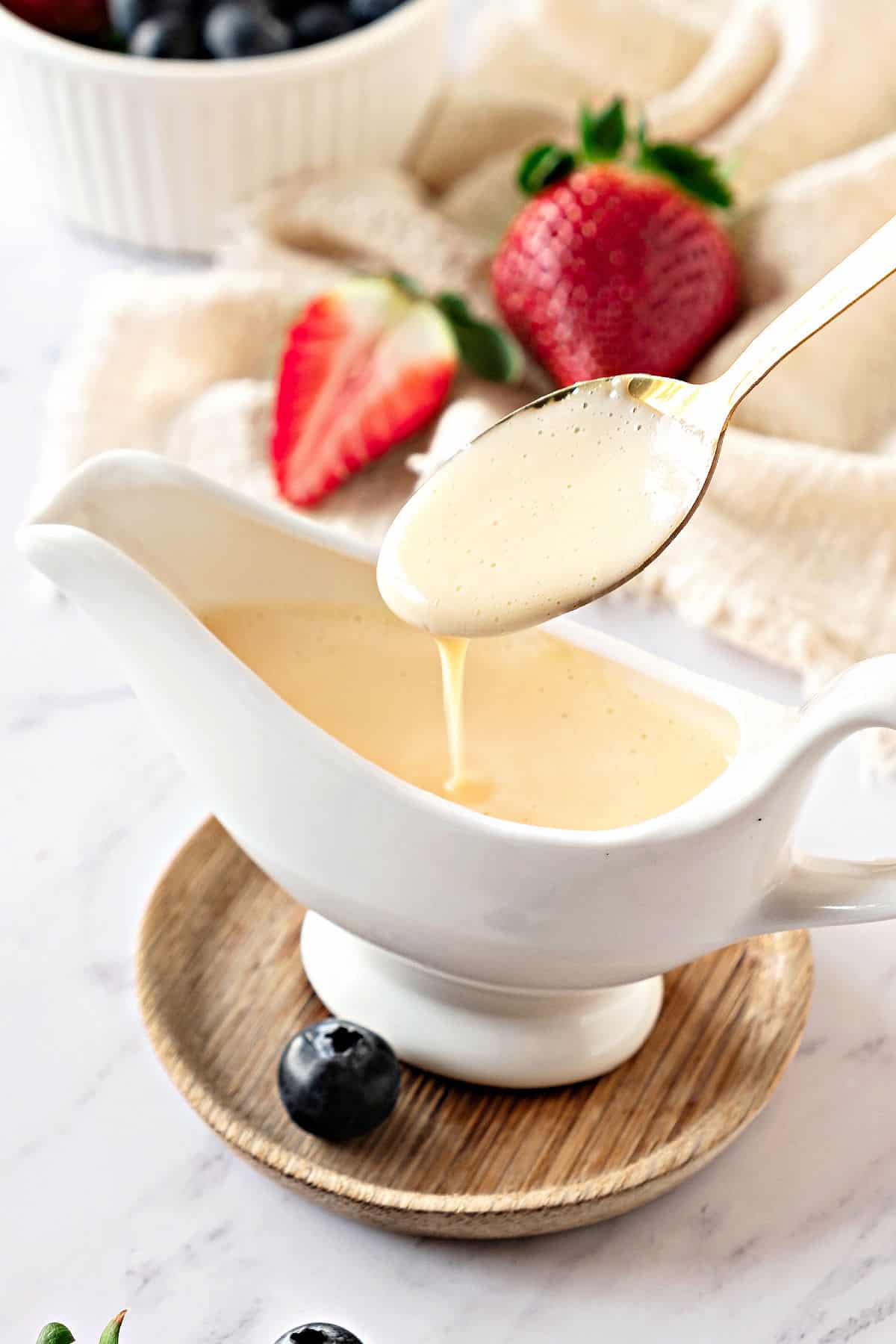
French vanilla sauce
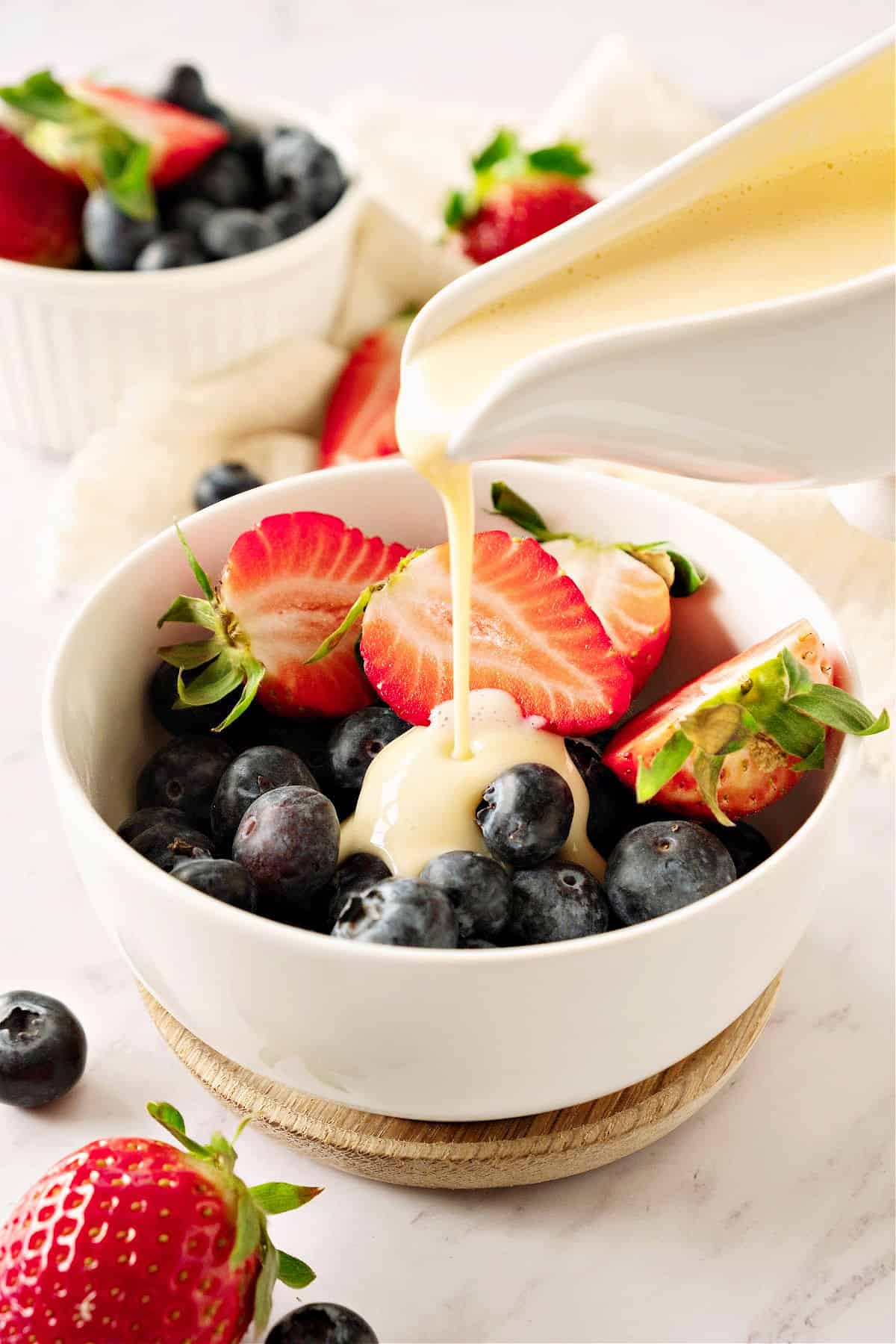
Also called English cream (the translation from French), this is like a pastry cream but lighter and more pourable, perfect as a sauce for desserts like old-fashioned bread pudding, baked apples, or to dress up a bowl of fresh berries.
It's different from vanilla custard pudding, which is a dessert on its own and thicker, and contains cornstarch.
Crème anglaise is a light, pourable custard, made on the stove with egg yolks cooked with sugared milk until they thicken enough to be called a sauce. It's part of old-fashioned ice cream recipes that require a custard base.
Vanilla is the traditional flavor, and you can use pure vanilla extract, paste (my favorite) or beans. The last two make the flavor more sophisticated, add depth, and leave tiny, unique black specks that make the sauce look more like the real deal.
But this custard can be flavored with so many other ingredients: citrus zest, other extracts (like coffee, rum, maple, citrus, and almond), cocoa powder, brown sugar, and more. So, start with the traditional and play around until you find your favorites!
Serving vanilla custard sauce
- Fruit-based desserts: such as pies, tarts, and crumbles. It pairs well with apples, pears, berries, and stone fruits.
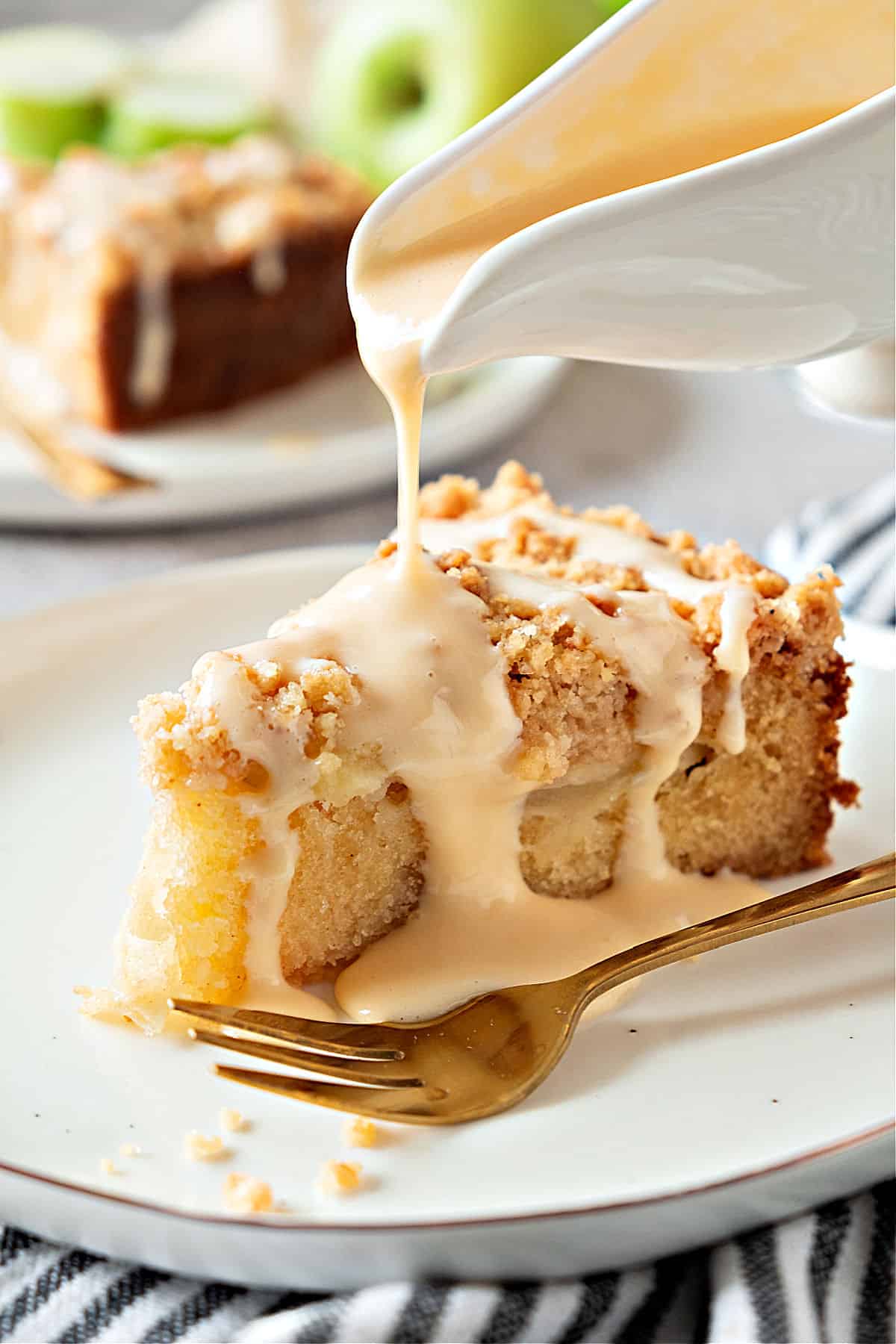
- Cakes: especially those with a light and airy texture, such as sponge cakes or angel food cakes. Or with fruit. It can be served either on top of the cake or on the side. It's a classic with Irish apple crumb cake.
- Puddings: it's an ideal partner for old-fashioned desserts such as sticky toffee pudding, fruit bread pudding, and rice pudding.
- Pancakes and waffles: it can be poured over these popular breakfast dishes with fresh fruit, like you would whipped cream.
- Dessert soufflés: serve alongside or pour over delicate fruit or chocolate soufflés to add extra richness and flavor. It's also a traditional pairing with one of my favorites, the classic floating island.
Testing notes
It should be fluid and pourable. But if you want it a bit thicker, I suggest you use less milk or substitute half with heavy cream, as it doesn't contain cornstarch or flour.
Whole milk is the way to go if you want the traditional, rich sauce. Even a little heavy cream if you want an even richer, thicker result. When using low-fat milk, the result was a thinner, less rich mixture. I haven't tried using an alternative milk, but the texture and flavor will not be the same as the original.
The yolks and sugar are traditionally whisked by hand rather than beaten with a mixer. You want the sugar to start dissolving and the preparation to be a bit thickened and lighter in color. You don't want to add too much air or reach the ribbon stage. I've done both with good results. If using a hand-held electric mixer, beat them at low speed and just until they thicken a little, about a minute, maybe two at the most.
Cooking temperature: It's key to cook the yolks and milk over low heat until they thicken. Watch it closely, stirring frequently, and don't let it boil. Avoid the temptation to speed up the process by increasing the heat.
I like it better after several hours or a day in the fridge. So I usually make it the day before.
Storage: It lasts in the refrigerator for several days or a week. You can freeze it, though it will never have the same consistency once you defrost it. However, depending on how you plan to serve it, you might not care.
Steps to make creme anglaise
Vanilla bean or extract: you can use either. The better the vanilla extract, the better the custard's flavor. Vanilla paste and beans have a more subtle flavor, and those lovely, tiny specks.
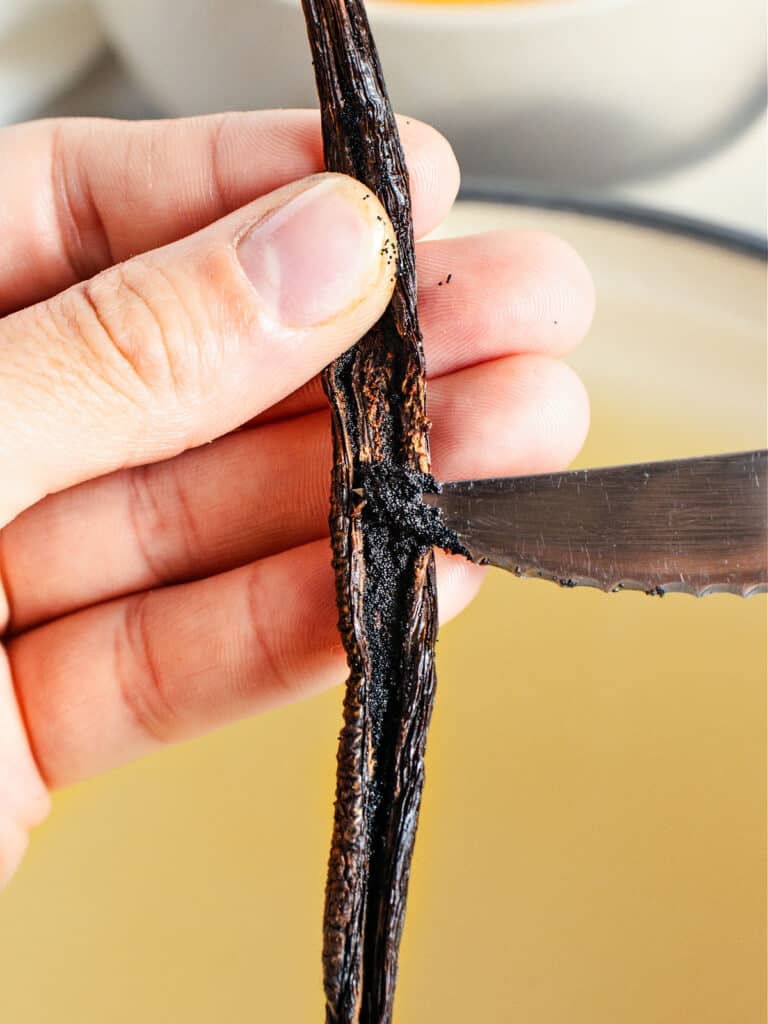
If using vanilla beans
- Place the bean or pod flat on the surface.
- Open the bean lengthwise with a sharp knife (I use a small one with a pointed tip).
- Use the tip of the knife to scrape the inside of each half bean lengthwise, dragging the seeds.
Vanilla sugar tip
Place the empty vanilla beans (washed with tap water and dried after using them) in a jar with powdered sugar and leave for several weeks. You'll have amazing vanilla sugar!
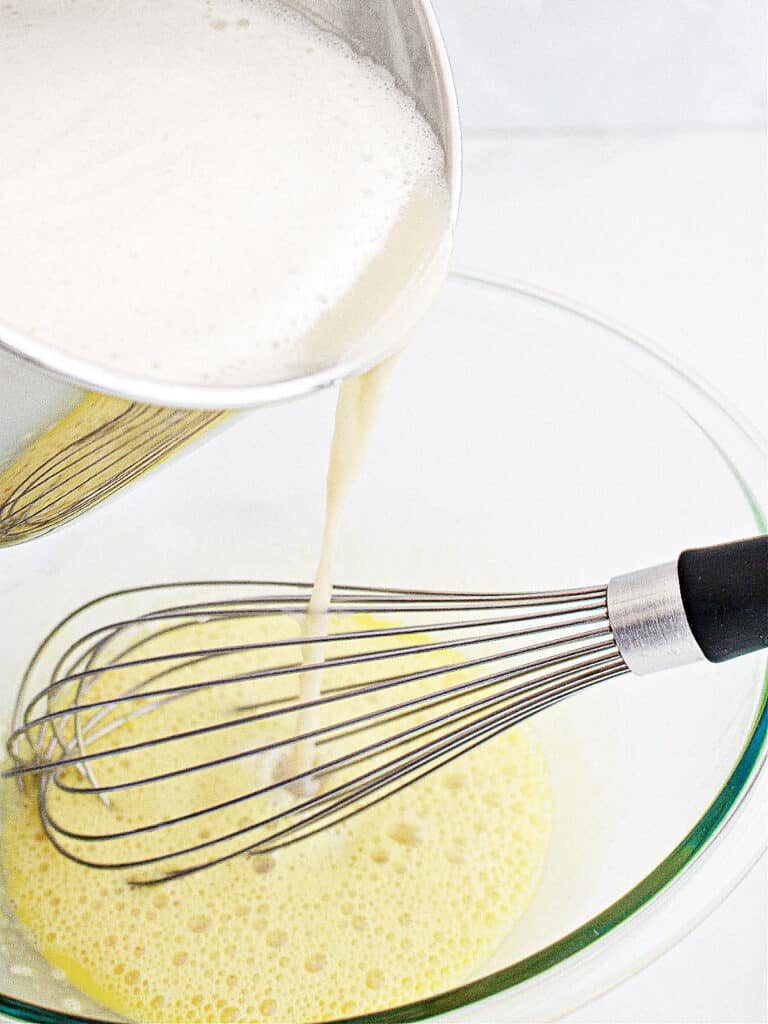
Hot milk and egg yolks
The milk and sugar are cooked until just about to break into a boil and then poured slowly over the beaten egg yolk mixture.
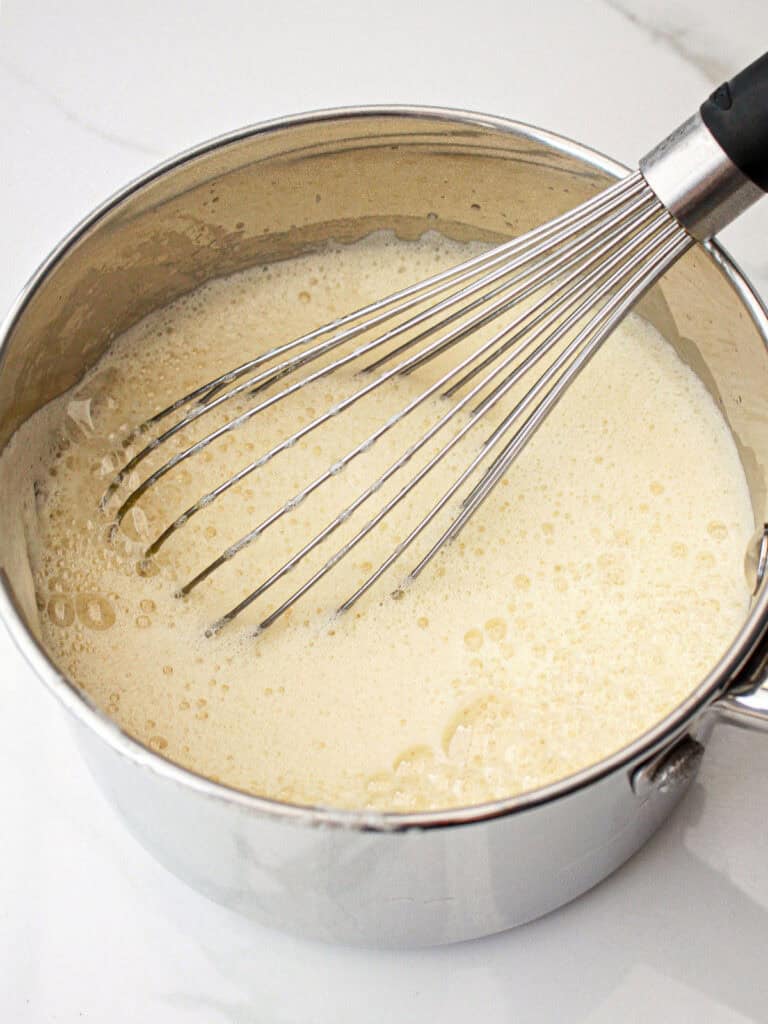
Return the mixture to the saucepan
The preparation is returned to the saucepan to cook and thicken. This step needs your undivided attention and constant stirring. Use a whisk or a wooden spoon.
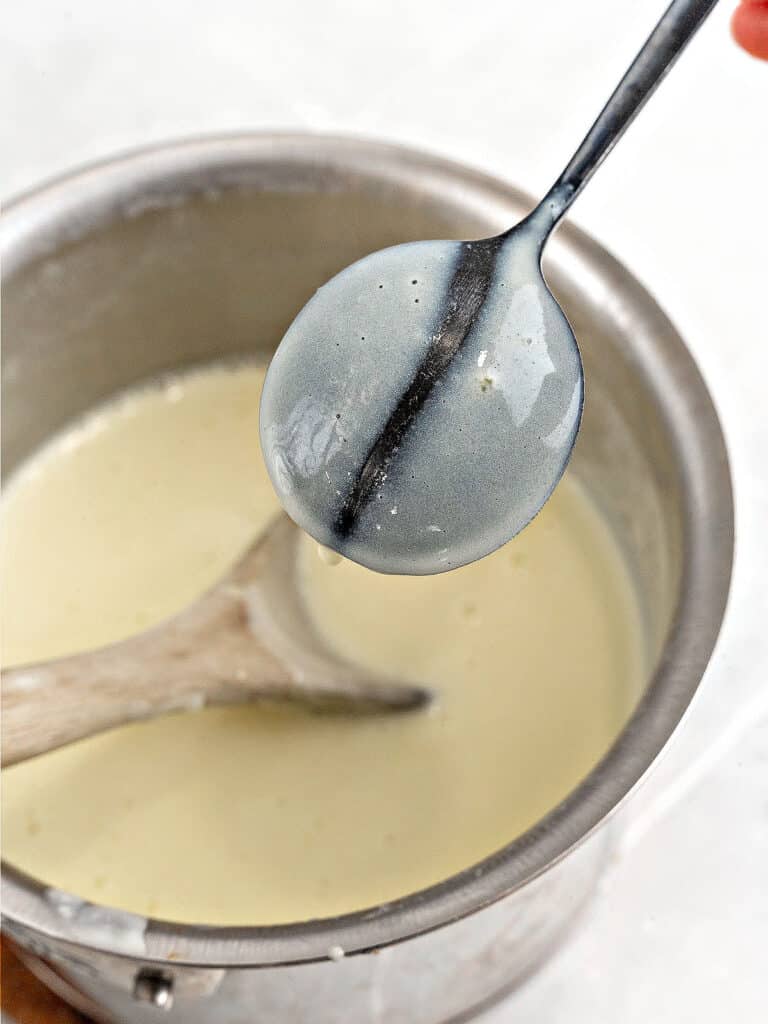
Spoon test
Coat a spoon with custard. When you can swipe your finger down the back of a spoon, and it stays put, the sauce has thickened and cooked enough. Don't let it curdle.
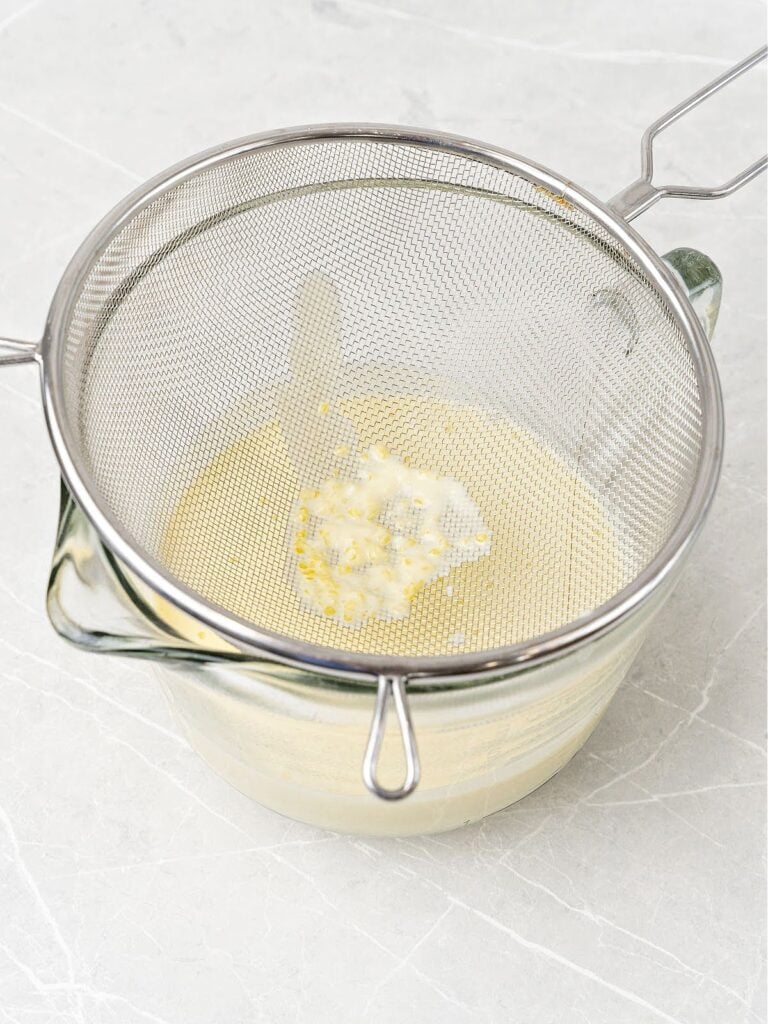
Strain it
This is important as it's normal for bits of egg to cook or stick to the bottom. Use a fine mesh colander and leave any impurities and solids behind.
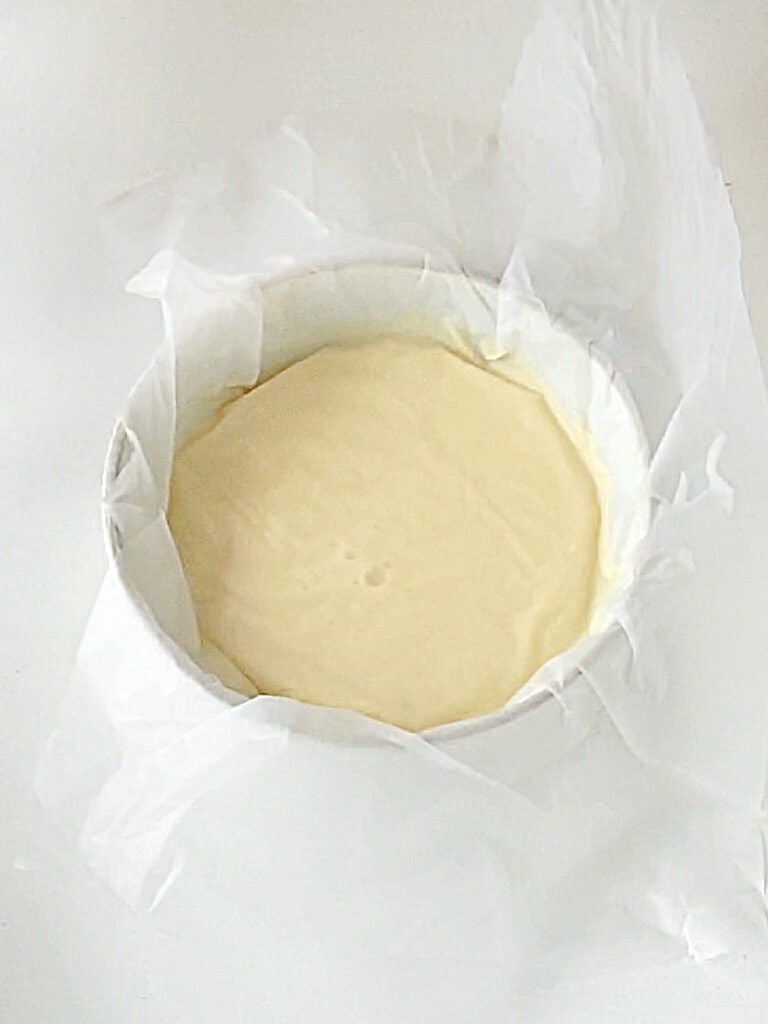
Cover and chill
Use plastic wrap or freezer sheets (my choice, as they're easier to manipulate) and make sure they touch the whole surface. This prevents a thick layer from forming as the sauce cools down.
Chill for a few hours before serving.
If you made this recipe and loved it, you can comment below and leave a 5-star ⭐️ review. Also, if you had issues, let me know so we can troubleshoot together.
You can also subscribe to our FREE email series 'Baking the Best' and our regular newsletter. Or follow and save my recipes on Pinterest.
As an Amazon Associate, I earn from qualifying purchases. Read my disclosure policy.
Custard Cream Sauce (Crème Anglaise)
Ingredients
- 3 egg yolks
- 1 cup whole milk, use half heavy cream and half milk for a richer sauce
- ¼ cup sugar
- ½ teaspoon pure vanilla extract , or vanilla paste
Instructions
- Have all ingredients ready. Including a bowl with ice and some water if you're going to cool it down with an inverted water bath (see Notes below).
- Pour 1 cup whole milk and half the sugar into a medium saucepan. Whisk until it starts to dissolve and heat over medium heat until it starts to barely simmer, or bubble in the edges. Don't let it boil.
- Meanwhile, beat 3 egg yolks with the remaining sugar until slightly thickened. It's recommended to use a whisk because we don't want to incorporate too much air, but if you only have a hand-held mixer use it just until the mixture thickens.
- Add the hot milk to the egg mixture a little at a time (we don't want to cook the yolks with the heat) until you add ⅔ of the milk.
- Return this mixture to the same saucepan that has the rest of the milk and cook over low heat for a few minutes, stirring constantly, until the mixture is hot and thickens slightly. Don't let it boil.
- Check a few times that the custard is not boiling as it might curdle. That's why we use low heat, to be able to cook it without curdling.
- It should coat the back of a wooden spoon and, if a finger is drawn across it, it should leave a clear path.
- Strain the custard onto a bowl to discard any solids that might've formed while cooking.
- Add ½ teaspoon pure vanilla extract or paste and mix.
- Transfer to the ice water bowl if using an inverted water bath (see Notes below), or cover the bowl with a piece of plastic on top that touches the whole surface.
- Cool at room temperature and refrigerate.
- Store it in an airtight jar or container in the refrigerator for 4-5 days.

Mink says
Looking for this ! Thank you
Autumn Outland says
I made this today because I loved the name and I loved your detailed instructions. Your recipe was a success because I didn’t mess up the eggs. This is decadent, I’ve never had this before. Thank you for the recipe, you’re right, after several hours it tasted even better. Very rich and complex.
Paula Montenegro says
SO happy to know you loved it! I agree that it's such a wonderful sauce to have around. Have a great weekend.
angiesrecipes says
I love it with pancakes 🙂 Real vanilla makes all the difference!