

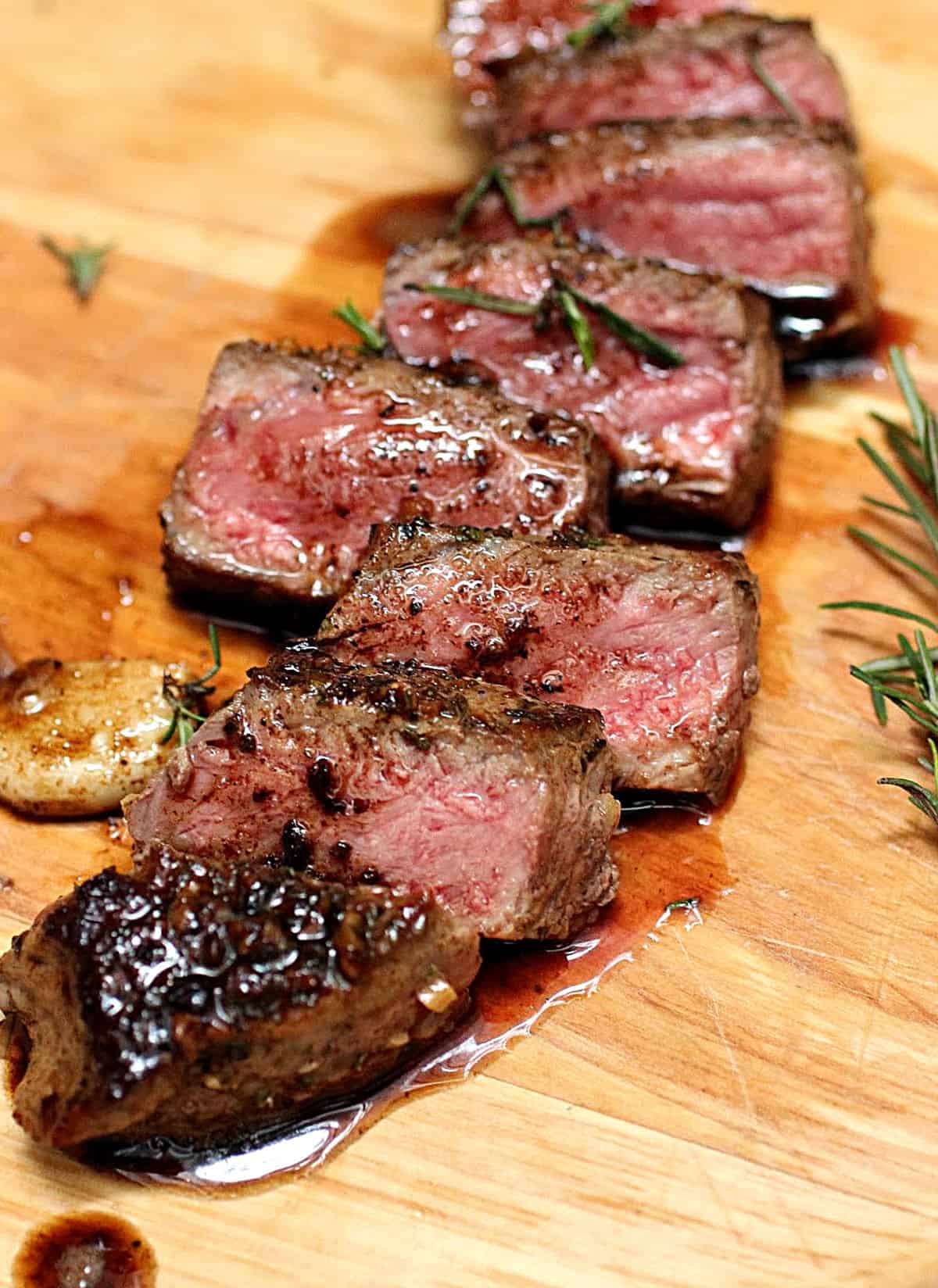
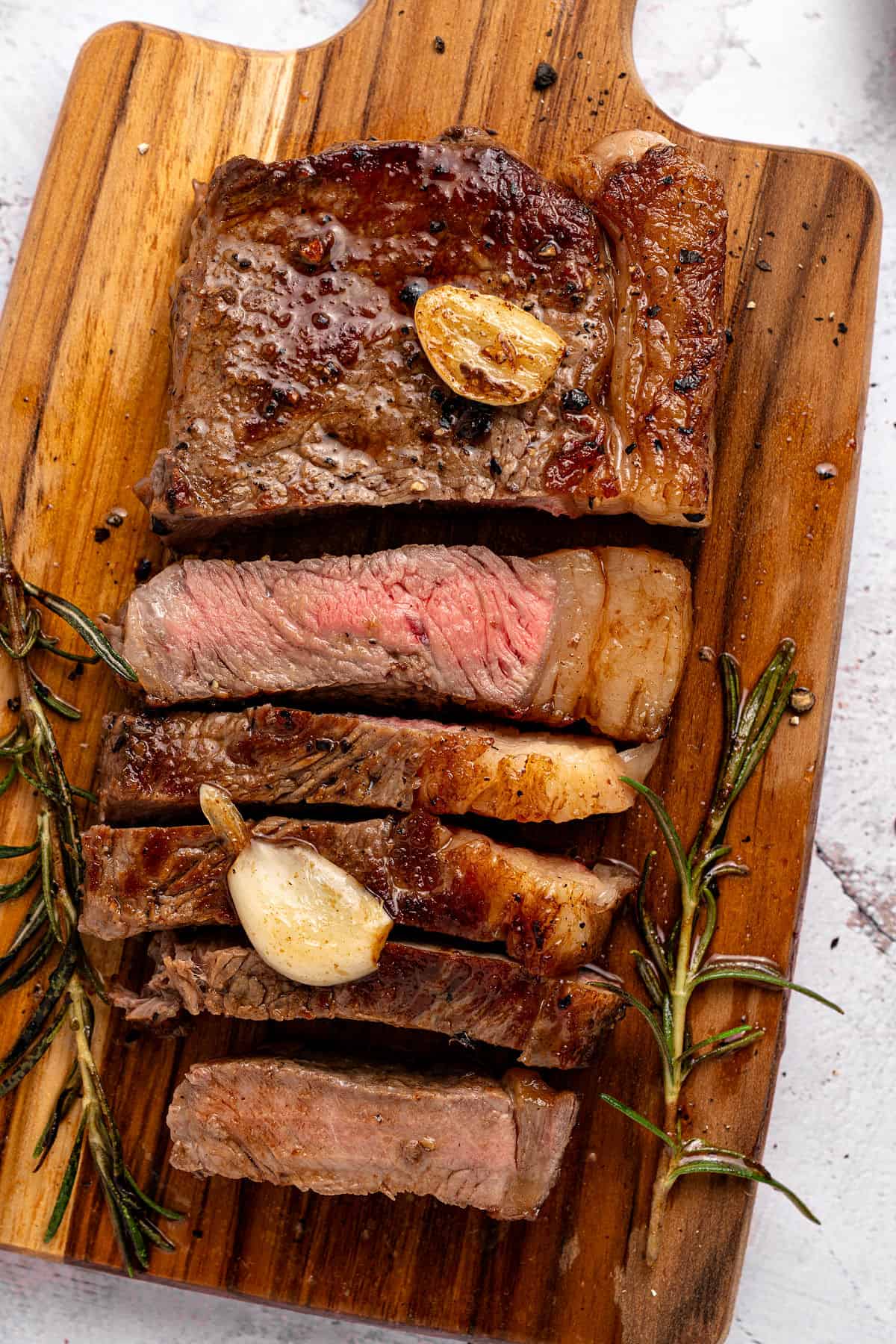
This rosemary garlic steak is seared in a hot skillet, then basted with garlic, fresh rosemary, and butter until it has a deep golden crust and a juicy center. It's ready in about 25 minutes, and a grill pan works just as well if you want to cook indoors.
This is one of my star dishes, one I've been making for decades with sirloin and sometimes ribeye steak. It uses few ingredients and just never fails to impress. Follow the tips below, and you can become a master steak cook.
SAVE THIS RECIPE
Best rosemary steak
Now, I live in Argentina, where meat is officially our national food. It is a serious business. Barbecue (or "asado") has become the number one choice here, our favorite thing to eat.
And while our grilling would be considered plain for most of you (no marinades, rubs or additions of any kind while being grilled, except for salt and pepper), the fat in the meat does the flavor trick and making a great piece of barbecue meat is no beginner's luck, no matter how many condiments you pile afterward. Maybe a bit of chimichurri sauce, but not much more.
The meat here is very fresh; no fourteen or twenty-one days waiting for it to age.
That said, I adjust it slightly when grilling meat indoors. So today's recipe comes with add-ons. And let it be known that you can also make amazing steak and chimichurri sandwiches with this recipe.
- Mikaela ⭐️⭐️⭐️⭐️⭐️
My husband and I LOVE this recipe. It is our go-to for steak. We are savory people through and through, and the rosemary is perfect with it. My husband is usually the one who cooks the steak, so learning not to burn mine and make it well done is something he's still working on, but the instructions are definitely helpful for him! Thank you for sharing!!
- Vin ⭐️⭐️⭐️⭐️⭐️
This was phenomenal! It is definitely our go-to steak preparation from now on.
- Nicole ⭐️⭐️⭐️⭐️⭐️
This is the best steak recipe I've ever made! We enjoyed it very much, and I doubt I'll ever make steak another way again. Thank you so much!
Testing notes
Paula's tips that make a difference.
Have the meat at room temperature. That way, it'll be more tender. If it's frozen, defrost it overnight in the fridge. The less change in temperature while defrosting, the better.
Salting: add salt right before it goes into the skillet. If you want to infuse some garlic and rosemary, rub them on the steaks, leave them at room temperature for twenty minutes, and salt them at the last moment.
Thickness: I like steaks to be two fingers (1 to 1.5 inches) thick if you want it medium rare with a good crust. Some people say up to 3 fingers, which can be too tall in my opinion.
Always preheat the pan: Make sure the skillet, steak iron griddle or cast-iron pan is preheated. If you forgot, let the meat wait until the pan is hot.
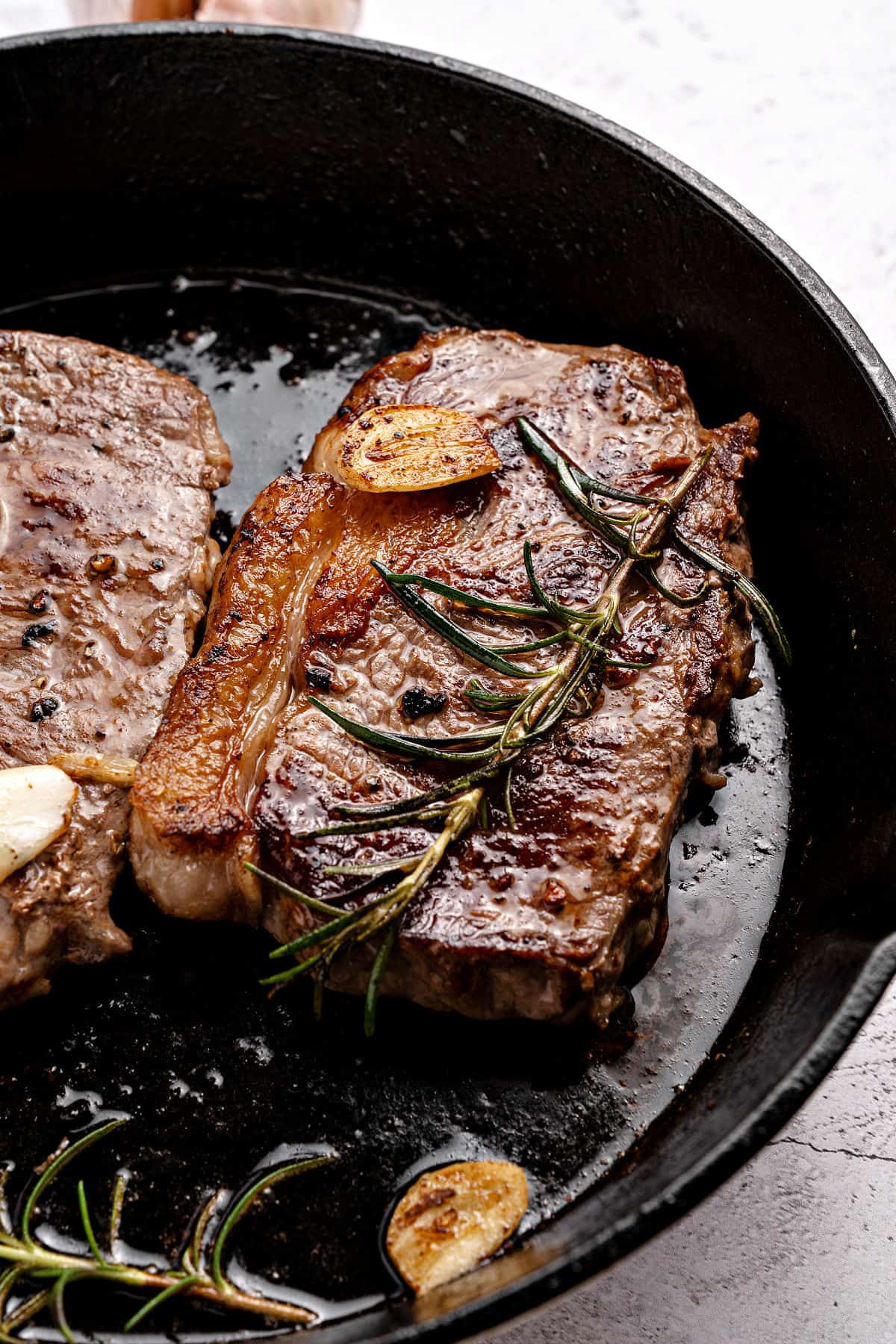
Searing: The steak must be first seared (cooking it quickly over very high heat to seal in the juices) on both sides over high heat, but finished over medium/low heat, that is, unless you like it very rare inside, almost raw (I'm looking at you, mom!). Otherwise, it will become flushed, as we say here, which means the outside is too dark before the inside gets a chance to cook properly.
Resting: Always let it rest for at least 3-5 minutes after you remove it from the heat source. The juices go to the outer part of the meat piece while cooking, and the resting period redistributes them. So you don't have a sudden spill of juices when you cut.
Testing for doneness: Many use a meat thermometer, and it's a good way if you're apprehensive about cooking steak. Or if you're used to it. Keep on using it! I don't usually, as it's not the way I learned, probably because I'm from Argentina. I never pierce or cut a steak to check for doneness. To test it, I lightly press it down with a fork or kitchen tongs. The more it gives, or the flabbier it feels, the rarer it is. When it's very cooked, the meat will hardly yield when you press it. After years of cooking steak, I know what my ideal doneness is.
What type of meat should you use?
I have two cuts I swear by when making this garlic butter steak:
Sirloin steak:
Lean but flavorful and perfect for grilling indoors or out. This is what I'm using for this post. It was a staple way before we became very familiar with ribeye steak here, and still is a fantastic cut for pan-seared steaks. This also applies to NY strip steak.
Ribeye steak:
Probably my favorite cut of meat if I could only choose one for indoor cooking and outdoor grilling. It has two types of meat, lean and tender on one side, flavorful and chewier on the other.
Should you leave the fat on or not? I do the following for both cuts of meat: I strip away most of the outside fat but use it to flavor the skillet. Grab a piece of fat with a fork and grease the hot pan; it will quickly melt. Or I just leave it on; it will melt and mix with the butter in the pan.
What does rosemary do for steak?
Rosemary adds a piney, slightly peppery aroma that stands up to the richness of beef. Its oils dissolve into the hot butter and coat the steak, while garlic brings savory depth. Together they season the meat with almost no work, and because rosemary is sturdy and punchy, it doesn't disappear under high heat the way delicate herbs do.
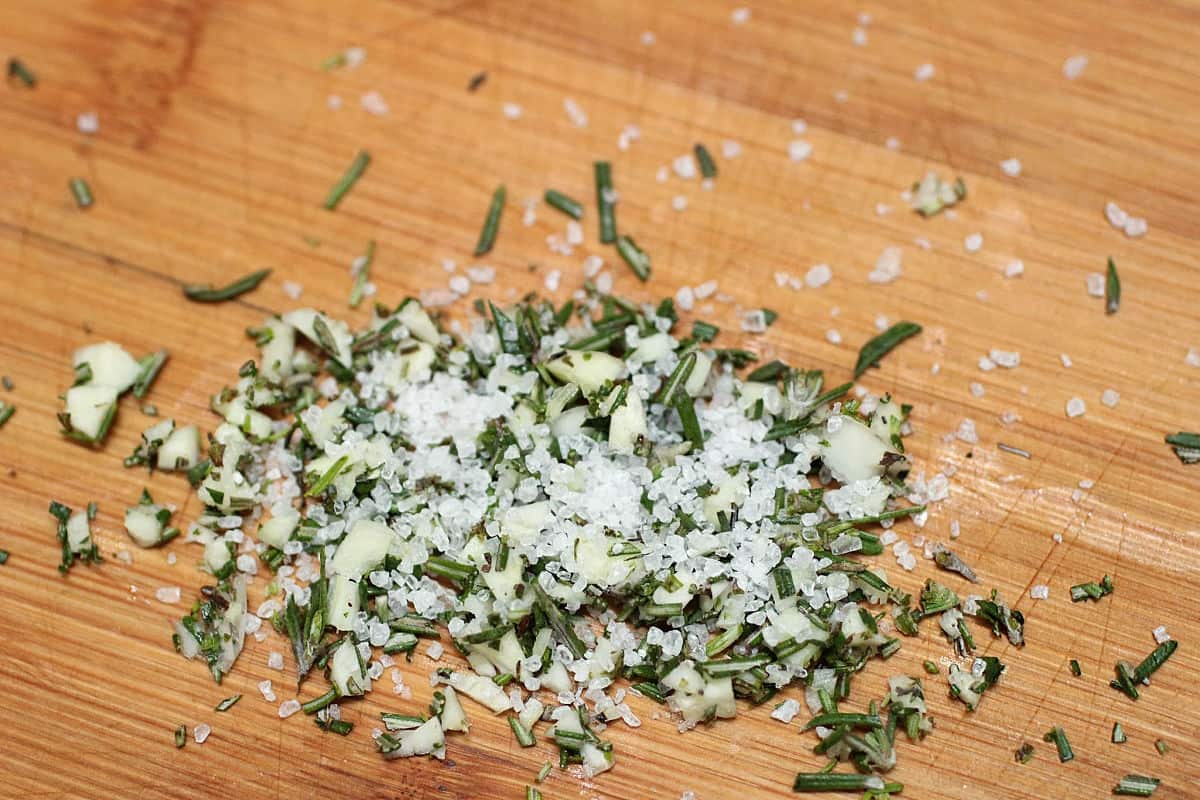
Rubbing garlic, rosemary and salt has been my easy way of adding extra flavor to steak without a lot of work. I discovered it almost by accident, and it became a staple. It adds so much to the end product; it's one of those simple secrets that you'll be forever grateful for.
Ingredients
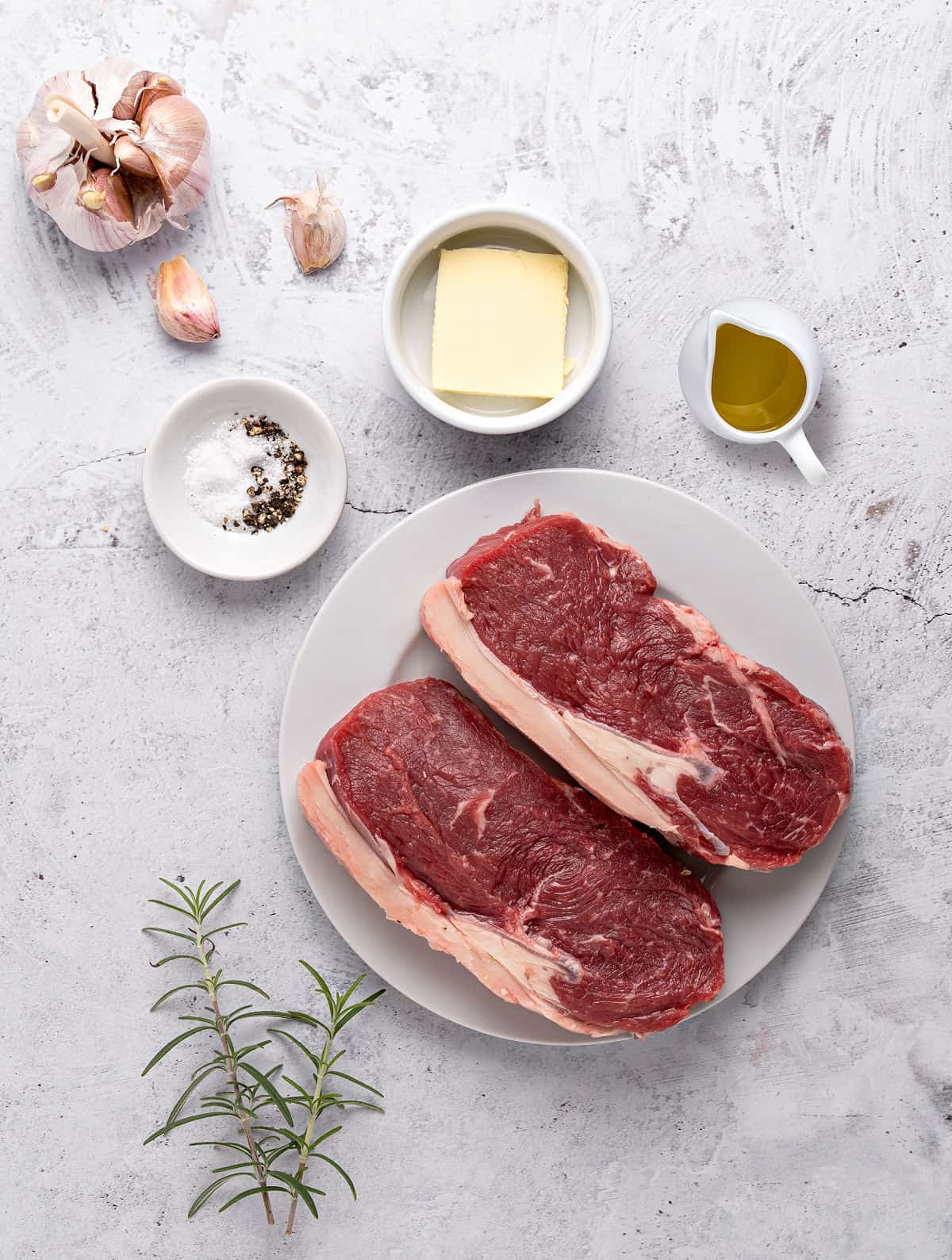
- Steak: of course, this is the star, so buy the best you can afford, always. Sirloin and ribeye are my top choices by a lot.
- Rosemary: Fresh is better, but in a hurry, dried will certainly do.
- Fresh garlic: so it can be chopped with the herb and salt or used whole.
- Butter: It gives the meat a great flavor, but oil can also be used.
- White wine: it's used to lift the bits that stick to the pan when the meat is cooked. It adds a great flavor, but use water if you want to, by all means. I also use red wine; whatever I have opened, really.
How to cook sirloin in a skillet
They are few and simple, but make sure you use the right amount of heat so the steak doesn't burn. And read the tips below first.
Preheat the pan
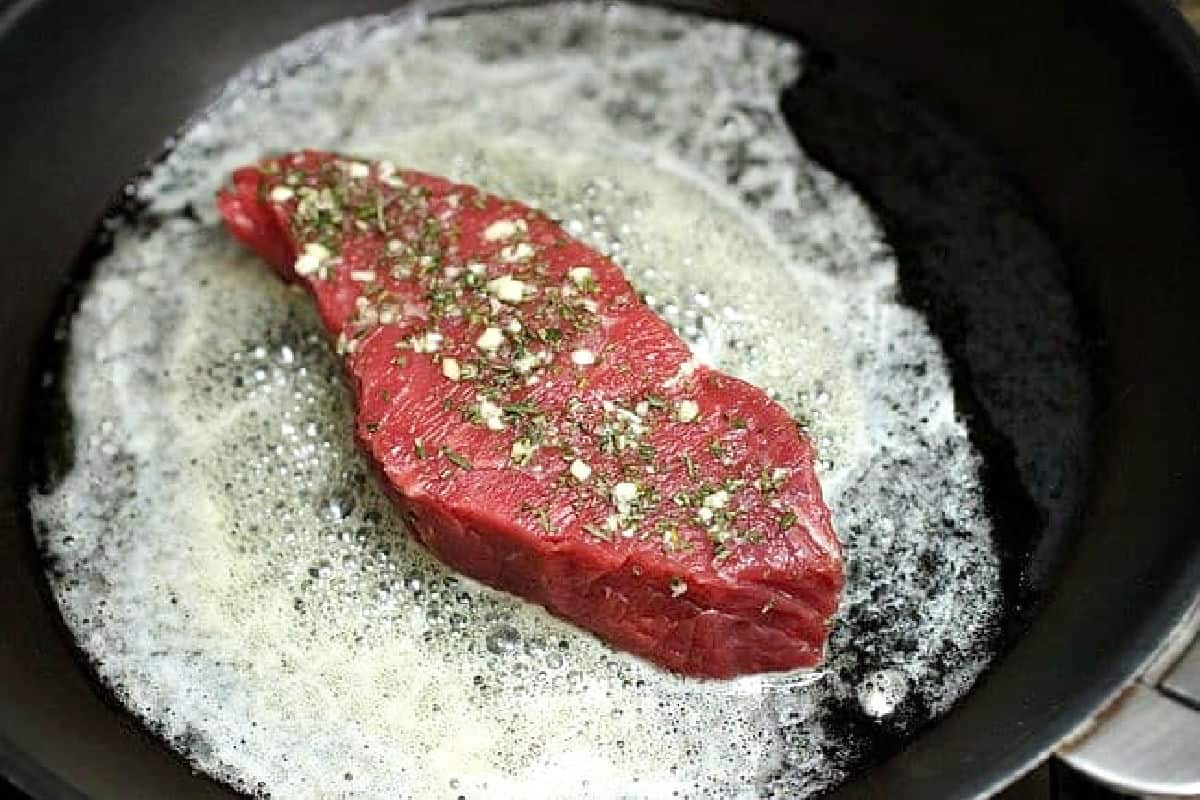
Rub the room-temperature steak with the rosemary, garlic and salt mixture. Melt the butter in a skillet. Do so on a medium/high heat and add the steak when it foams.
Turn the steak over
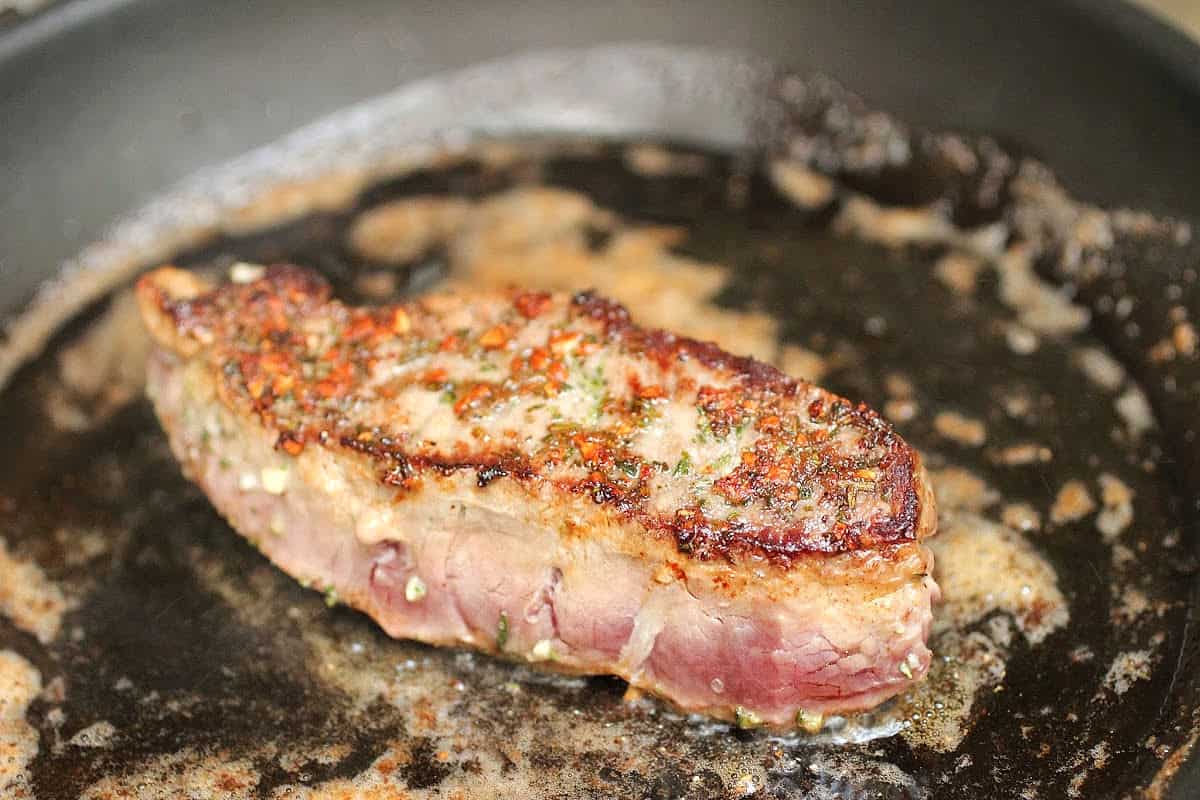
The steak must be turned over halfway to cook evenly. The time it takes to sear on each side will depend on its height, so it might take a few more minutes (if thicker) or a couple less (if thinner).
Add liquid to deglaze
This is where you create that wonderful rosemary garlic butter pan sauce. The best part of this steak is what's left in the skillet. After the second turn, add a splash of white or red wine. It steams furiously and lifts all the browned bits of garlic, rosemary, and butter stuck to the pan. Cook it for a minute or two until it reduces to a glossy glaze, just enough to spoon over the sliced steak.
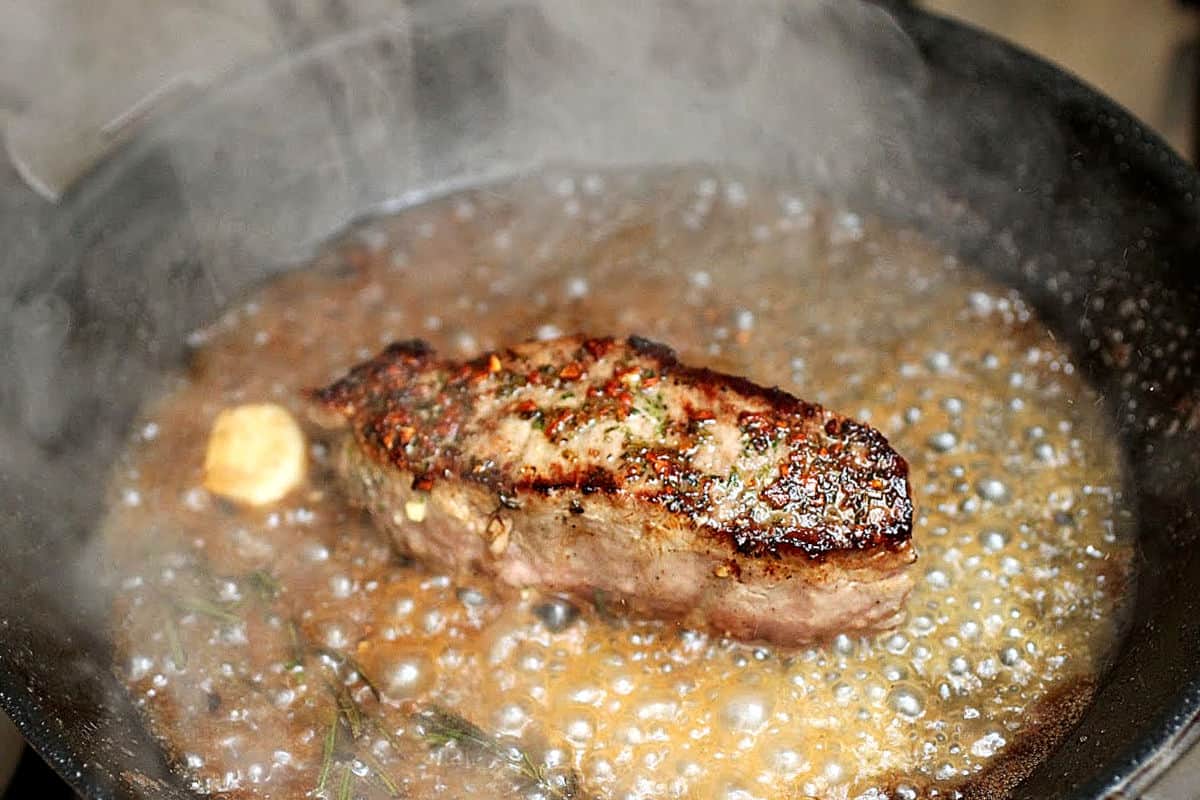
No wine? Use a splash of water, or skip the liquid and pour the pan juices over the steak. They're already full of butter, garlic, and rosemary.
Want more sauce? Swirl in an extra tablespoon of cold butter after you take the pan off the heat. (Optional, and not part of the base recipe.)
Resting time: so important!
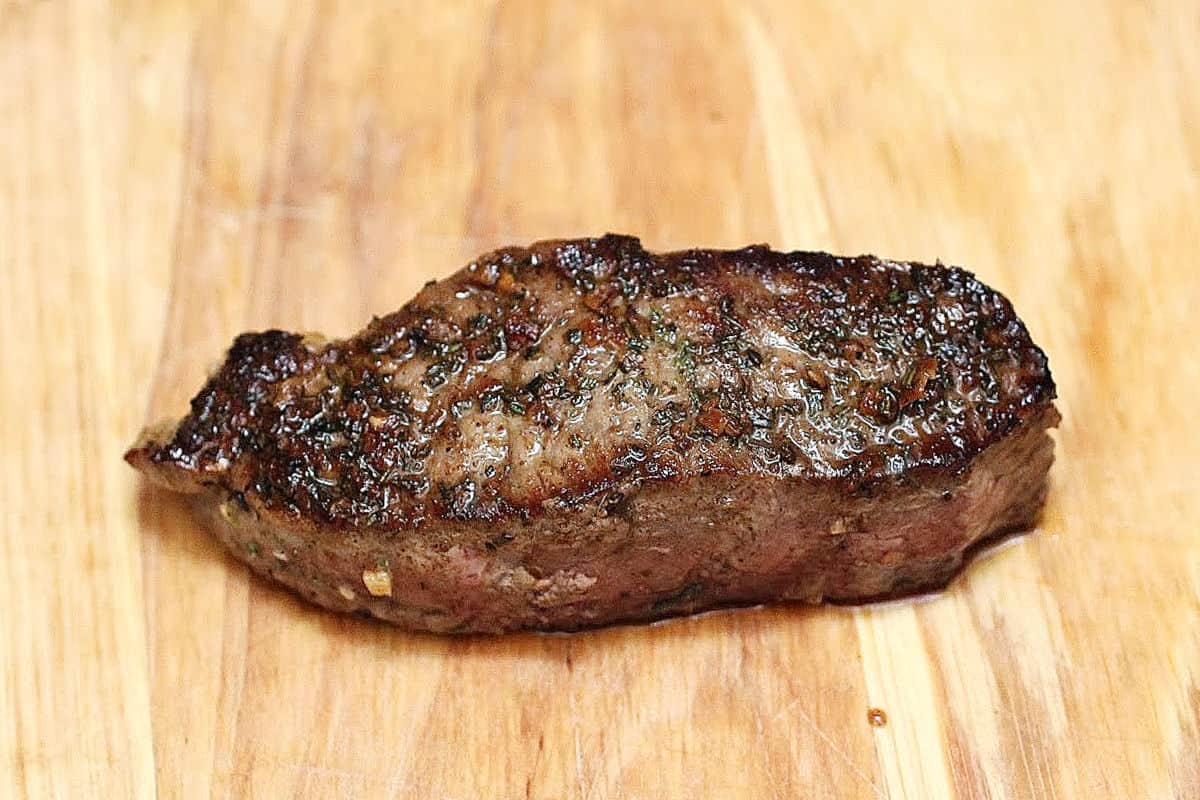
Take the steak from the pan and let it rest for no less than 3-5 minutes before cutting. This allows the juices that have gone to the edges during cooking to redistribute, so you'll have a consistently juicy piece of meat when you cut it. Otherwise, the liquid drips from the meat and onto the plate the moment you cut it. For me, this is a crucial step.
Steak doneness temperatures
| Doneness | Pull from heat at |
| Rare | 120-125°F (49-52°C) |
| Medium-rare | 130-135°F (54-57°C) |
| Medium | 140-145°F (60-63°C) |
| Medium-well | 150-155°F (66-68°C) |
Extra Tip
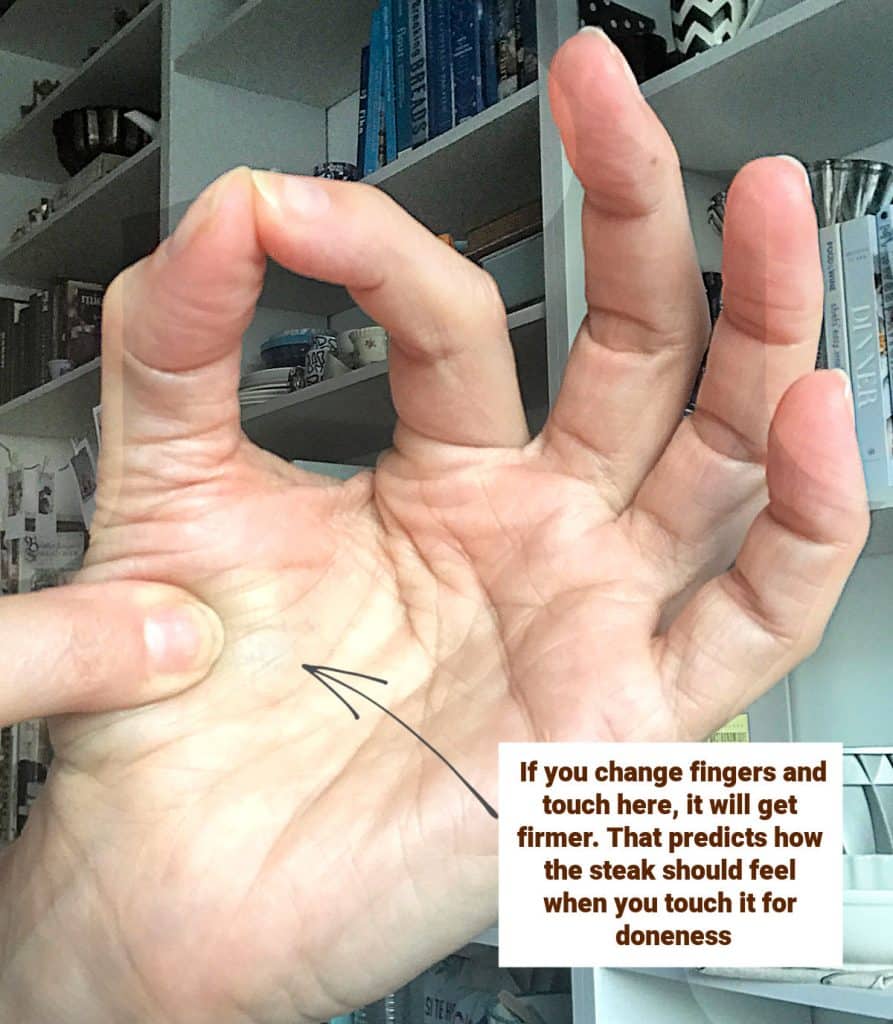
Did you know that the area below your thumb (yes, in your hand!), that thick mound that forms in the palm, is quite accurate when testing steaks? It's not perfect, of course, but it can help you start to feel when your steak is done instead of relying on a thermometer.
Rare: lightly join the tips of your thumb and index finger, forming a circle with both fingers and press that area below the thumb (image above). It means that if you lightly press the steak while it's cooking (with a tong is fine), the pressure should be similar.
Medium rare: join the middle finger and thumb; it gets a little tighter.
Medium well: touch the tip of your thumb with the ring finger
Well done: use your pinky finger.
As an Amazon Associate, I earn from qualifying purchases. Read my disclosure policy.
Rosemary Garlic Butter Steak (Juicy in 25 Minutes)
Ingredients
- 4 sirloin steaks or NY steaks, about 7 ounces each, 1 to 1.5 inches thick, at room temperature
- 2 to 3 garlic cloves
- 2 tablespoons fresh rosemary leaves
- 3 tablespoons unsalted butter
- 1 tablespoon olive oil
- 1 teaspoon salt, or to taste
- ⅛ teaspoon freshly ground black pepper, or to taste
- 2-3 tablespoons white or red wine, a splash if you measure by instinct
Instructions
- Mince 2 to 3 garlic cloves and 2 tablespoons fresh rosemary leaves. Add 1 teaspoon salt (or to taste) and mince it a little longer. You can also do this with a mortar and pestle.
- Rub the paste evenly over both sides of 4 sirloin steaks or NY steaks. It's not a thick layer, just enough to flavor the meat.
- You can also use the fat from the steaks to grease the pan before adding the rest of the ingredients; see Notes below.
- Heat a skillet over medium/high heat and melt 3 tablespoons unsalted butter. Add 1 tablespoon olive oil to prevent it from burning too much.
- Add the steaks, season them with ⅛ teaspoon freshly ground black pepper, or to taste, and cook 1 or 2 minutes on each side.
- Turn it over, cook it 2 or 3 more minutes and add 2-3 tablespoons white or red wine. It will steam furiously. Cook the steak 2 or 3 additional minutes for medium rare. Remove the skillet with the meat from the heat, and let it rest for 3 to 5 minutes. This redistributes the juices and is an important step.
- Meanwhile, cook the wine mixture until reduced and a sort of sauce is formed. It will not be much, just enough to glaze.
- Slice the steaks and serve them with the juices and sauce.

Patrick says
Tried your recipe it was phenomenal it will be my goto steak dinner from now on
Jamie says
Will the garlic burn with the high heat skillet?
Paula Montenegro says
That never happened to me Jamie, to the point were it turns bitter. But if you’re afraid of that, add a few crushed cloves to the pan as you’re searing the steak and move them around so they don’t burn.
John says
Great steaks. The sauce was ok, but I’d just as happily just pour the pan liquid over the steak without adding any wine to it.