


Raisin scones are classic, and this very old recipe is not overly sugary or butter-heavy, but has just the right crumb and sweetness to eat on their own. I like to make them small, but that's up to you. They're great to have frozen and bake them to order, so you have fresh scones every single time!
A good scone is not complicated. But it does ask you to pay attention to a few things: cold ingredients, a light hand, and not over-thinking the rough dough. All my top tips are included, so they come out tender and perfect, even if you're a beginner.

SAVE THIS RECIPE
British bakery recipe
At some point, when life didn't have internet or online recipes, I used to ask restaurants and coffee shops for recipes. They usually agreed, especially if I was traveling. This is one of those recipes I got on my first visit to London.
They're more vintage, less rich than these mini scones that use cream, or the classic American biscuits with baking powder, which have more butter. They're perfect for brunch, as a snack with a cup of coffee or for proper afternoon tea with clotted cream and jam or lemon curd.
Scone-making is a big deal in my family. My Irish great-grandmother passed down the recipe, according to everyone. But no one got the same results. So finding my own scone recipes has always been a challenge and also a joy, as I love them so much.
Testing notes
Baking powder: It's essential to help the scones rise, so make sure it's not expired. And that you don't forget it (not that it happened to me, wink!).
Very cold ingredients: I'm not kidding when I say very cold butter. I cut it and put the pieces in the freezer for 5 minutes before using them. And don't take the liquid ingredients out before you start mixing the scones. They belong in the fridge until you need them.
Don't work the dough much. It should come together, but might still have floury patches. You don't need to work it until it's smooth, like pie dough. It is uneven, with dry spots sometimes, and that's good for tenderness and flakiness later.
Chill before baking: To get tender and fluffy results, the butter in the scones needs to be cold when going into the oven. So put the tray with the cut scones in the freezer for 15 minutes before baking. If they don't fit your freezer, refrigerate them for 30 minutes.
A rather high oven is necessary: they need that extra initial heat to rise well. If you happen to forget to turn on the oven beforehand, leave them in the freezer or fridge until the oven reaches the right temperature.

FAQ
Can I use yogurt instead of sour cream?
Yes. Plain regular yogurt or Greek yogurt works well and gives a similar texture and slight tang. It also helps with tenderness.
Can I freeze raisin scones?
Yes! Freeze the unbaked cut scones on a tray until firm, then transfer to a freezer-safe bag. Bake directly from frozen, in a 375°F (190°C) oven, adding a few extra minutes to the baking time.
Experiment with different flavor combinations. Instead of the raisins or in addition to, you can add citrus zest (orange is lovely), seeds (lemon and poppy seeds always work), vanilla extract, ground spices such as cardamom or cinnamon, mini chocolate chips, dried cranberries or chopped dried apricots. Don't go crazy with the amount; this is not a large recipe.
Process steps
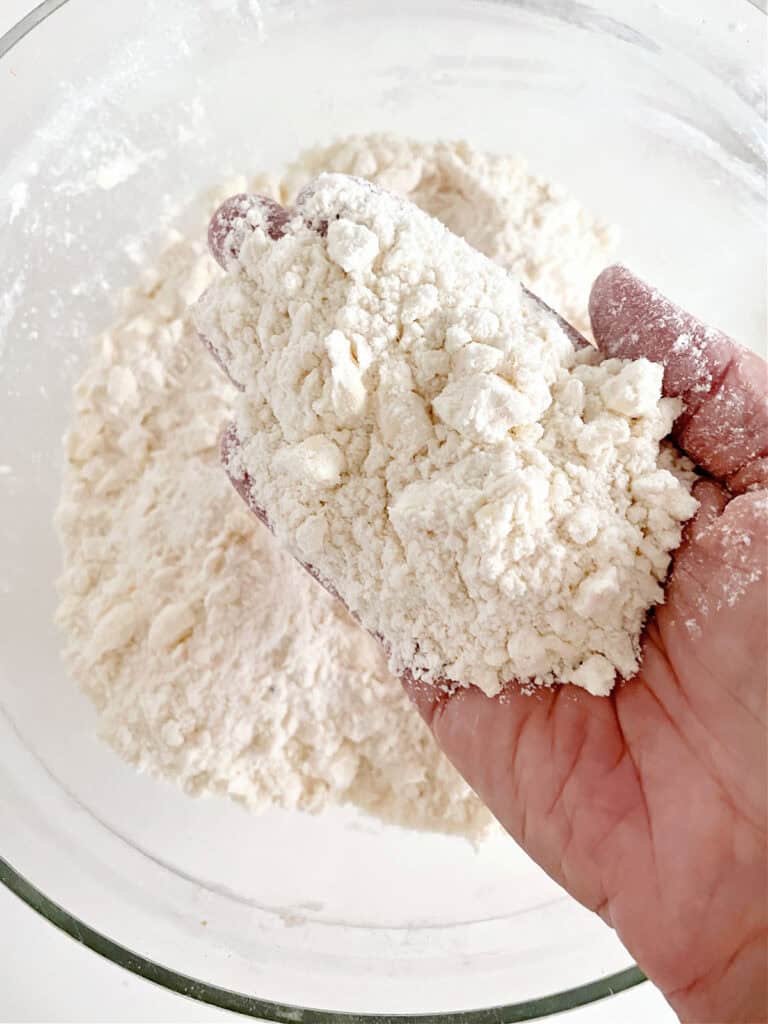
Work in the butter
Stir to combine the dry ingredients in a large bowl and scatter cold butter pieces on top.
Use a pastry blender (dough cutter) or your hands (my choice usually) until the butter pieces are the size of small beans. It will be irregular.
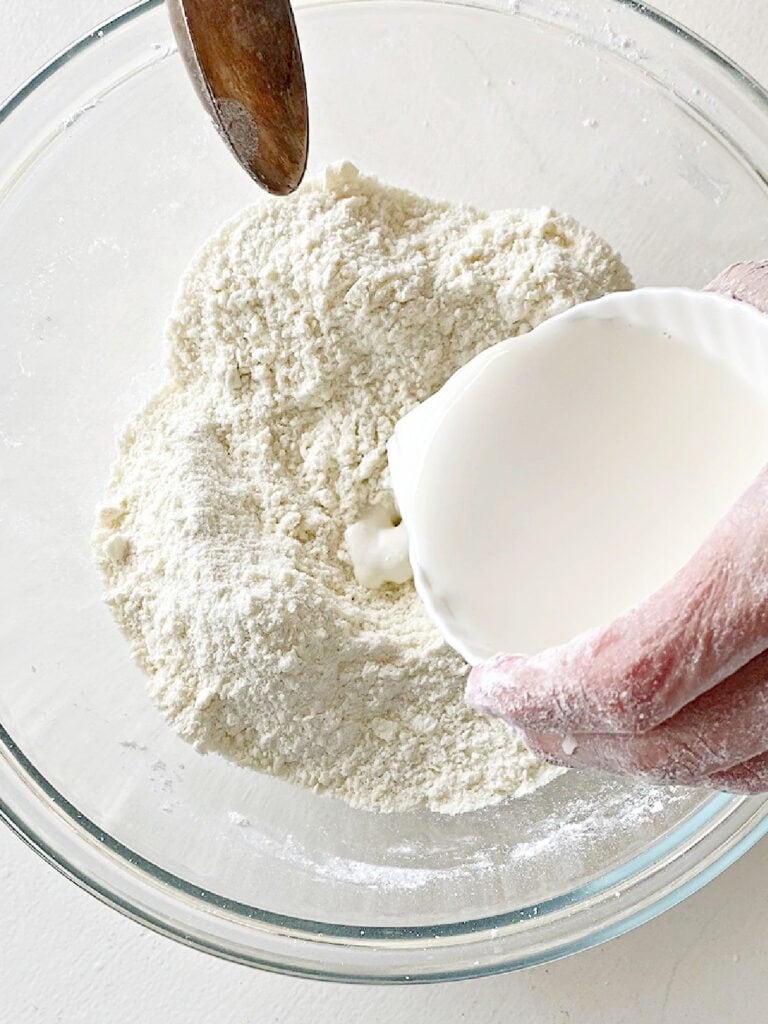
Add wet ingredients
Add the milk and sour cream to the dry ingredients and stir with a fork or spoon until a few dry spots are left. Don't overmix!
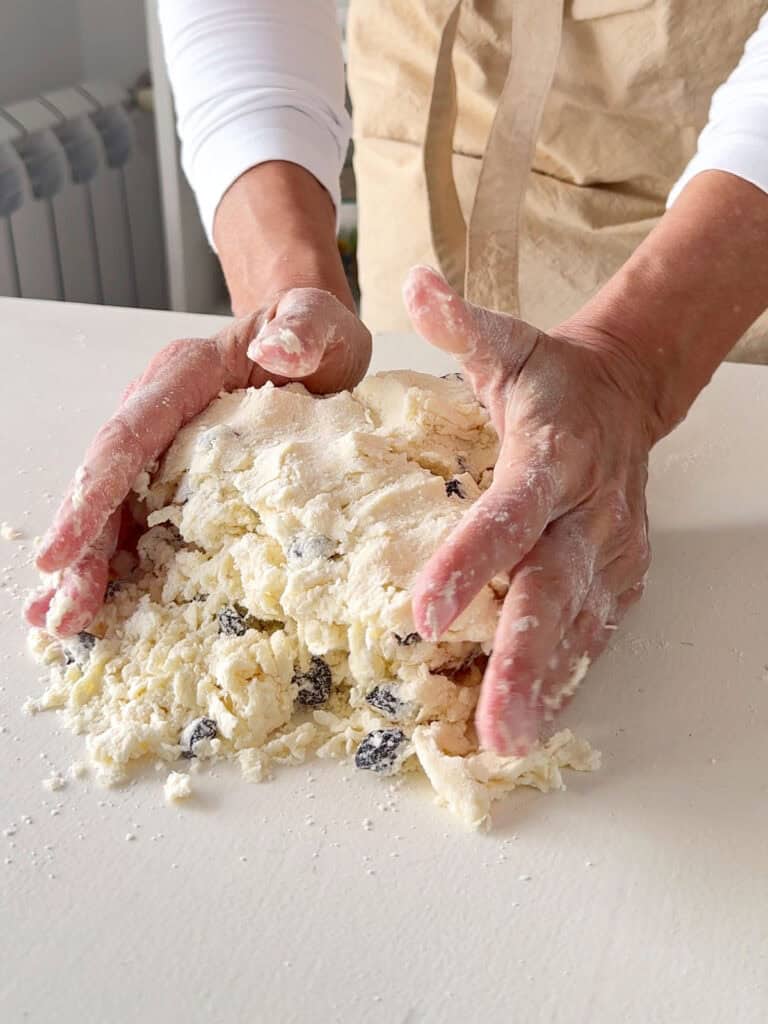
Add raisins
Transfer the shaggy scone dough to a lightly floured surface. Gather it into a disc, folding it onto itself (to create layers and thus, flaky scones) and patting it lightly, and working it as little as possible. A dough scraper (like a large spatula) helps with this part.
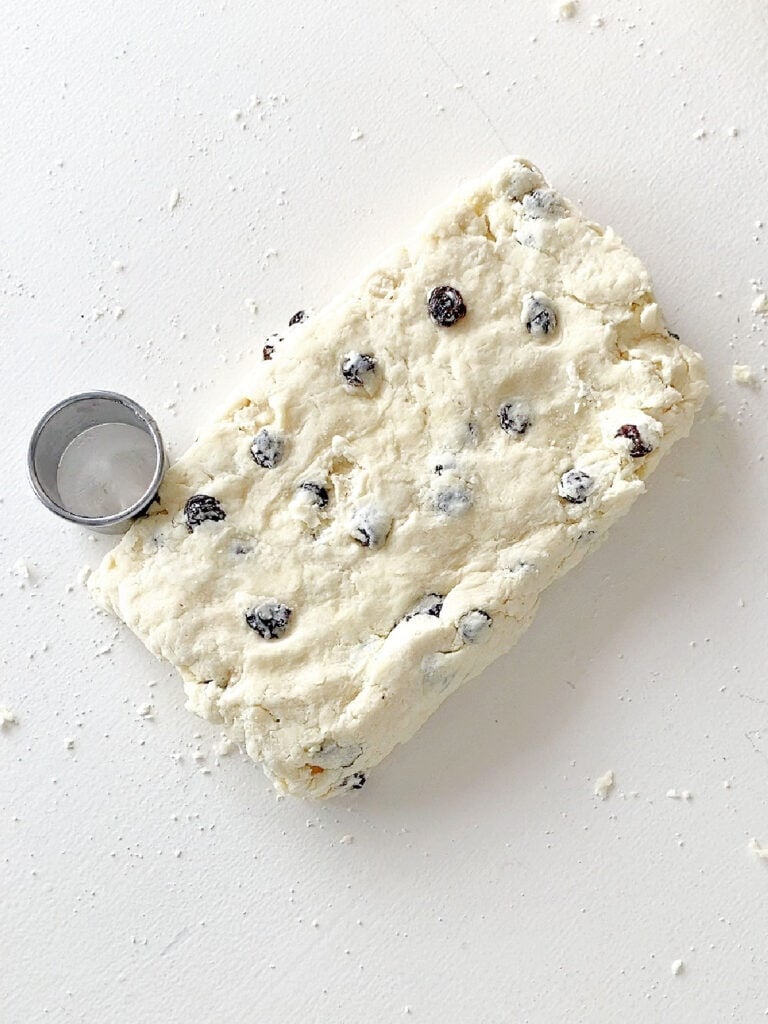
Make a rectangle
Form the dough into a rough rectangle. It will be irregular, and some spots will be more floury than others, but overall, the dough should be cohesive and not crumbly.
I like to use the cutter to eyeball the dough, so I get 3 scones (short side) with minimal scraps left. Also, I never go above the cutter's height, so it's easier to push down and cut.
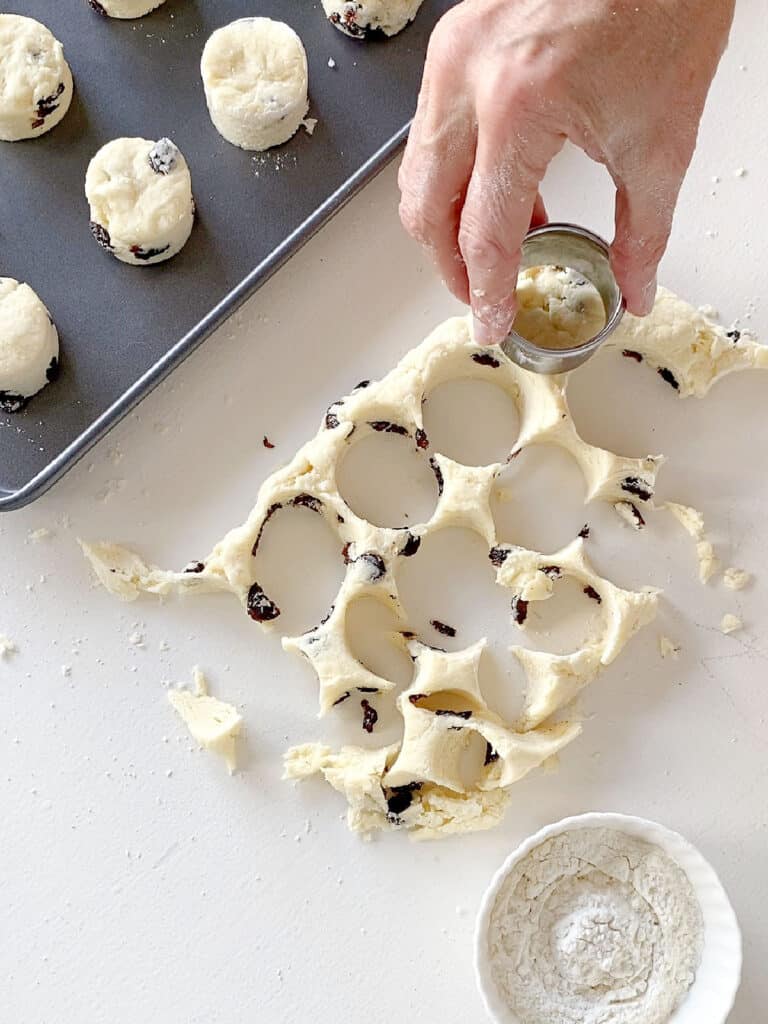
Cut the scones
For classic round scones, use a medium round cookie cutter.
Push down, don't twist the cutter. That clumps the dough a little, and the scones may not rise as high as they could.
Dip it in flour and shake off excess if needed between cuts, so it doesn't stick to the dough.
For wedges or triangles, use a kitchen knife or dough scraper, like for the chocolate chip scones.

Egg wash or plain?
I like both, but am a bit more inclined towards the matte, plain version. For a more golden brown, shinier finish, brush them with an egg wash (an egg, lightly beaten with a tablespoon of water or milk). Sprinkle them with extra sugar on top for extra crunch.
They should not stick after being baked, but if you're more comfortable lightly buttering the sheet or using parchment paper, go ahead.

Baking
When are they baked? Besides growing and turning golden brown, the best way to make sure is to open one slightly with a fork and check that the inside is fully baked. It should de dry, not wet.
Large batch
If you want to double the recipe (or triple if your processor is large), a great idea if you're freezing them, you can mix the dry ingredients and butter in the food processor: it's another option to making them completely by hand, but it's just for step 1.
Pulse them a few times. This is way faster and less messy (no hands involved), and the only thing to watch out for is not getting carried away and processing too much. Or the scones will be tough. The butter pieces should be irregular, the size of peas and beans. Then, follow from step 2 above.

As an Amazon Associate, I earn from qualifying purchases. Read my disclosure policy.

Old Fashioned English Scones with Raisins
Ingredients
For scone dough:
- 2 cups self-rising flour
- 1 teaspoon baking powder
- ¼ cup sugar
- ⅛ teaspoon salt
- 4 tablespoons unsalted butter, cold, cut into small pieces
- ⅓ cup regular sour cream, cold
- ⅓ cup milk, cold
- ½ cup raisins
Egg wash:
- 1 egg
- 1 tablespoon milk
Instructions
- In a large mixing bowl, place 2 cups self-rising flour, 1 teaspoon baking powder, ¼ cup sugar and ⅛ teaspoon salt.
- Stir to mix and scatter 4 tablespoons unsalted butter, cold and in pieces, on top.
- Using your fingertips or a pastry cutter, rub the butter into the flour until the mixture looks like coarse crumbs. A few pea-sized bits of butter are fine; they'll help the scones be flaky. Work quickly so the butter stays cold.
- In a small bowl, stir together ⅓ cup regular sour cream with ⅓ cup milk until combined.
- Make a well in the center, add the wet ingredients, and mix just until combined. Integrate with the flour using a fork or spoon. It will be floury and irregular.
- Fold in ½ cup raisins while there are still some floury patches.
- Transfer to a clean counter and gather with your hands, turning the dough onto itself a few times until you can pat a rectangle about ½ inch thick. It won't be a smooth dough like for a pie. Avoid kneading much; scones should be handled as little as possible.
- Cut into rounds with a medium plain round cutter and place on a greased baking sheet. Use a plain round cutter (not fluted), and press straight down without twisting. Twisting seals the edges and prevents the scones from rising as high. Push down, lift up, done. If the cutter sticks to the dough, dip it in flour and shake off excess before you push down. Gather the scraps and re-pat once, touching as little as possible. The second-round scones will be slightly less tender than the first, but they'll still be very good.
- Chill in the refrigerator for 20-30 minutes. Preheat oven to 350°F (180°C) while scones are chilling.
- For the egg wash, mix 1 egg and 1 tablespoon milk in a small bowl and brush the tops of the scones. You can sprinkle some extra sugar for crunchiness and sweetness.
- Bake for about 15-20 minutes, until puffed and lightly golden. Eat warm on their own, with butter, sour cream, clotted cream or jam.

Rate and review this recipe