

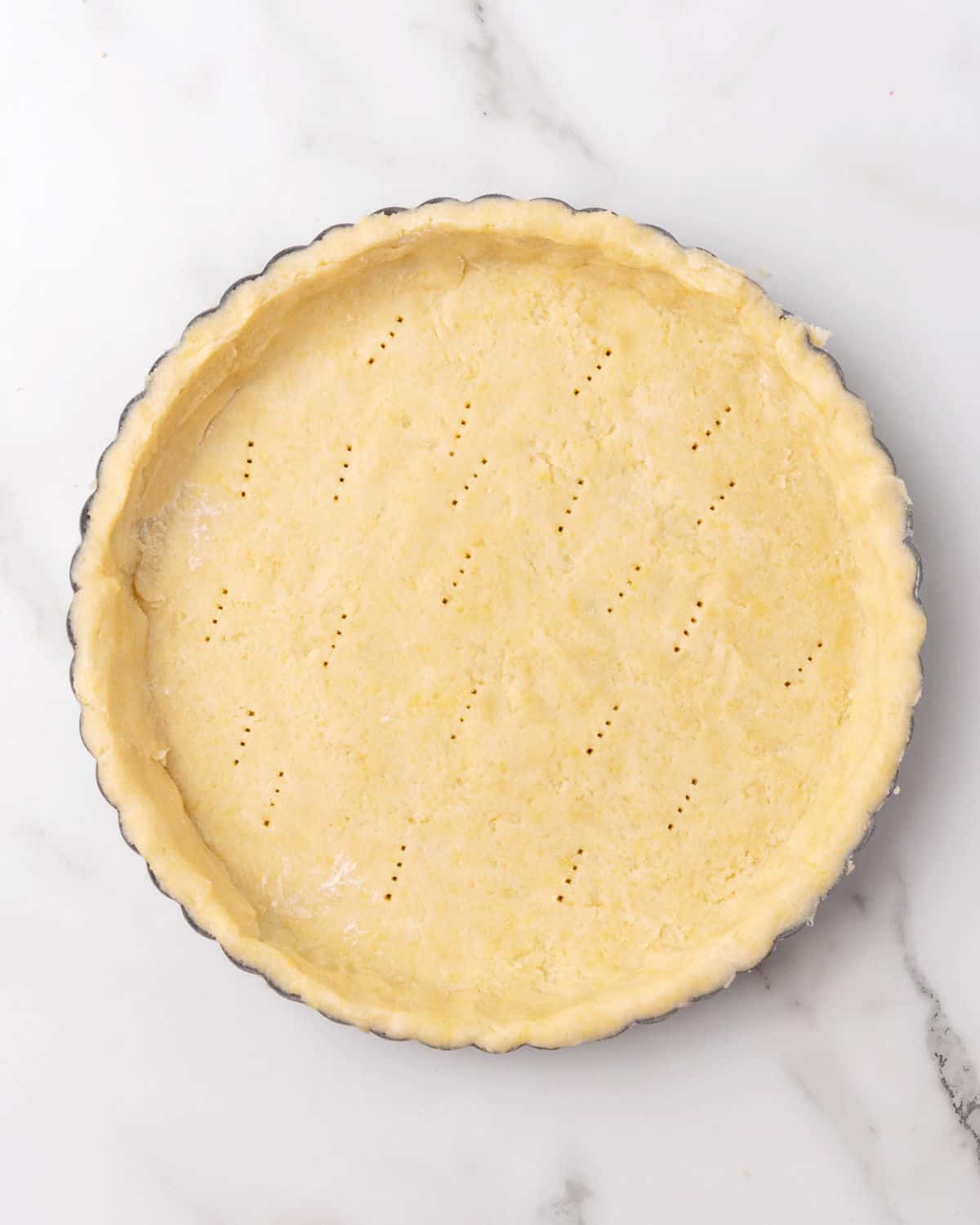
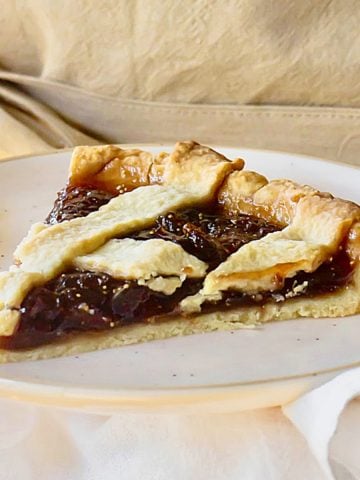
Pasta frolla is the classic Italian sweet pastry dough, the one behind every crostata, jam tart and ricotta pie. It's a rich, tender crust made with butter and eggs that's easy to roll. This is my go-to Italian pie crust recipe for crostata dough, and it freezes beautifully for up to 3 months.
It uses baking powder, which is not a regular ingredient in classic pie dough, but lends softness after baking and helps with a finer, more tender texture. I'm used to this crust, which is sweeter than regular American recipes, and I use it regularly, so I have all the tips to share with you.
SAVE THIS RECIPE
Crostata dough recipe
I regularly make Italian desserts, so I use this traditional pasta frolla recipe (sweet pie crust in Italian) a lot. So much so that I decided it deserved its own post.
FABULOUS pastry! ⭐️⭐️⭐️⭐️⭐️
That's what Stacey, a reader, commented. And I couldn't agree more.
It resembles other dough recipes, like our favorite sweet shortcrust pastry, with details that make it unique, such as using baking powder.
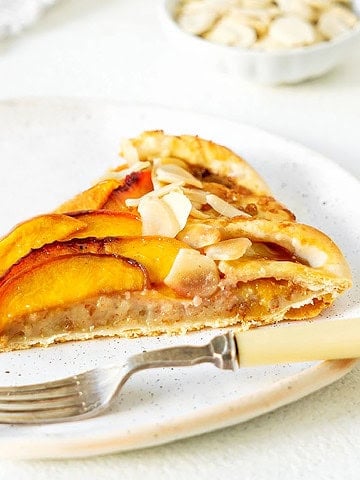
Some call it crostata crust and galette crust, as it's an excellent base for those desserts, as well as tarts in general, which have less filling than classic pies.
It can be flavored by using some orange or lemon zest, a dash of spice, vanilla extract or others like anise or almond.
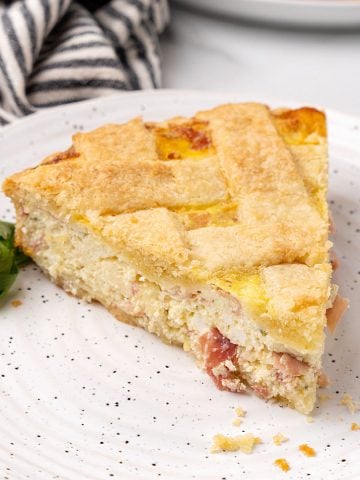
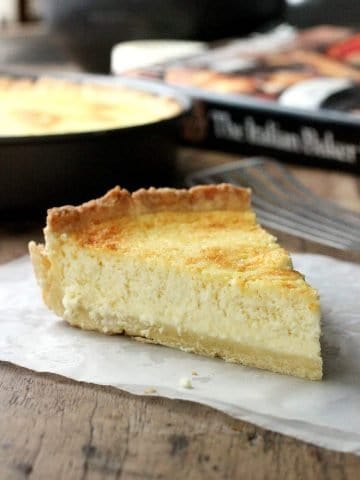
You have already seen it in this blog in the very popular lemon ricotta pie and my mother's fig crostata (that also features her homemade fig jam!). It's so versatile that it's also found in some savory dishes like this savory ricotta pie.
Testing notes
Paula's baking tips that make a difference.
Butter: use it cold and in pieces. This is very important, so it mixes a bit with the flour but is not completely incorporated into it. Some pieces of butter the size of peas should remain. You can use a food processor for this part, or make it by hand.
Use the baking powder; don't skip it. It helps with softness to create a more tender crust and balances the richness of the eggs and butter.
Use all-purpose flour (or Italian flour tipo 00 if you find it) for this dough. Don't use bread flour (too much gluten). I have used cake flour for this recipe, but I don't recommend it as the first option; the dough can be too tender and more difficult to roll and handle.
Be careful not to overwork the butter with the flour so that it starts softening or melting (due to warm hands, usually). If that happens, cover the bowl (or wrap the dough if it's on the counter) and return it to the fridge for 20-30 minutes or the freezer for 10-15 minutes, and then continue.
Don't overwork the dough after adding the flour. This is a critical step if you want a tender, light dough. Once the flour is added, don't overwork it; it doesn't need to be kneaded. It needs to be mixed until there are no visible streaks of flour.
Always let it rest in the fridge before rolling it. This step is absolutely essential. Even if you didn't work it much when assembling it, the dough will have developed some gluten (great for bread, for example, but not for doughs), so it needs to relax in the cold refrigerator before it is rolled. Otherwise, it will be difficult to stretch and too elastic, making it shrink as it bakes and be tough.
If your dough is too crumbly or hard to roll, the dough is probably too cold or too dry. Let it sit at room temperature for 5-10 minutes until it's pliable. If it still cracks, press it into the pan with your fingers instead of rolling. Patches and repairs are fine, since the crust bakes together and nobody will see them. Refrigerate it before baking.
A crostata is the Italian version: a free-form or tart-pan pie made with pasta frolla, a sweet, cookie-like dough, usually filled with jam, fruit or ricotta. A galette is French and typically uses a flakier, more pie-like dough folded over the filling. This dough works for either one.
Pasta frolla is richer and sweeter than American pie crust because it contains eggs and sugar and no water, so it bakes up tender instead of flaky. It's closer to shortbread, but the eggs make it softer and easier to roll. French pâte sucrée is the closest relative.
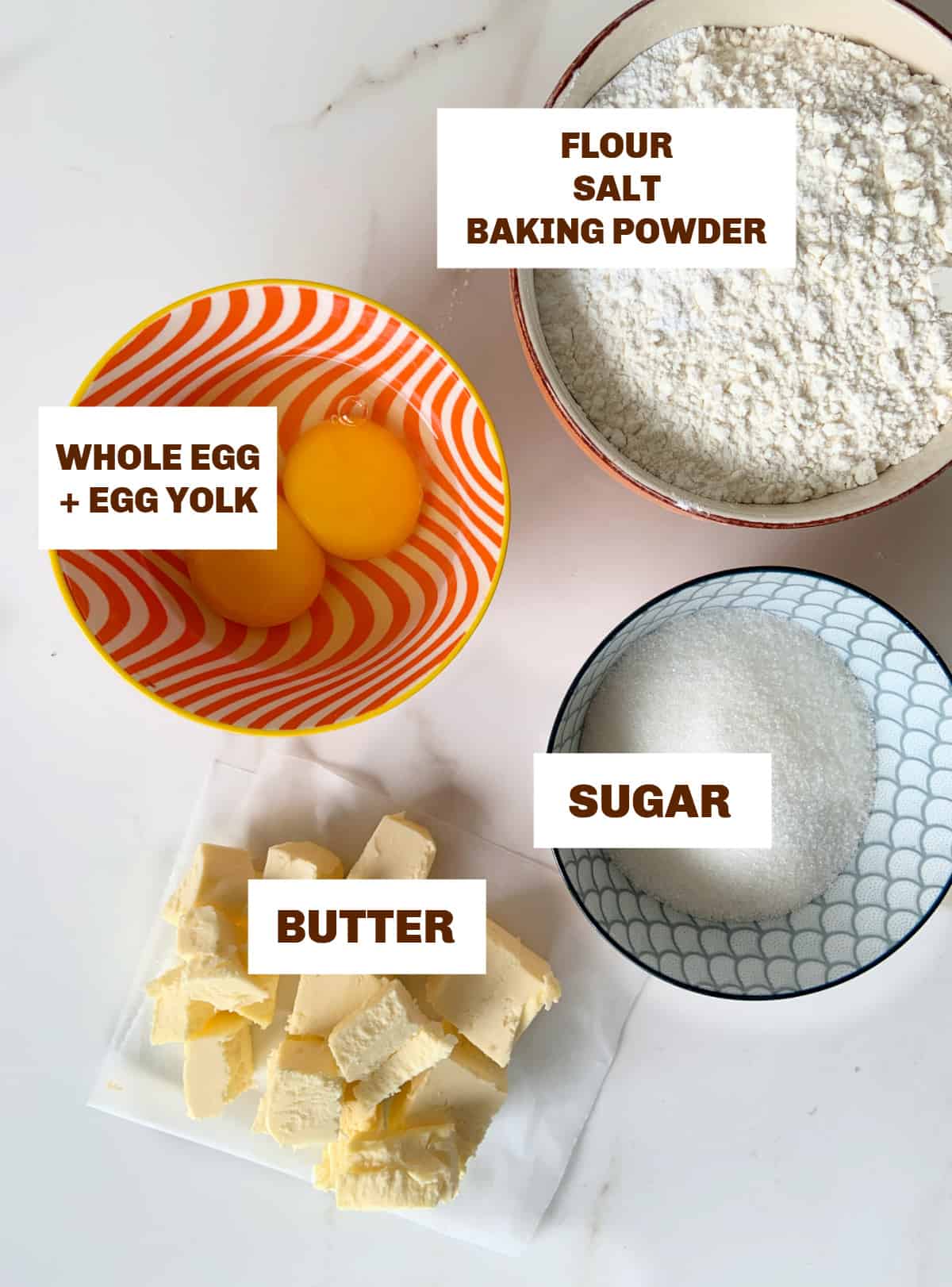
Ingredients
Quantities are listed on the recipe card towards the end of this post. The Ingredients page has more details and lists the brands we use.
- Eggs. Fresh, large, grade A whenever possible. The extra egg yolk makes it wonderfully rich.
- Flour. All-purpose flour always works well, and cake flour for a softer, finer dough.
- Baking powder: make sure it's active. It's an unexpected ingredient that gives it a kind of spongy, sugar cookie texture. That's why I love it for crostatas. You can omit it; you'll still have a rich, sweet pie crust.
How to make authentic Italian pasta frolla
In the food processor
When making a large batch of dough for several pies, I like using this small appliance because it's easy and fast.
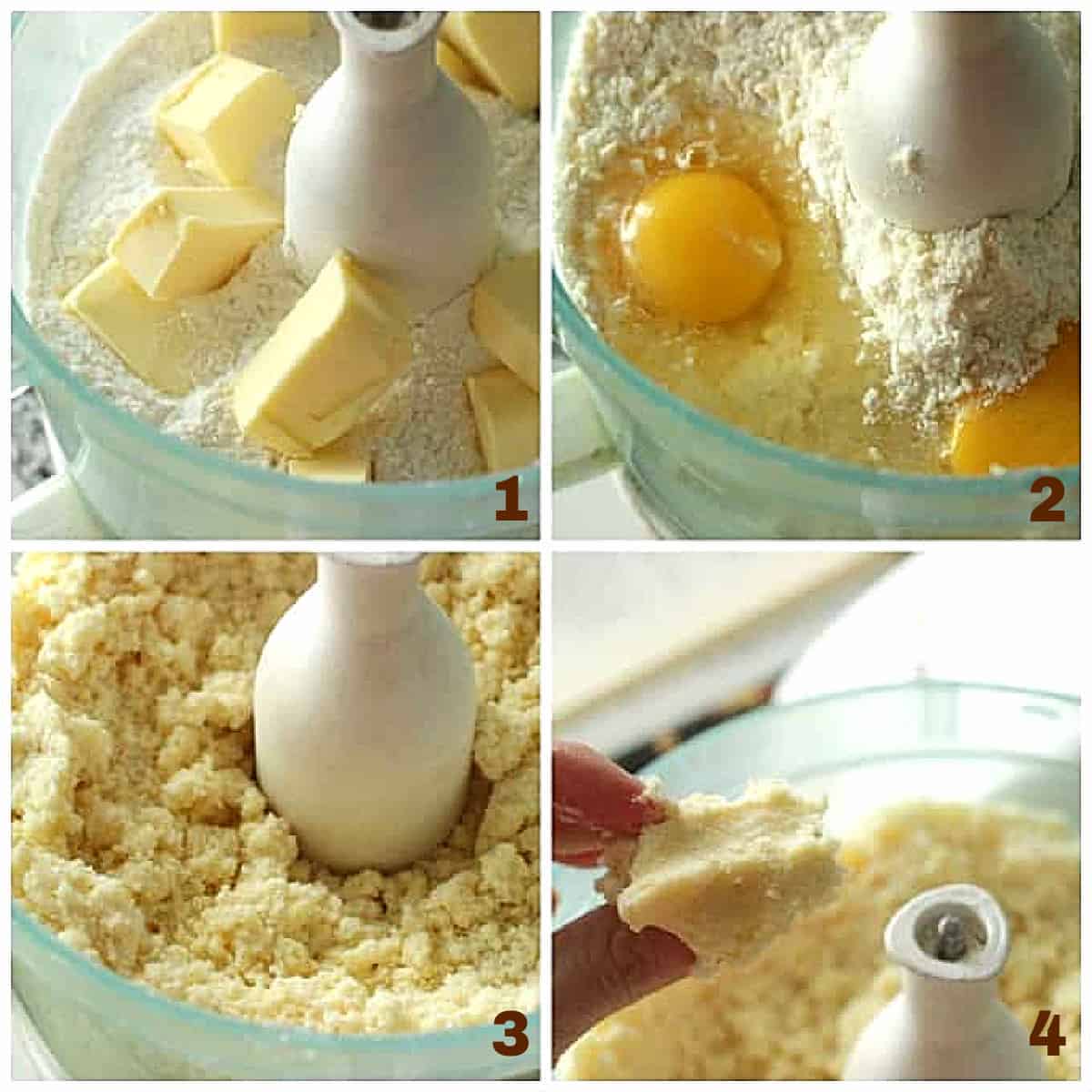
- Pulse until the cold butter is the size of beans. Don't overprocess it.
- Add eggs and pulse a few times. Move the mixture with a spatula if your processor pools in the bottom.
- The dough will start to come together. Be careful not to process it into a ball.
- If you squeeze some of the crumbly mixture in your hand, it should come together and not be floury. That's your sign to stop processing.
- Transfer the shaggy mass onto a clean counter, gather into a ball without overworking it, wrap it and refrigerate it for at least 1 hour.
By hand
For the amount of dough this recipe makes, I generally make it by hand. But I bake all the time, so I'm used to it. If you're a beginner, I do recommend this method to understand how homemade crust works and get the feel of it.

Mixing
The cold butter is worked with the dry ingredients, and then the eggs are added. Use a large bowl and stir it with a fork until you have a shaggy mixture.

Work quickly
It will be a shaggy mass at first, but it will eventually come together. Don't overwork it. It's key for a tender dough.
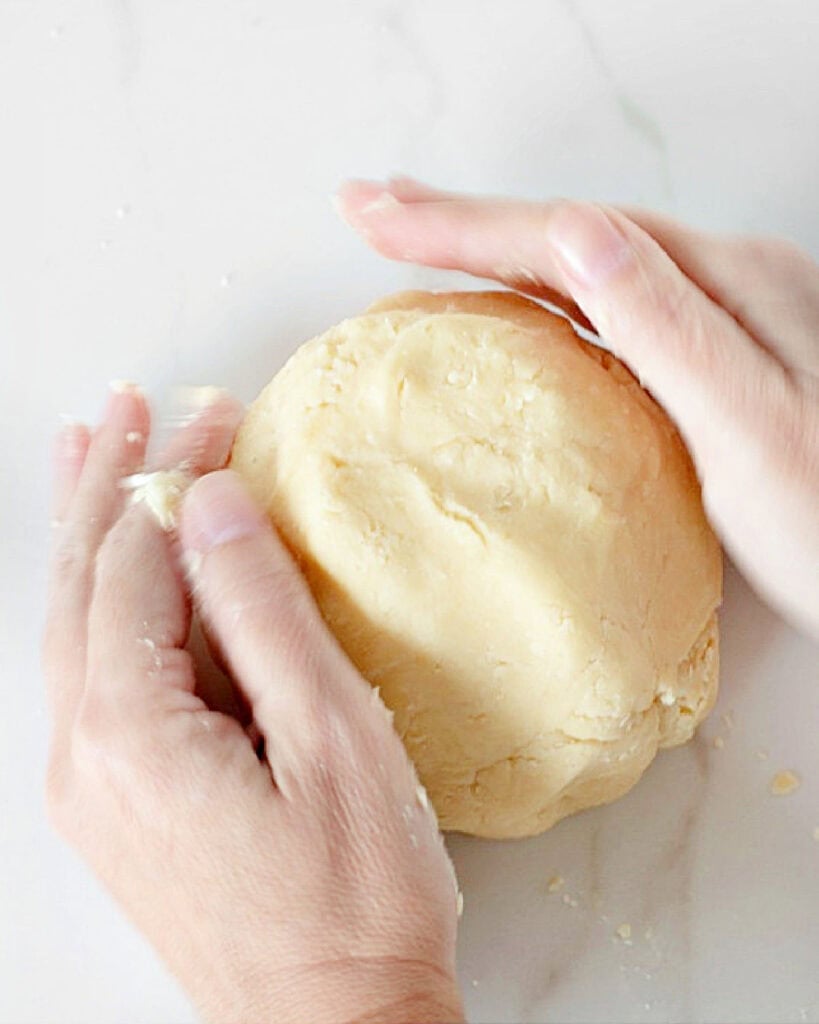
Gather into a ball
As soon as you have it in a rather smooth ball, stop. You want it to be cohesive, but don't overwork it, or it'll be tough.

Refrigerate
Flatten it into a disc, cover it tightly with plastic wrap or a large freezer sheet and chill for at least 1 hour or up to 5 days.
As with most crusts (there are exceptions like this cherry tart), pie doughs need to be refrigerated before use. They need to relax so that they can be rolled out properly without shrinking.
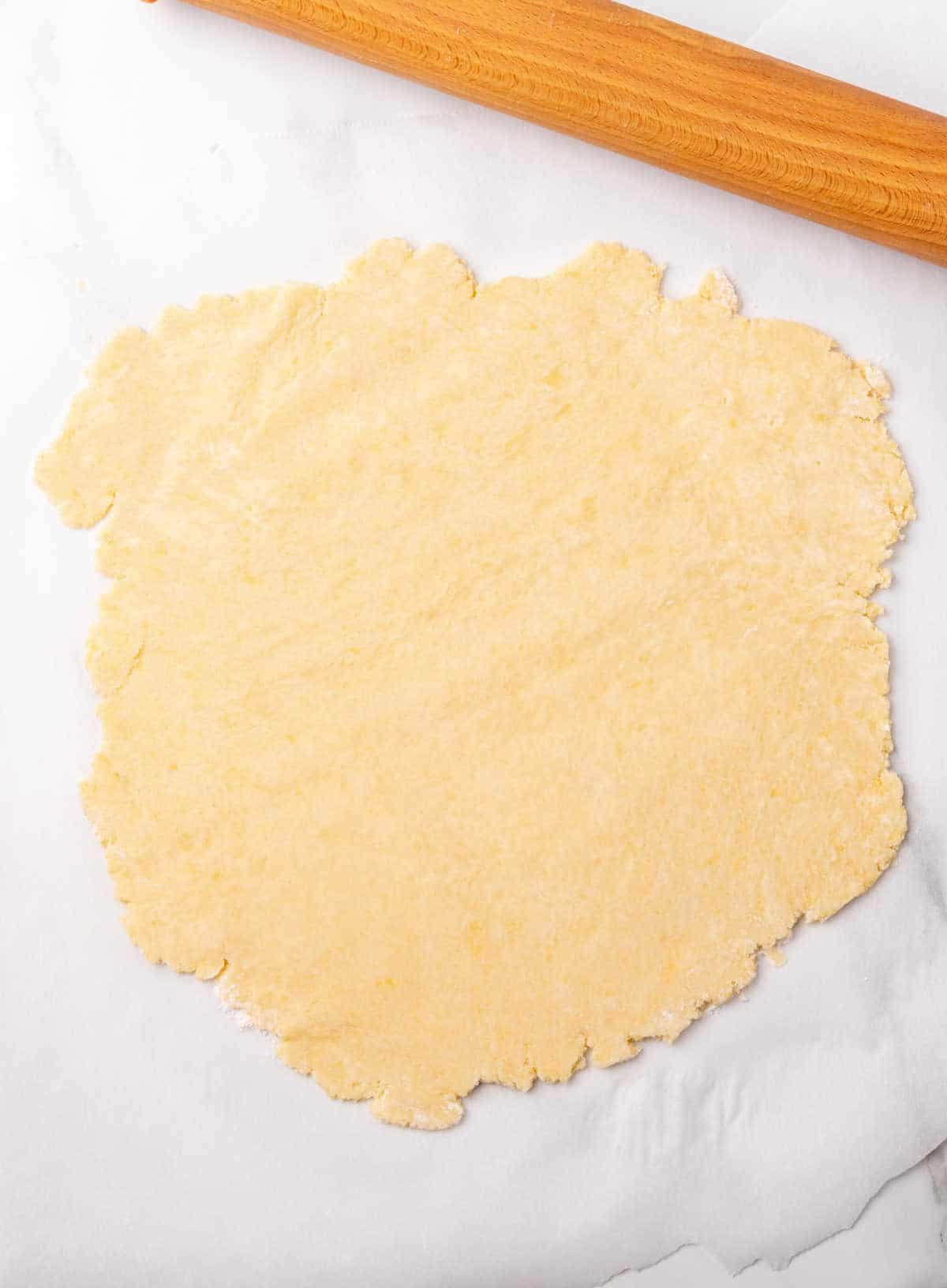
Rolling pie crust
Always roll cold dough. Even if you think it's too cold and needs to be at room temperature until it becomes pliable, check it often while you're waiting for it to be ready.
Start rolling it as cold as you can; it will soften quickly. You don't want the butter to start softening too much because it will make the final crust tougher.
Here's a short video about how to roll pie crust.
Storage
- Refrigerating: after you make the dough ball, wrap it well and keep it in the fridge for up to a week. Make sure no part of the dough is left unwrapped, as it will dry out. I wrap it in double plastic or freezer paper and then in a Ziploc bag.
- Freezing: follow the same wrapping procedure as for the refrigerator. Label and date it. It can be frozen for about two months.
If you like homemade pie crusts, check our Basic Recipes category. There are posts with detailed instructions, videos, and photos.
As an Amazon Associate, I earn from qualifying purchases. Read my disclosure policy.
Pasta Frolla Recipe (Italian Crostata Dough)
Ingredients
For the dough:
- 2 ¼ cups all-purpose flour
- ½ teaspoon baking powder
- ½ cup sugar
- pinch of salt
- ¾ cup unsalted butter, cold and in pieces
- 1 egg
- 1 egg yolk
Instructions
For the dough:
- If using a food processor, pulse the dry ingredients: 2 ¼ cups all-purpose flour, ½ teaspoon baking powder, ½ cup sugar and a pinch of salt, a few times to mix. Scatter ¾ cup unsalted butter, cold and in small pieces on top, and mix until you have butter the size of peas.
- If making it by hand, stir to mix 2 ¼ cups all-purpose flour, ½ teaspoon baking powder, ½ cup sugar and pinch of salt in a large bowl. Scatter ¾ cup unsalted butter, cold and in small pieces on top and mix until you have butter the size of peas.
- For both methods, add 1 egg and 1 egg yolk and process using quick on/off pulses, or stir with a fork, until it all starts to come together. If processing it, don't let it form a ball. If you take a little and squeeze it with your hand or pinch it with your fingers, it should come together.
- Turn the rough pastry dough onto the counter and gather it together several times, pressing it to form a rather smooth dough ball. Don't overwork it, or the crust will be tough when you bake it. The butter must remain cold. I put it inside a plastic bag and aid myself with the bag while pressing my knuckles until it comes together. That way, I don't touch the dough unnecessarily.
- Press the dough into a flat disk. Cover with plastic wrap and refrigerate for 1 hour and up to 3 days. Wrap it well. Make sure no part of the dough is left unwrapped, or it will dry out. I wrap it in double plastic or in freezer sheets, and then in a Ziploc bag.
- When ready to use, roll the cold dough with a rolling pin until it's thin and larger than the pie or tart pan you're using. Prick the bottom with a fork and place it in the fridge to chill for 1 hour before baking it. Always fill it cold; don't bake or use it at room temperature. Follow blind baking instructions if the recipe calls for it.

Leslie says
Water is not listed in recipe ingredients but is mentioned in notes, but there is no indication of how much?
Paula Montenegro says
Hi Leslie, it doesn't use water, just eggs. The process was not the right one, but it's been changed now, and the post has been updated with the right steps. Thanks for letting me know.
Stacey says
FABULOUS pastry!
patricia says
Thanks for sharing. I'm inclined to use shortening instead of butter. Your thoughts? Thanks, Pat
Paula Montenegro says
Hi Patricia, I like butter, but there are several pie doughs made with shortening. And the substitution is 1:1, same amount.
Lauren says
Hi Paula,
I am making a pastia with this dough. Should Ibake before addng the filling?
Thanks for the recipe!
Paula Montenegro says
Hi Lauren! You might want to prebake (blind bake) the dough first so the filling doesn't moisten it before baking.
Hilary says
Hi Paula when you jump to the recipe you don't' have baking powder down so i didn't put it in ! I hope it will be ok.
Paula Montenegro says
Hi Hilary! Yes, it will still be a great sweet dough. I corrected it in the recipe card. Thanks for the heads up! Even though I check the recipe several times and sometimes have others do so too, a typo or a missing ingredient once in a while happens. Have a great weekend.